

If you’re anything like me, your relationship with “going green” has probably been a bit of a rollercoaster. One minute you’re standing in the grocery store aisle, holding a cucumber wrapped in plastic, feeling guilty.
The next minute, you’re deep down a rabbit hole of “zero waste” Instagram accounts, convinced you need to make your own toothpaste from charcoal and coconut oil by midnight, or you’ve failed the planet.
Sound familiar? Let’s hit the pause button.
I’ve spent years navigating the world of sustainable living, and if there is one golden rule I’ve learned, it’s this: Perfect is the enemy of good.
We aren’t aiming for a sterile, plastic free museum of a house. We’re aiming for a home that feels good, works hard, and doesn’t contribute to the mountain of waste we see in the news.
The goal is progress, not perfection. And the best part? Many of the swaps we’re going to talk about today actually save you money in the long run. They pay for themselves, and they let you breathe easier, literally and figuratively.
Today, we’re going on a room by room tour. I’ve curated five high impact, practical swaps for the four main areas of your home: the Kitchen, Bathroom, Bedroom, and Living Room.
These aren’t just random ideas plucked from a Pinterest board; these are expert backed, durable solutions that cut down on plastic waste, reduce your exposure to nasty chemicals, and lower your utility bills.
Ready to make your home a little kinder to the Earth (and your wallet)? Let’s dive in.
In a Nutshell
- You do not need to overhaul your whole house at once.
- The best swaps are practical, reusable, and save money over time.
- The kitchen and bathroom usually offer the fastest wins.
- Natural materials often last longer and create less waste.
- Progress matters more than perfection.
Quick Roundup Table
| Room | High Impact Swap | Why It Helps |
|---|---|---|
| Kitchen | Swedish dishcloths | Reduces paper towel waste and saves money over time |
| Kitchen | Glass jars and silicone bags | Replaces disposable storage and keeps food organized |
| Bathroom | Bamboo toothbrushes | Cuts down on plastic handles and packaging |
| Bathroom | Safety razor and bidet attachment | Reduces disposable waste and lowers toilet paper use |
| Bedroom | Organic cotton or linen bedding | Improves breathability and reduces microfiber shedding |
| Living Room | LED bulbs and natural fiber rugs | Uses less energy and avoids plastic based materials |
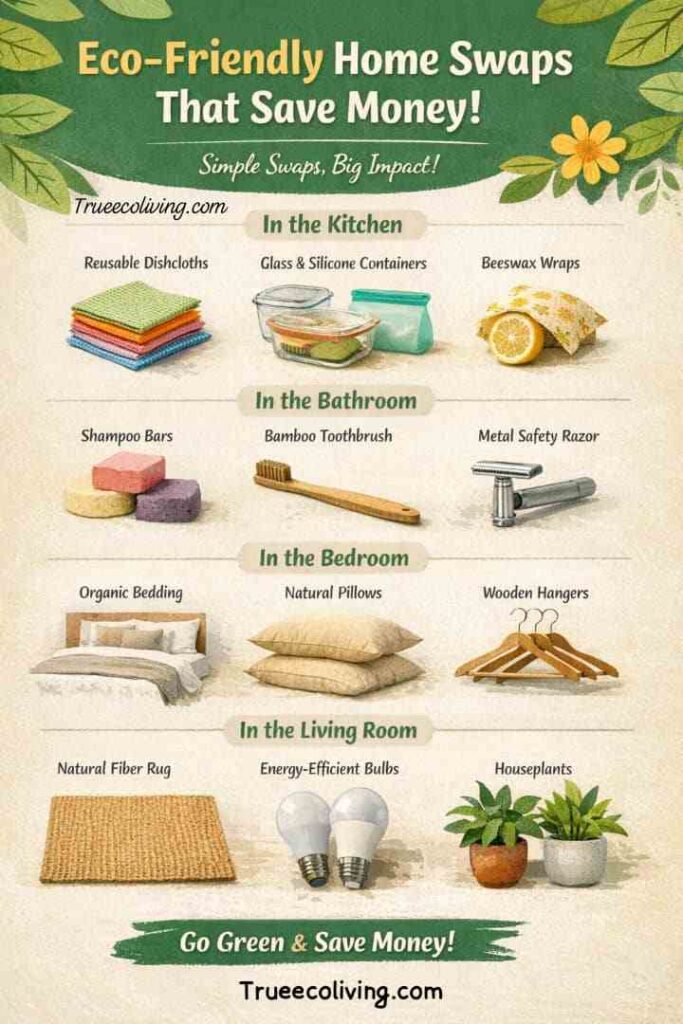
Tired of Trash? Try These 20 Plus Eco Friendly Home Swaps For Every Room That Actually Save Money
The Kitchen: Tackling the High Waste Hotspot
Honestly, the kitchen is where sustainability goes to die sometimes. It’s the hub of single use plastics, food waste, and “convenience” items that are actually just trash in disguise. But it’s also the room where our swaps have the most visible impact. If you change nothing else, start here.
1. The Paper Towel Intervention
Let’s talk about the elephant in the room: that roll of paper towels sitting by the sink. It’s so easy to reach for it. Spill some coffee? Rip. Wipe the counter? Rip. Dry your hands? Rip.
Did you know the average household goes through roughly 80 rolls of paper towels a year? That’s a lot of trees and a lot of money going straight into the landfill.
The Swap: Reusable Swedish Dishcloths, Cloth Towels, or “Unpaper” Towels.
Swedish dishcloths are my absolute favorite gateway swap. They look like a thin piece of cardboard when dry, but get them wet, and they turn into a super absorbent sponge that handles spills better than paper.
They last for months, can go in the dishwasher to sanitize, and when they finally wear out, they are compostable.
If you’re not ready to give up the “roll” format, get “unpaper towels” cloth towels that snap together on a cardboard tube. Keep a pretty basket under the sink for dirty ones, toss them in the wash, and you’re done.
Expert Tip: Keep a small stash of “pretty” cloth napkins for dinner. It instantly elevates your dining experience and makes you feel less like you’re camping.
2. Ditching the Plastic Shrink Wrap
I hate plastic cling wrap. It sticks to itself, never to the bowl, and it’s essentially a thin layer of fossil fuel that we use for three hours before throwing away.
The Swap: Beeswax Wraps or Silicone Bowl Covers.
Beeswax wraps are magical. They’re pieces of cotton infused with beeswax, jojoba oil, and tree resin.
The warmth of your hands makes them pliable so they mold to the top of a bowl, a cut avocado, or a hunk of cheese. They’re breathable, which keeps food fresher longer (no more soggy veggies!), and they smell like honey.
If you’re vegan, silicone bowl covers are a fantastic alternative. They stretch over any bowl or container and create a suction seal. Both options are reusable for years.
When beeswax wraps lose their stickiness, you can either compost them or refresh them by grating some beeswax over them and baking them in the oven for a few minutes.
3. The Great Container Overhaul
If I open your Tupperware cabinet, will I be met with an avalanche of mismatched plastic lids and stained margarine tubs? No judgment here, we’ve all been there. But plastic containers, especially when heated, can leach chemicals into our food. And they inevitably crack or warp.
The Swap: Glass Jars, Mason Jars, and Silicone Reusable Bags.
Go glass. Mason jars are the workhorses of the eco friendly kitchen. They store leftovers, act as drinking glasses, hold dry goods like pasta and rice, and even work as a salad shaker. They look beautiful and organized.
For bags, ditch the Ziplocs. Invest in a few Stasher bags (or similar silicone bags). Yes, the upfront cost stings a little, but they are indestructible. You can boil food in them, freeze them, toss them in the dishwasher, and they last for a decade. I use mine for everything from freezing berries to packing sandwiches for road trips.
4. Rethinking the Grocery Run
We all know we should bring reusable grocery bags, but how many times have you walked out of the store with ten plastic bags because you forgot them in the car?
The Swap: Reusable Mesh/Cotton Produce Bags and Sturdy Tote Bags.
The trick is system over memory. Keep a “stash” of reusable bags where you can’t forget them. For me, that means a few tote bags stuffed into the backseat of my car and a small pouch of mesh produce bags hanging by the front door.
Those flimsy plastic produce bags are one of the worst offenders. Mesh bags are breathable, which keeps your veggies crisp, and they are washable. If you buy loose produce like bananas or onions, you don’t even need a bag, just put them directly in the cart.
5. Scrubbing Without the Plastic
That bright yellow and green sponge? It’s plastic. And it sheds microplastics down your drain and eventually ends up in a landfill where it never decomposes.
The Swap: Natural Compostable Sponges and Wooden Brushes.
Look for sponges made from coconut coir (the husk of the coconut), loofahs (which are actually gourds, not sea creatures!), or cellulose. Pair these with a wooden dish brush with a replaceable head.
I love the wooden brush; it sits on my sink and looks rustic and chic, and when the bristles wear out, I just pop in a new head and compost the old one. They clean cast iron better than plastic, too.
Create an eco friendly home on a budget with 10 simple checklist ideas. Cut waste, save energy, lower bills and build greener habits without stress.
The Bathroom: The Plastic Packaging Prison
If you ever want to feel like you’re drowning in waste, just empty your bathroom trash can after a week. Shampoo bottles, conditioner bottles, body wash pumps, floss containers, razor heads, it’s a sea of plastic.
The bathroom is the perfect place to start swapping, because these are items we use daily, and the alternatives often look way nicer on the counter.
1. The Toothbrush Evolution
We’re told to change our toothbrush every three months. Multiply that by 8 billion people, and that’s a staggering pile of plastic handles that will outlive our grandchildren.
The Swap: Bamboo Toothbrushes.
Don’t worry, the bristles are still nylon (you need them to clean your teeth), but the handle is made of fast growing, biodegradable bamboo. When you’re done, you snap off the head (or pull out the bristles with pliers if you’re a hardcore composter) and toss the handle in your compost or garden waste.
They feel exactly like a normal toothbrush, and they come in cute biodegradable cardboard packaging.
2. Liquid Soap to Solid Bars
Walk down the shampoo aisle. It’s a wall of plastic bottles that are mostly filled with water and synthetic fragrances.
The Swap: Bar Soap, Shampoo Bars, and Conditioner Bars.
This is the swap that saves the most money. A good shampoo bar lasts as long as two or three bottles of liquid shampoo, takes up zero space, and doesn’t spill in your luggage. The same goes for body wash.
I know there’s a bit of a learning curve (some bars leave a residue depending on your water hardness), but the market has exploded. There are bars for curly hair, oily hair, dandruff, you name it. And bar soap for your hands? It’s often gentler on skin because it’s less stripping than liquid soap. Plus, they look lovely on a wooden soap dish.
3. The Razor Reformation
Disposable razors are designed to fail. The handle is cheap plastic, the blades go dull fast, and the rubber grips get gross.
The Swap: Metal Safety Razor.
This one feels intimidating, but I promise, it’s a game changer. A metal safety razor is a solid piece of stainless steel that will outlast you. It’s heavy, it’s beautiful, and it gives the closest shave of your life (because it uses a single, super sharp blade). The blades cost pennies, literally, and they are fully recyclable (you put them in a small metal tin and recycle them at your local scrapyard or using a mail back program). No more pink tax, no more plastic waste.
4. Ditching Disposable Cotton
Cotton rounds are convenient, but they are usually bleached and used once.
The Swap: Reusable Organic Cotton Rounds or Microfiber Pads.
These come in little bags, often with a mesh laundry bag. You use them to remove makeup, apply toner, or remove nail polish, then toss them in the bag, zip it up, and throw it in the washing machine. They come out clean, soft, and ready to go. I bought a set of 10 about three years ago, and I’m still using the same ones.
5. The Toilet Paper Upgrade and the Bidet
This is the big one. We flush trees down the toilet. Traditional toilet paper is made from virgin forests, wrapped in plastic.
The Swap: Bamboo or Recycled Toilet Paper plus a Bidet Attachment.
Bamboo toilet paper is a fantastic swap because bamboo grows up to three feet in a single day, requires no pesticides, and regenerates from its own roots.
But let’s talk about the bidet attachment. I know, I know, Americans are weird about bidets. But once you go bidet, you never go back. A simple $30 attachment that fits under your existing toilet seat reduces your toilet paper usage by 60 to 80 percent. You use a little TP to dry off, or you get cloth “family cloth” (if you’re ready for that level of commitment). It’s cleaner, it’s better for your plumbing, and it drastically cuts down on your paper waste.
READ ALSO: These 7 Zero Waste Bathroom Swaps Could Save You $125 in Two Months
The Bedroom: Sleeping Cleaner
We spend a third of our lives in bed. It makes sense to ensure that the environment we’re sleeping in isn’t off gassing toxic chemicals or made from petroleum. The bedroom is about textiles, air quality, and buying things that last.
1. The Mattress Makeover
Conventional mattresses are usually a “chemical soup” of polyurethane foam, flame retardants, and synthetic fabrics. Since you’re pressed up against this for 8 hours a night, it matters.
The Swap: Organic or Natural Fiber Mattress (Wool, Latex, Cotton).
This is a bigger investment, so it’s okay if this is a “someday” swap. But when it’s time to replace your mattress, look for GOTS (Global Organic Textile Standard) certified options. Natural latex (from rubber trees), organic wool (which is naturally flame retardant, no chemicals needed), and organic cotton create a breathable, non toxic sleep environment.
2. Sheets That Breathe
Microfiber sheets are cheap, but they are essentially woven plastic. They trap heat and shed microplastics in the wash.
The Swap: Organic Cotton, Linen, or Bamboo Bedding.
Linen is my personal favorite. It’s made from flax, which grows in poor soil with little water, and the fibers are incredibly strong and breathable. It gets softer with every wash and lasts for decades. Organic cotton is a classic for a reason, no pesticides used in the growing process. Bamboo viscose is silky soft, though do check the manufacturing process to ensure it’s closed loop to avoid chemical runoff.
3. Pillows with a Purpose
Synthetic pillows go flat, trap heat, and are often made from polyester fill.
The Swap: Buckwheat Hull, Wool, or Organic Cotton Pillows.
Buckwheat pillows sound intense, but they are amazing for neck pain. They are filled with the hulls of buckwheat seeds; they mold perfectly to your head and allow constant airflow (so you sleep cool). Wool pillows are temperature regulating and hypoallergenic. These natural fills last much longer than synthetic ones.
4. Hangers That Hold Up
You know those cheap plastic hangers that snap the moment you try to hang a winter coat? They’re a nightmare.
The Swap: Bamboo or Wooden Hangers.
This is a simple, aesthetic swap. Wooden hangers look like a high end boutique, they don’t crease your clothes (especially suits and dress shirts), and they last forever. Bamboo is a renewable resource that grows rapidly. It’s a small change that makes your closet look instantly more organized.
5. Clearing the Air Literally
Those plug in air fresheners that smell like “Mountain Spring” or “Linen Breeze”? They aren’t actually cleaning the air. They are releasing a constant stream of volatile organic compounds (VOCs) and phthalates, which are endocrine disruptors.
The Swap: Houseplants or Natural Essential Oil Diffusers.
Bring nature inside. Plants like snake plants, pothos, and peace lilies are natural air purifiers. They absorb carbon dioxide and release oxygen (some even do it at night!). If you want a scent, use a simple ultrasonic diffuser with 100% pure essential oils, or make a linen spray with water, a splash of vodka (as an emulsifier), and a few drops of lavender or eucalyptus. It smells better, and you’re not breathing in synthetic chemicals all night.
DISCOVER THE: 12 Eco-Friendly Swaps That Helped Me Save $452 in One Month
The Living Room: Style Meets Substance
The living room is where we relax and entertain. It’s often the room with the biggest furniture footprint. Here, we focus on durability, natural materials, and energy efficiency.
1. Rug Renewal
That fluffy synthetic rug? It’s likely made from nylon or polyester, essentially, plastic carpeting. It sheds microplastics when you vacuum and walk on it.
The Swap: Natural Fiber Rugs (Jute, Seagrass, Wool, or Sisal).
Jute and seagrass rugs are incredibly durable, look beautiful, and are fully biodegradable. They bring a wonderful texture to a room. Wool rugs are naturally stain resistant and flame retardant. They feel luxurious underfoot and last for generations if cared for properly.
2. Furniture: Fast Fashion vs Heirlooms
We’ve been conditioned to think furniture should be cheap and replaced often. But “fast furniture” from big box stores is often made from particle board (glued sawdust) and vinyl upholstery that falls apart in a few years.
The Swap: Reclaimed Wood, Thrifted, or FSC Certified Solid Wood Pieces.
The most sustainable piece of furniture is one that already exists. Thrifting, hitting estate sales, or buying secondhand on Facebook Marketplace saves pieces from the landfill and gives your home a unique, curated look. If you buy new, look for solid wood (not particle board), bamboo, or pieces upholstered in recycled fabrics or natural fibers.
3. Throws and Decor
Synthetic throws pill easily and look worn out after a few washes.
The Swap: Organic Cotton or Wool Throws, and Upcycled Decor.
Switch out your polyester throw blankets for cotton or wool. They regulate temperature better and look timeless. For decor, instead of buying plastic “filler” items from a chain store, look for ceramic, glass, or wooden items from local artisans or thrift stores. Woven baskets (seagrass or water hyacinth) are great for storage and look far nicer than plastic bins.
4. Lighting the Way
This is the easiest swap on the list with the biggest immediate impact on your carbon footprint and your electric bill.
The Swap: Energy Efficient LED Bulbs.
If you still have incandescent or halogen bulbs in any fixture, swap them for LEDs. They use about 75 percent less energy and last 25 times longer. Yes, they cost a bit more upfront, but they pay for themselves in utility savings within months. Plus, you aren’t climbing on a ladder every six months to change a bulb.
5. The Power of Plants Again
I mentioned plants in the bedroom, but they deserve a spot here too. Instead of plastic decor or disposable decorations, fill your living room with life.
The Swap: Houseplants and Natural Accents.
Create a living wall, a fiddle leaf fig in the corner, or a collection of succulents on the coffee table. Plants reduce stress, increase humidity (good for your skin and your wood furniture), and clean the air. Pair them with natural material pots (terracotta, ceramic, stone) instead of plastic pots. This brings a “biophilic” design into your home, which has been shown to improve mood and productivity.
READ ALSO: How to Make Eco-Friendly Lifestyle Changes Stick: An 8 Week Science-Backed Plan
Final Thoughts: You Do Not Have to Do It All Today
If you’re looking at this list and feeling a little overwhelmed, take a deep breath. I want you to remember something: We don’t need a handful of people doing zero waste perfectly. We need millions of people doing it imperfectly.
You do not have to throw away everything you own and replace it with a bamboo version today. That would actually be wasteful! The most sustainable item is the one you already have.
Here’s my challenge to you:
- Pick one room. Maybe it’s the kitchen.
- Pick one swap. Maybe it’s just the Swedish dishcloths.
- Try it for a month. See if it works for your lifestyle.
If it works, great! Pat yourself on the back. If it doesn’t, that’s okay too. Find the swap that does. The goal is to reduce plastic waste, lower your exposure to chemicals, and save a little money in the process.
These small, consistent changes add up. They send a message to manufacturers about what we value. They teach our kids about stewardship. And they make our homes healthier, happier places to be.
I’d love to hear from you! Which swap are you most excited to try? Have you already made the switch to a safety razor or shampoo bars? Drop a comment below and let me know how it’s going. If you’re looking for specific product recommendations or want to know how to tackle other rooms like the home office or laundry room, just ask, I’ve got plenty more where this came from!
Here’s to a cleaner home and a cleaner planet, one small swap at a time.
FAQs
The easiest place to start is usually the kitchen, especially with reusable Swedish dishcloths or cloth towels because they are simple, affordable, and immediately cut down on paper towel use.
Yes, many do. Items like shampoo bars, safety razors, reusable bags, and LED bulbs may cost more upfront, but they often last longer and reduce ongoing replacement costs.
The kitchen and bathroom usually create the most everyday waste because they contain a lot of disposable packaging, so they are great starting points for eco friendly changes.
Not always. Bamboo can be a good option, but it is best when the product is durable, responsibly made, and actually replaces a disposable item instead of creating more waste.
No. The most sustainable approach is to swap items slowly as they wear out or when you are ready to change them. Progress matters more than perfection.