
Why food choices matter
Food choices are one of the fastest ways to lower your personal footprint. Producing meat and dairy uses more land, water, and energy than most plant foods.
Shifting even a few meals a week toward plants cuts emissions and usually lowers your grocery bill. From my experience, the trick is not to go all-in overnight but to make small, repeatable swaps that fit your tastes and schedule.
This post is indepth, and it gives you a gentle, satisfying start with:
- Section A: 7-Day Plant-Forward Meal Plan (beginner friendly)
- Section B: Long-Term Plant-Forward Habits That Actually Stick
- Section C: Alternatives – Flexible Approaches to Sustainable Eating
- Budget-Friendly Plant-Based Grocery List
After going all through this, the I guarantee that your eco-friendly lifestyle changes as touching food, diet, plant based eating would be achieved, starting from today. Let’s start.
In a Nutshell
- Pick two meatless days this week: “Meatless Monday” is a proven habit starter.
- Buy seasonal and local where you can: it’s fresher and often cheaper.
- Favor whole foods (beans, oats, rice) over ultra-processed plant products.
- Cut food waste: plan meals, save leftovers, freeze extras.
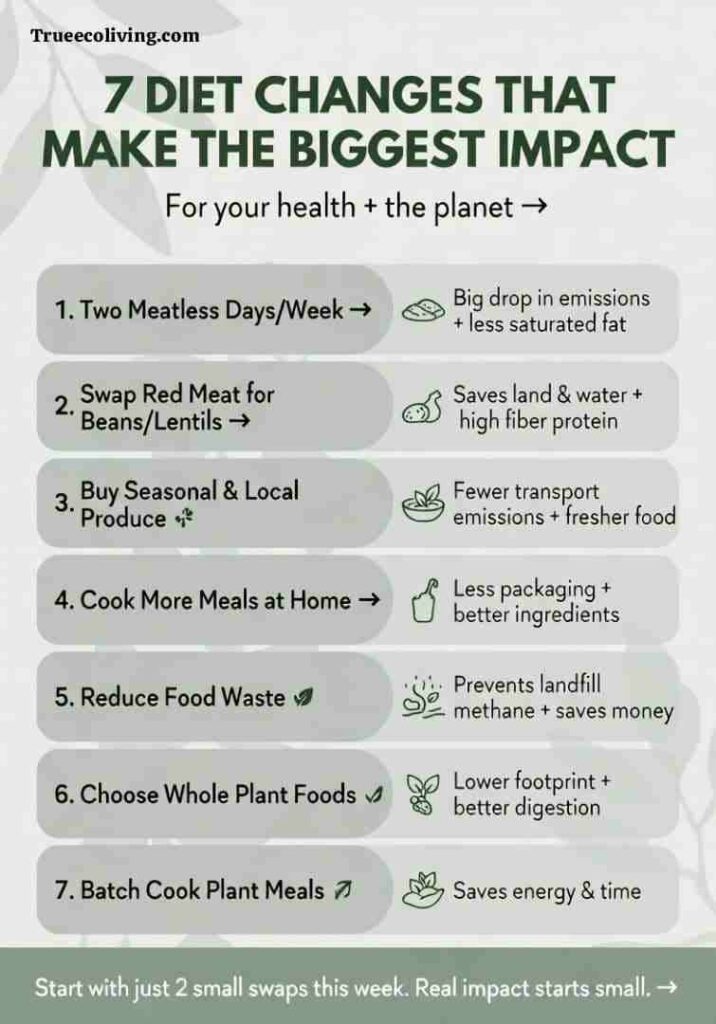
A Quick Roundup: Eco-Friendly Diet Changes That Make the Biggest Impact
| Diet Change | Difficulty Level | Environmental Benefit | Health Benefit | Simple Way to Start |
|---|---|---|---|---|
| Two Meatless Days Per Week | Easy | Reduces emissions linked to meat production | Lower saturated fat intake | Try “Meatless Monday” and one additional plant-based dinner |
| Replace Red Meat With Beans or Lentils | Easy | Beans require far fewer resources than beef | High fiber and plant protein | Swap beef in chili or tacos with lentils |
| Buy Seasonal and Local Produce | Easy | Reduces transportation emissions | Fresher and often more nutritious | Visit a local market or choose in-season vegetables |
| Cook More Meals at Home | Medium | Less packaging and food waste | More control over ingredients | Prepare simple meals like stir-fries or grain bowls |
| Reduce Food Waste | Easy | Prevents wasted food resources and landfill waste | Encourages mindful eating | Freeze leftovers and plan weekly meals |
| Choose Whole Plant Foods | Easy | Lower environmental footprint than highly processed foods | Better for digestion and energy | Choose oats, rice, beans, fruits, and vegetables |
| Batch Cook Plant-Based Meals | Medium | Saves energy and reduces frequent cooking | Saves time during busy days | Cook a large pot of lentil soup or bean chili |
Trueecoliving Tip:
If you’re just starting your eco friendly lifestyle changes diet plant-based journey, begin with two small swaps from this table this week. Once they feel easy, add another change.
A 7-Day Plant-Forward Starter Plan Checklist
🌿 Eco‑nourish checklist
🌱 Week starter goals
🥗 Daily food habits
♻️ Food waste reduction
🍳 Eco kitchen habits
Take Action: choose your commitment for the week
Write down one simple promise now: either “I will eat two meatless dinners this week” or “I will use leftovers for one meal.” Put the note on your fridge or phone. That small promise is your anchor for this plan.
How much money could your eco-friendly diet actually save you each month?
Most people are shocked by the number.
👇 Use the Simple Eco Savings Calculator below to find out in 10 seconds.
Section A: 7-Day Plant-Forward Meal Plan (beginner friendly)
This is a low-stress plan. Portions are one adult-sized serving: scale up for more people. Swap ingredients by season and local availability. Where I mention time, that’s active cooking time only.
Shopping list (basic pantry + fresh):
- Dry: rolled oats, rice, dried or canned beans (chickpeas, lentils), pasta, canned tomatoes, olive oil, soy sauce, peanut butter, basic spices (salt, pepper, chili flakes), flour (optional).
- Fridge/fresh: 1 head of lettuce or mixed greens, 1 bunch of herbs (parsley or cilantro), 3–4 seasonal vegetables (carrots, onions, bell pepper), 2 lemons, 4 bananas, apples or seasonal fruit.
- Extras: yogurt or plant yogurt, nuts or seeds, bread or wraps.
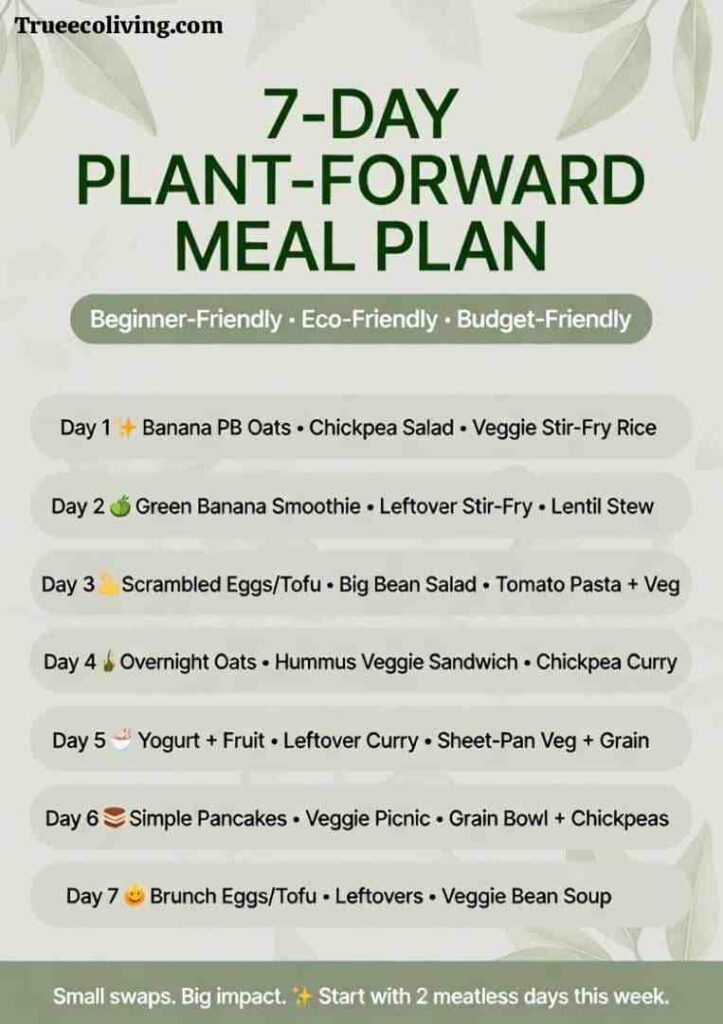
Day 1: Simple Breakfast, Chickpea Lunch, Veggie Dinner
- Breakfast: Oats with banana and a spoon of peanut butter (5 minutes).
- Lunch: Chickpea salad: canned chickpeas, diced cucumber/tomato, lemon, olive oil, salt (5–7 minutes).
- Dinner: Stir-fry rice with mixed veggies and soy sauce (20 minutes).
- Kid/student hack: make the chickpea salad in a jar to take to school or work.
Day 2: Smooth Start, Leftover Lunch, Hearty Lentil Stew
- Breakfast: Smoothie – banana, yogurt, handful of greens, water/milk (2 minutes).
- Lunch: Use leftover stir-fry over rice or in a wrap.
- Dinner: Lentil stew with canned tomatoes and carrots (30 minutes).
- Tip: Make extra lentils – they freeze or taste even better next day.
Day 3: Egg (or Tofu) Scramble, Salad Lunch, Pasta Night
- Breakfast: Scrambled eggs or tofu with herbs and toast (8–10 minutes).
- Lunch: Big mixed green salad with beans and vinaigrette.
- Dinner: Pasta with tomato-garlic sauce and roasted veg (25 minutes).
Day 4: Overnight Oats, Sandwich Lunch, Veggie Curry
- Breakfast: Overnight oats (prepared night before).
- Lunch: Hummus & roasted veg sandwich.
- Dinner: Quick curry with chickpeas, spinach, and coconut milk or yogurt (25 minutes).
Day 5: Fruit + Yogurt, Leftover Curry Lunch, Sheet-Pan Veggies + Grain
- Breakfast: Yogurt with fruit and seeds.
- • Lunch: Use leftover curry over rice.
- • Dinner: Roast seasonal veg on one tray, serve with quinoa or rice (30 minutes).
Day 6: Pancake or Flatbread Morning, Picnic Lunch, Stirred Grain Bowl
- Breakfast: Simple pancakes or flatbread (mix flour + water + oil).
- Lunch: Picnic style — bread, cheese or plant spread, veggies.
- Dinner: Warm bowl — cooked grain, roasted chickpeas, greens, tahini lemon drizzle (20 minutes).
Day 7: Treat Sunday: Brunch + Meal Prep for Next Week
- Breakfast: Brunch eggs/tofu, toast, fruit.
- Lunch: Leftovers or grain salad.
- Dinner: Simple soup made from any leftover veg and beans; stretch food and reduce waste.
- Prep: Chop extra veg and cook a pot of beans or rice to save time next week.
Trueecoliving cooking tip: 10-minute habit to build
After dinner each night, spend 10 minutes packing lunch for tomorrow or portioning leftovers into containers. Small routine, big waste savings.
Discover: 30 eco friendly lifestyle changes for families. Fun, practical habits kids will love that reduce waste, save energy, and make sustainable living easy.
Section B: Long-Term Plant-Forward Habits That Actually Stick
The 7-day starter plan is just the beginning. The real goal of eco friendly lifestyle changes through diet is to build habits that feel natural.
Haven worked with sustainable food systems for years, I’ve seen one thing consistently: people succeed when they simplify their routine.
Instead of trying to cook complicated recipes every day, create a small system in your kitchen that makes plant-forward eating easy.
Let’s walk through the simple framework.
1. Build a Sustainable Pantry
Think of your pantry as the foundation of quick meals. When these items are always available, you can cook a nutritious meal in under 20 minutes.
Core plant-forward staples
| Category | Staples to Keep |
|---|---|
| Protein | Lentils, chickpeas, black beans, tofu |
| Grains | Brown rice, quinoa, oats, whole-wheat pasta |
| Healthy fats | Olive oil, peanut butter, nuts, seeds |
| Flavor boosters | Garlic, onions, soy sauce, herbs, spices |
| Quick vegetables | Frozen spinach, frozen peas, canned tomatoes |
Why this is important: Plant proteins like lentils and beans generally require far less water and land compared to many animal proteins.
According to sustainability research often cited by organizations like Earth.Org, dietary shifts toward plant-based foods can significantly reduce food-related emissions.
The good news is: you don’t need to eliminate meat entirely to see a difference.
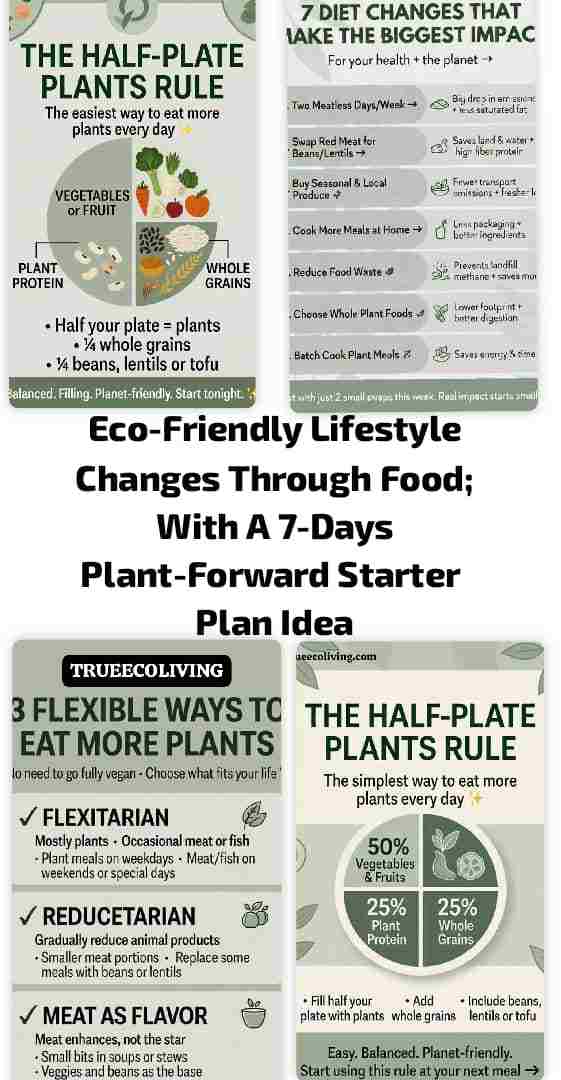
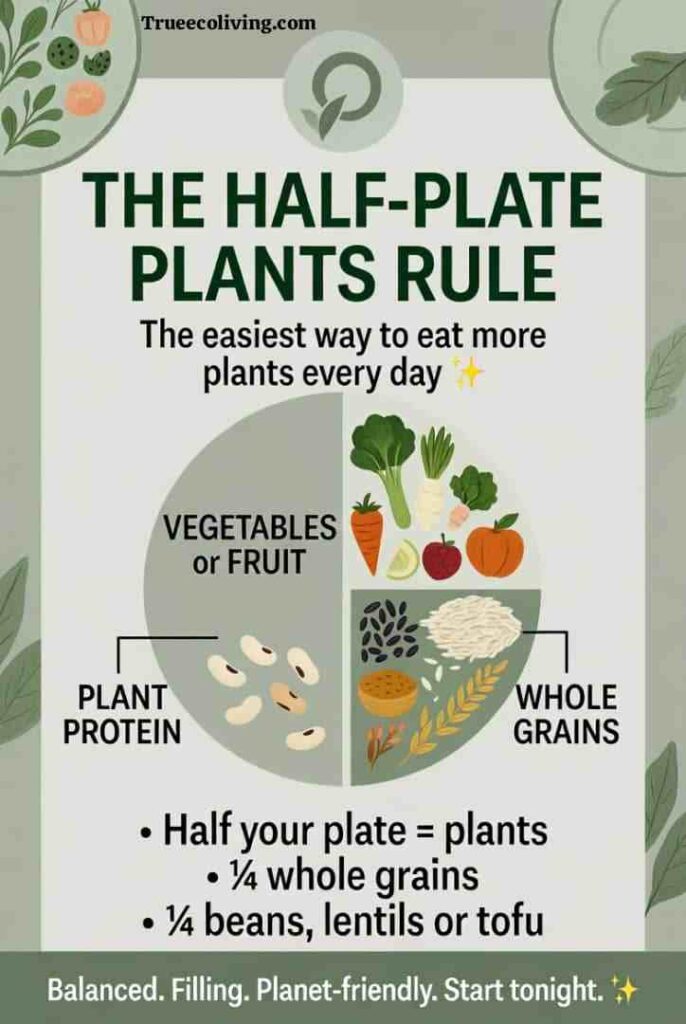
2. Use the Half-Plate Plants Rule
Here’s an easy visual guideline for you to understand this.
When you prepare your meal:
- Half the plate: vegetables or fruits
- One quarter: whole grains
- One quarter: plant protein (beans, tofu, lentils)
This structure automatically pushes your diet toward plants without strict restrictions.
Example dinner:
- Brown rice
- Lentil curry
- Roasted carrots and broccoli
Balanced, filling, and planet-friendly.
3. Make One Batch Meal Each Week
Busy schedules are the biggest barrier to sustainable diets. That’s why batch cooking works.
Spend 45–60 minutes once a week preparing one large plant-based dish such as:
- Lentil chili
- Vegetable soup
- Chickpea curry
- Bean burrito filling
Portion it into containers and refrigerate or freeze.
Benefits:
- Saves time during the week
- Reduces food waste
- Prevents impulse takeout orders
4. Learn 5 Core Recipes
You don’t need 50 recipes. Just learn five versatile plant-forward meals.
Here are excellent beginner options:
- Vegetable stir-fry with tofu
- Lentil soup
- Chickpea salad wrap
- Roasted vegetable grain bowl
- Tomato pasta with beans
Once you master these meals, you can rotate ingredients based on what’s available or seasonal. That’s how sustainable diets stay affordable.
5. Buy Seasonal and Local When Possible
Seasonal food often travels shorter distances and requires fewer resources to produce. Plus, it usually tastes better.
Examples:
- Spring: spinach, peas, strawberries
- Summer: tomatoes, zucchini, peppers
- Autumn: pumpkins, sweet potatoes, apples
- Winter: cabbage, carrots, potatoes
If local produce is unavailable, frozen vegetables are also a great option. They are picked at peak freshness and help reduce spoilage.
6. Reduce Food Waste at Home
Food waste is one of the hidden environmental problems in modern diets. Globally, large amounts of edible food are thrown away every year.
Here are simple habits that help:
1. Plan your meals before shopping: Write down what you’ll cook during the week.
2. Store food properly: Leafy greens last longer in sealed containers with a paper towel.
3. Freeze leftovers: Cooked grains, soups, and beans freeze well.
4. Turn leftovers into new meals: A creative kitchen dramatically reduces waste.
Example:
- Leftover roasted vegetables → wrap filling
- Leftover rice → fried rice
- Leftover beans → soup or salad topping
Eco Meal Planner and Food Waste Calculator, a simple tool that helps you plan a week of meals, build a shopping list, and estimate the food waste, money, and carbon you avoid by planning ahead.
Section C: Alternatives – Flexible Approaches to Sustainable Eating
Not everyone wants to adopt a fully plant-based diet. That’s completely fine. There are several flexible approaches that still support eco-friendly lifestyle changes.
1. The Flexitarian Diet
Flexitarian simply means mostly plant-based with occasional meat.
Typical pattern:
- Plant meals during the week
- Meat or fish occasionally on weekends
This approach is popular because it’s realistic and sustainable long-term.
2. The Reducetarian Approach
Reducetarian focuses on gradually reducing animal products.
Instead of removing meat entirely, you:
- Reduce portion size
- Replace some meals with plant proteins
Example:
- Old dinner: chicken + rice + vegetables
- New dinner: lentils + rice + vegetables (with smaller chicken portion)
Small adjustments add up over time.
3. The “Meat as Flavor” Method
This approach is common in many traditional cuisines. Instead of making meat the centerpiece, it becomes a flavor enhancer.
Examples:
- Small pieces of chicken in vegetable soup
- Bacon bits in a bean stew
- Shrimp mixed into vegetable stir-fry
You still enjoy familiar flavors while reducing overall environmental impact.
Budget-Friendly Plant-Based Grocery List
Eating sustainably doesn’t need to be expensive.
Here’s a simple weekly grocery list for plant-forward cooking.
Grains
- Oats
- Brown rice
- Whole-grain bread
- Pasta
Proteins
- Lentils
- Chickpeas
- Black beans
- Tofu
Vegetables
- Onions
- Carrots
- Spinach
- Bell peppers
- Broccoli
Fruits
- Bananas
- Apples
- Seasonal fruit
Extras
- Olive oil
- Peanut butter
- Garlic
- Herbs and spices
Most of these ingredients are inexpensive and extremely versatile.
Eco-Friendly Kitchen Habits That Multiply Your Impact
Food choices matter, but how we cook and store food also matters.
Here are simple habits with big environmental benefits.
1. Cook With the Lid On
Using lids when boiling or simmering reduces energy use.
2. Use Reusable Food Storage
Glass containers or silicone bags help reduce single-use plastic waste.
3. Drink Tap Water When Safe
Filtered tap water is often more sustainable than bottled water.
4. Compost Food Scraps
Vegetable peels and coffee grounds can become compost instead of landfill waste. Even small habits contribute to a greener kitchen.
Quick Recap: Your Simple Action Plan
Let’s summarize the easiest steps to start today.
- Try the 7-day plant-forward meal plan
- Keep a sustainable pantry stocked with beans and grains
- Cook one batch meal each week
- Follow the half-plate plants rule
- Reduce food waste by planning meals
You don’t need to be perfect.
Even small dietary shifts can support eco friendly lifestyle changes through diet.
Final Thoughts
Sustainable eating isn’t about strict rules or complicated recipes. It’s about simple, consistent choices that benefit both your health and the planet.
A plant-forward diet:
- Reduces environmental impact
- Saves money
- Encourages healthier eating habits
Start with one week. Try the meals, adjust them to your taste, and notice how easy plant-forward eating can be.
The goal isn’t perfection: it’s progress.