
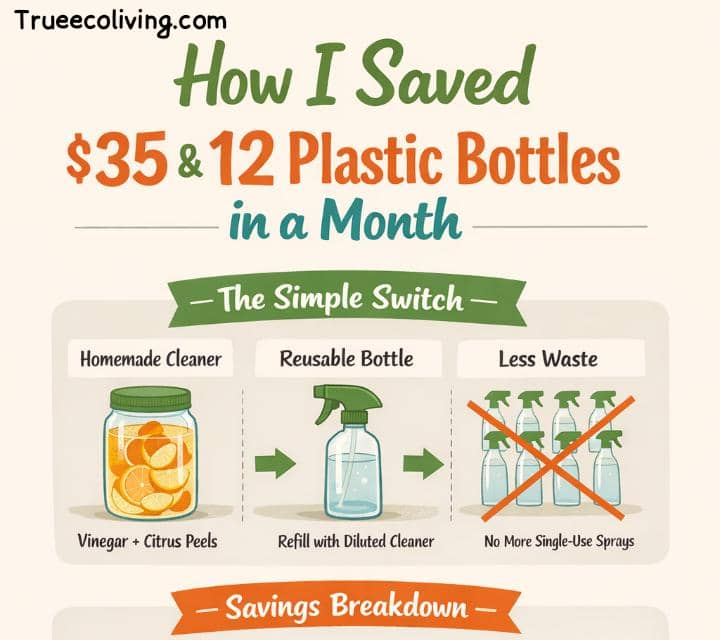
What if one simple habit could save you money, reduce plastic waste, and simplify your cleaning routine, all at the same time?
I know that sounds like a late night infomercial promise, but stick with me. I’m not selling anything here. I’m just someone who got tired of tripping over a cabinet full of half used spray bottles and watching my bank account drain one $4.99 purchase at a time.
Honestly, most of us grab a cleaner off the shelf without thinking about it. “Oh, I’m out of glass cleaner.” Toss it in the cart. “This countertop has a weird stain, better get the granite spray.” Toss it in the cart. We do this on autopilot, right?
One thing I’ve learned the hard way is that cleaning products are one of the easiest places to overspend without noticing. The marketing is brilliant. They’ve convinced us we need a different bottle of chemicals for every single surface in our house.
In this post, I’m going to show you how making one single batch of homemade cleaner could help you save $35, avoid tossing 12 plastic bottles into the recycling bin, and completely simplify your weekly cleaning routine.
Grab a cup of coffee, and let’s dive in.
Briefly
Before you scroll to the bottom, here is the gist of what changed:
- I stopped buying multiple single use cleaning sprays (you know, the ones under the sink that look like a rainbow). Read Later: 5 Things I Stopped Buying to Save Up $290 in a month.
- I switched to one simple homemade concentrate.
- I set up a refill system using reusable glass bottles.
- The result? I slashed my monthly cleaning budget and dramatically reduced my plastic waste.
Savings and Impact at a Glance
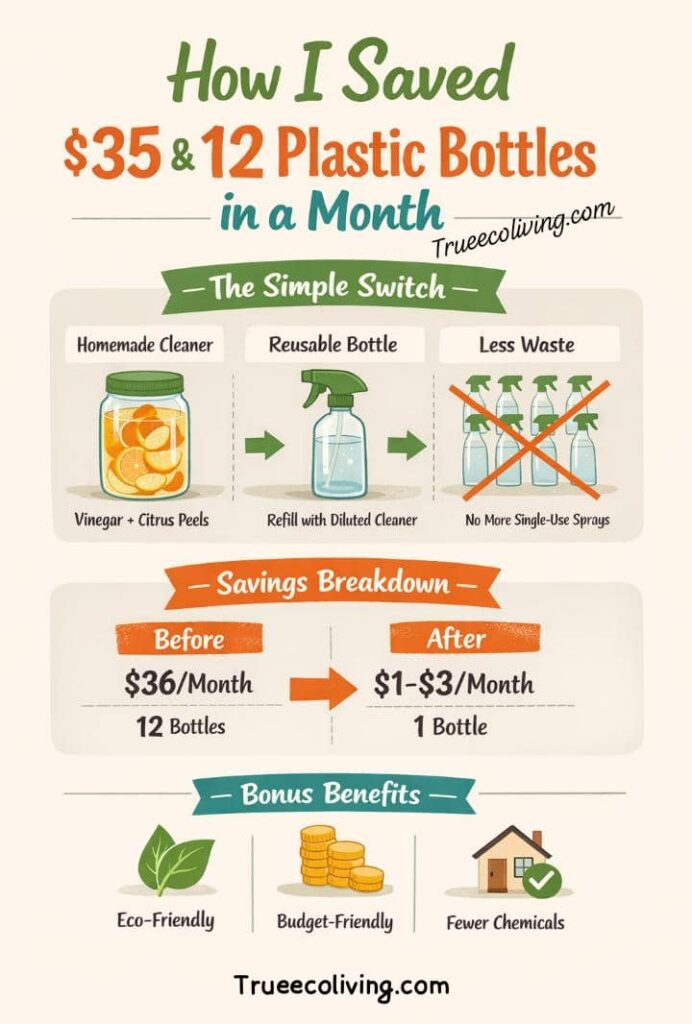
Let’s look at the cold, hard numbers. This is what my spending looked like before versus after.
Category Before After Monthly Impact
- Cleaning Products Multiple store bought sprays One homemade concentrate $35 saved
- Plastic Bottles ~12 disposable bottles 1 reusable bottle (kept) 12 bottles avoided
- Refill Cost Rebuying every week Pennies per batch Long term savings
Why Cleaning Products Are a Hidden Money Drain
Let’s do some quick math. Have you ever actually added up how much you spend on cleaners?
The average “specialty” cleaner, whether it’s for the bathroom, the kitchen, or the windows, costs between $3 and $6. Because they are “small” purchases, we don’t bat an eye. But we use them fast. We spray liberally because we think we have to.
From my own experience, I was buying 4 to 6 different cleaners without even realizing how often I replaced them. One for the glass stovetop, one for the stainless steel, one for the mirrors, one for the bathroom. It was exhausting.
Beyond the money, there’s the environmental angle. Every bottle we buy is a new piece of plastic that needs to be manufactured, shipped across the country, and then eventually, even if recycled, ends up adding to the waste stream.
When I looked under my sink and saw a graveyard of plastic, I knew I had to change.
What Changed Everything for Me
The shift wasn’t just about what I was cleaning with; it was about how I thought about cleaning.
I stopped thinking in terms of “buying cleaners” and started thinking in terms of building a reusable system.
The real takeaway here is that simplifying your system makes it easier to stay consistent. If you only have one or two tools to do the job, you don’t get decision fatigue. You just grab the bottle and go.
The Simple Cleaner Recipe I Use
Okay, let’s get to the fun part. This isn’t a chemistry experiment. This is the “I have five minutes and I’m tired of smelling bleach” recipe.
Basic All Purpose Concentrate
You don’t need fancy equipment. Here is what you need:
- White Vinegar: The workhorse of natural cleaning.
- Water: Distilled is best if you have hard water, but tap works fine.
- Citrus Peels (optional): I save lemon and orange peels in a bag in the freezer. They add a fresh scent and help cut grease.
- Essential Oil (optional): If you want a specific scent, 10 to 15 drops of tea tree, lavender, or lemon oil is great.
The Method:
- Fill a large mason jar or old jug with citrus peels.
- Pour white vinegar over the peels until they are fully submerged.
- Let that sit for about a week. (It smells like a fancy Italian market, not a pickle factory.)
- Strain out the peels. You now have a concentrate.
Why It Works
- Vinegar cuts grease and removes odors naturally.
- Citrus oils (from the peels) act as a solvent and degreaser.
- It’s safe for most hard surfaces (more on that in a minute).
Cost Breakdown
To make a gallon of concentrate, I spend about $1 to $3. A gallon of concentrate dilutes down to about four gallons of ready to use spray. Compare that to a $4 bottle of Windex that lasts a week. The math is unbeatable.
Discover the 15 best non toxic and eco friendly cleaning products, plus DIY recipes and expert tips to keep your home clean and safe.
How the Refill System Works
This is the secret sauce. If you just make the cleaner but keep buying new spray bottles, you’re missing half the benefit.
Step 1: Make the Concentrate
Mix a stronger solution once (the vinegar/peel mixture) and store it in a sealed jar in your cabinet.
Step 2: Dilute When Needed
I keep one 16oz glass spray bottle under my sink. When it’s empty, I fill it 1/4 with the concentrate and 3/4 with water.
Step 3: Reuse the Bottles
I have used the exact same two spray bottles for over a year now. No buying new ones. No dealing with crappy spray nozzles that break after three uses.
The Result:
Less clutter, zero repurchasing, and total control over what ingredients I’m breathing in while I clean.
Where I Use This Cleaner
You’re probably wondering, “Okay, but can it do everything?”
For the most part, yes. Here’s where it shines:
- Kitchen: Countertops, sinks, appliance surfaces (I do a spot test on stainless steel first, but it’s usually fine).
- Bathroom: Tiles, mirrors, sinks, and even the shower door (vinegar is great for hard water spots).
- General Surfaces: Tables, shelves, quick wipe downs.
Note: I do keep one separate, dedicated cleaner for my natural stone countertops (granite/marble), because vinegar can etch stone. It’s always good to know your surfaces!
The Math That Got Me to $35 and 12 Bottles
Let’s break down how I arrived at those numbers. This is where it gets eye opening.
Before (The Store Bought Days)
- Average cleaner: $3 each (conservative estimate).
- Usage: I was going through about 3 bottles a week. Think about it: one bathroom spray, one kitchen spray, and maybe a glass cleaner.
- 3 bottles x $3 = $9/week.
- $9 x 4 weeks = $36/month.
After (The Homemade System)
- Homemade cleaner cost: The ingredients (vinegar, water, occasional essential oil) cost me about $1 to $3 for the entire month.
- Reusable bottles: I already owned them (I reused an old glass kombucha bottle for the sprayer).
Simple Total:
- $36 minus $1 = $35 saved.
- 3 bottles/week x 4 weeks = 12 plastic bottles avoided.
Let me save you the trial and error here: repeated small purchases are where most of the waste and cost come from. We don’t feel it at the checkout, but we feel it at the end of the month when the credit card bill arrives.
Environmental Impact (Simple Numbers That Matter)
If the money isn’t enough to convince you, maybe the planet will be. When I realized I was tossing 144 plastic bottles a year into the landfill (just from cleaning supplies!), it made me feel physically ill.
Here is what switching saves:
- 144 plastic bottles avoided per year.
- Reduced chemical exposure in your home (no more mystery fumes).
- Lower production footprint: No transportation emissions from shipping heavy bottles of water (which is what most cleaners are anyway).
Read Also: Nine budget friendly plastic free kitchen swaps under 15 dollars to cut single use plastic fast and affordably.
What Actually Works If You Want Similar Results
I want you to succeed, so here is my advice based on what worked for me (and what almost derailed me).
- Start with one cleaner, not five. Don’t try to make a laundry detergent, a dishwasher pod, a bathroom spray, and a floor cleaner all in one weekend. You’ll get overwhelmed. Just start with the all purpose spray.
- Keep your system simple. If it’s easier to buy a spray bottle than to reuse an old one, buy one nice one. The goal is consistency.
- Store your concentrate properly. Keep it in a cool, dark place so the vinegar doesn’t degrade.
- Use what you already have first. Don’t throw away the half bottles under your sink. Use them up, then switch. Waste not, want not.
Common Mistakes to Avoid
I made these so you don’t have to:
- Overcomplicating recipes: You don’t need 17 ingredients. Vinegar + water + scent is fine.
- Not labeling bottles: Please, please label your bottles. Nothing ruins dinner like mistaking the cleaning spray for the cooking oil spray.
- Expecting instant perfection: It took me a week to get used to the smell of vinegar. Now, I associate it with “clean.”
Quick Action Plan
Ready to try it? Here is your 5 step plan for this week:
- Stop buying new cleaning sprays right now.
- Make one batch of the all purpose concentrate (grab a jar, fill with vinegar and peels).
- Find a spray bottle you already own. Wash it out.
- Dilute and use for one week.
- Track it. See how long that concentrate lasts. Calculate your savings after one month. (You may use our Eco Savings Calculator here).
Conclusion
The point I’m really trying to make is that simple swaps can create both financial and environmental impact.
I didn’t renovate my kitchen. I didn’t buy expensive glass containers or fancy starter kits. I just stopped buying plastic bottles filled with water and started using vinegar, citrus peels, and a reusable bottle.
One batch, one system, consistent use.
If you’re feeling the squeeze on your budget or looking to cut down on your waste this year, start small. Try one batch. See how quickly it adds up. I promise, your wallet, and your recycling bin, will thank you.
FAQs
Yes, for 90% of everyday cleaning tasks, grease, grime, dust, and surface dirt. For disinfecting (like after handling raw chicken), I sometimes use a separate peroxide spray or just hot soapy water.
Vinegar smells strong when wet, but the smell dissipates as soon as it dries (about 5 minutes). If you hate it, infusing with lemon peels or adding lavender essential oil makes a huge difference.
Generally, yes for sealed surfaces. Avoid it on natural stone (marble, granite, limestone) and unfinished wood, as the acid can etch or dull them.
You’ll notice the savings in the first month because you won’t be buying refills. If you usually spend $30 to $40 a month on cleaning supplies, you’ll have that cash back in your pocket immediately.