
Honestly, laundry looks harmless. It is just clothes, water, and soap, right?
It feels like one of those mundane chores that barely registers on the radar of our environmental impact. We toss a load in, press a button, and an hour later, everything smells like “mountain breeze” and feels warm from the dryer. Simple. Harmless.
But what most people do not realize is this. Laundry is one of the biggest hidden sources of waste, energy use, and unnecessary spending in the average home.
Think about it for a moment. Every single week, we run machines that consume massive amounts of water and electricity. We buy products packaged in plastic that will outlive our grandchildren.
We send microplastics down the drain and into our waterways. We throw away single-use sheets and bottles without a second thought.
From single use dryer sheets to microplastics from synthetic fabrics, to the electricity used for hot washes and dryers, it all adds up faster than you think. It’s a silent, cumulative drain on your wallet and the planet.
One thing I have learned in my journey of eco-living is; you do not need to overhaul your entire lifestyle to make a difference. You don’t need to build a solar-powered washing machine or start making soap from wood ash in your backyard.
Small laundry changes can quietly save you money, reduce waste, and make your home more eco friendly without stress.
This isn’t about perfection. It’s about progress. Think of this guide as your simple, practical reset. A collection of small pivots that, when combined, transform a wasteful chore into a sustainable routine.
In a Nutshell
- Wash clothes less often to save water and energy
- Switch to cold water washing for most loads
- Use eco friendly detergents or make your own
- Skip dryer sheets and use reusable alternatives
- Air dry clothes whenever possible
- Choose better fabrics that last longer
But let’s dig deeper. Because understanding why each step matters is what turns a tip into a lasting habit.
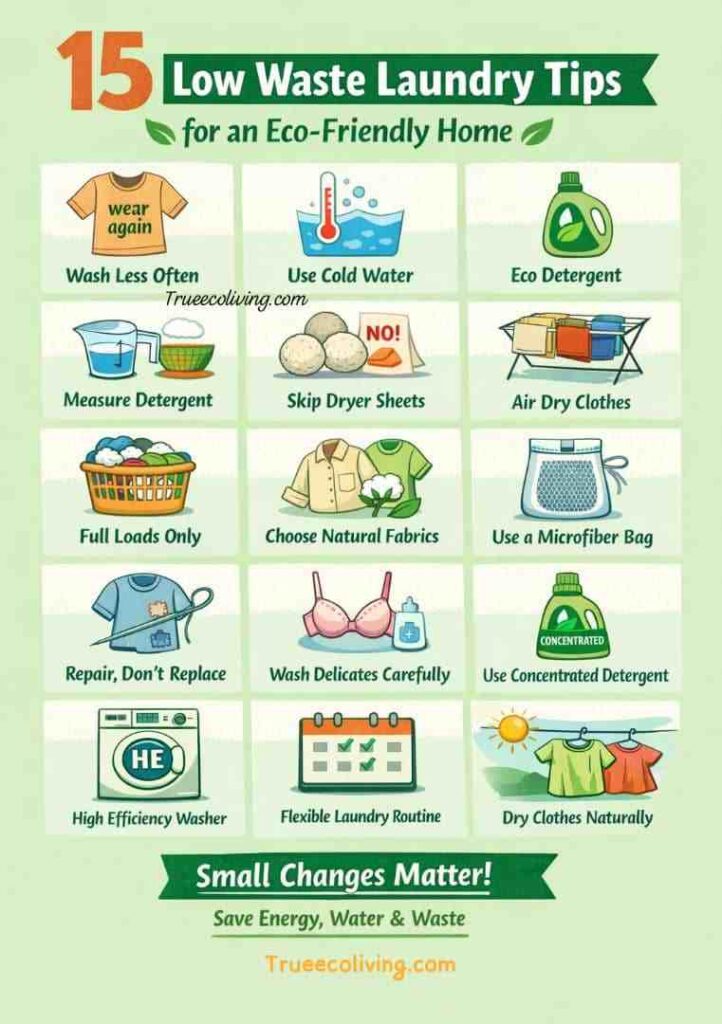
Round Table showing The 15 Low Waste Laundry Tips for an Eco-Friendly Home Environment
| Tip | Difficulty | Cost | Impact | Why It Works |
|---|---|---|---|---|
| Wash Less Often | Easy | Free | High | Cuts water, energy, and wear on clothes |
| Use Cold Water | Easy | Free | High | Reduces energy used for heating water |
| Eco Friendly Detergent | Easy | Low | Medium | Lowers chemical pollution and plastic waste |
| Measure Detergent | Easy | Free | Medium | Prevents waste and cleans more efficiently |
| Skip Dryer Sheets | Easy | Low | Medium | Removes single use waste from laundry |
| Air Dry Clothes | Easy | Free | High | Saves electricity and helps clothes last longer |
| Full Loads Only | Easy | Free | High | Makes each wash cycle more efficient |
| Choose Natural Fabrics | Medium | Medium | High | Helps reduce microplastic pollution |
| Use a Microfiber Bag | Easy | Low | High | Catches fibers before they enter water systems |
| Repair, Do Not Replace | Medium | Low | High | Extends clothing life and cuts waste |
| Wash Delicates Carefully | Easy | Free | Medium | Prevents damage and unnecessary rewashing |
| Use Concentrated Detergent | Easy | Low | Medium | Reduces packaging and lasts longer |
| Use a High Efficiency Washer | Hard | High | High | Uses less water and energy over time |
| Flexible Laundry Routine | Easy | Free | Medium | Helps avoid unnecessary loads |
| Dry Clothes Naturally | Easy | Free | High | Saves energy and supports low waste habits |
Why Laundry Matters More Than You Think
Here is the thing most people miss.
Laundry is not just about cleaning clothes. It is about water, energy, chemicals, and materials all working together in a system that, for most households, is leaking resources at every turn.
Every load you run can involve:
- Dozens of liters of water (often up to 50-100 liters per load)
- Electricity for heating and spinning (a clothes dryer alone can account for up to 6% of a home’s total electricity use)
- Chemical detergents entering waterways, some of which contain phosphates and synthetic fragrances that harm aquatic life
- Microfibers shedding into the environment, with a single synthetic fleece jacket releasing hundreds of thousands of fibers in one wash
The good news?
You are in control of almost all of this. You don’t need to wait for a better washing machine or a greener detergent to be invented. The tools are already in your hands.
What I do instead is focus on small habits that stack up over time. And that is exactly what you are about to learn.
READ LATER: 10 Budget Friendly Ways to Create an Eco Friendly Environment at Home: Create an eco friendly home on a budget with 10 simple checklist ideas. Cut waste, save energy, lower bills and build greener habits without stress.
15 Low Waste Laundry Tips That Actually Work
1. Wash Only When Necessary
This is the easiest win.
Not every piece of clothing needs washing after one wear. Jeans, jackets, and even some shirts can be worn multiple times. In fact, over-washing is one of the fastest ways to degrade fabric fibers, causing clothes to pill, fade, and wear out prematurely.
The real takeaway here is simple. Less washing means less water, less detergent, and less wear on your clothes. Try the “sniff test” or simply hang items back up after wearing to let them air out.
2. Switch to Cold Water Washing
Hot water uses a lot of energy. In fact, up to 90% of the energy consumed by a washing machine goes toward heating the water.
Cold water works perfectly for most clothes today because modern detergents are designed for it. Unless you are dealing with oily stains or sanitizing heavily soiled items (like cloth diapers), cold water is not only sufficient, it’s preferable for preserving colors and fabric integrity.
From my experience, this single change alone can noticeably reduce your electricity bill over time.
3. Use Eco Friendly or DIY Detergent
Many regular detergents contain harsh chemicals like optical brighteners, synthetic fragrances, and preservatives that can irritate skin and harm aquatic ecosystems. They also almost always come in single-use plastic jugs.
Better options include:
- Plant based detergents in cardboard packaging
- Concentrated formulas that require less packaging
- Homemade detergent using simple ingredients like washing soda, borax, and castile soap
What actually works is this. You do not need fancy products. You just need something effective and less wasteful.
4. Measure Your Detergent Properly
Most people use too much detergent without realizing it.
We are conditioned by marketing to think “more soap equals cleaner clothes,” but the opposite is often true. Excess detergent creates suds that trap dirt and redeposit it on fabrics.
It also leaves residue that can trap bacteria and odors, leading to a vicious cycle of re-washing.
One thing I always tell people is this. Follow the recommended amount or even use slightly less. Your clothes and wallet will thank you.
5. Skip Dryer Sheets Completely
Dryer sheets are the epitome of single-use waste. They are used once, coated in synthetic fragrances and softening agents, and then thrown in the trash.
They also coat your dryer’s lint filter with a waxy film over time, reducing efficiency and even posing a fire hazard.
A better option?
- Wool dryer balls – they bounce around, separating clothes to allow hot air to circulate more efficiently, which can actually reduce drying time by 10-25%. They also naturally soften fabrics and reduce static.
- Reusable fabric softener alternatives – some people even use a simple vinegar rinse in the wash cycle for natural softness.
Wool dryer balls last for months or even years and reduce waste significantly.
Reduce your home energy use with 10 practical eco friendly tips that lower bills, cut waste, and create a more sustainable, planet friendly home environment.
6. Air Dry Whenever You Can
Dryers consume a lot of energy. They are one of the most energy-intensive appliances in a home.
Air drying is one of the simplest ways to cut that down. It requires zero energy, extends the life of your clothes, and often leaves them smelling fresh.
You can:
- Use a drying rack indoors (perfect for winter or humid climates)
- Hang clothes on a balcony or window area
- Use hangers to dry shirts neatly, which also reduces the need for ironing
Here is the simple truth. Air drying is free, gentle on clothes, and completely waste free.
7. Wash Full Loads Only
Running half loads wastes water and energy. A washing machine uses roughly the same amount of water and electricity for a small load as it does for a full load.
If you wait until you have a full load, you get more value from each cycle. Think of it like this. One full load is always better than two half loads.
8. Choose Durable, Natural Fabrics
Synthetic fabrics like polyester, nylon, and acrylic release microplastics during washing. These tiny plastic fibers are too small to be filtered out by wastewater treatment plants and often end up in rivers, oceans, and even the food chain.
Natural fabrics like cotton, linen, hemp, and wool are better choices. They biodegrade, don’t shed plastic, and often breathe better, meaning you might need to wash them less frequently.
From experience, I see clothes that last longer reduce both waste and the need for frequent washing.
9. Use a Microfiber Filter or Bag
If you already own synthetic clothes, do not worry. You don’t have to throw them away.
You can reduce microplastic pollution by using:
- Laundry bags designed to catch fibers (like a Guppyfriend bag): you place synthetic items inside the bag, which traps the microfibers during the wash.
- External washing machine filters: these attach to the discharge hose and filter microplastics from the wastewater before it leaves your home.
This is one of those small changes that has a big environmental impact.
10. Repair Instead of Replacing
A loose button, a small tear, or a hem that has come undone does not mean the end of a garment.
Learning basic repairs, even just sewing on a button or mending a seam—can extend the life of your clothes by years. The most sustainable garment is the one you already own.
One thing I wish I had known sooner is this. Repairing clothes saves more money than constantly replacing them, and it builds a sense of connection to what you own.
10 Sustainable Gardening Tips to Build an Eco Friendly Home Environment
11. Avoid Overwashing Delicate Items
Delicate fabrics like silk, wool, and lace wear out faster with frequent washing. The agitation of the machine, even on a gentle cycle, causes friction that weakens fibers over time.
Instead:
- Spot clean small stains with a damp cloth and mild soap
- Air out clothes between wears by hanging them in a well-ventilated space
This reduces waste, keeps your clothes in better condition, and saves you the hassle of constantly replacing delicate items.
12. Use a High Efficiency Washing Machine (If Possible)
If you ever upgrade your machine, go for a high efficiency model.
They use:
- Less water (some use as little as 7-11 liters per load compared to 50+ liters for older models)
- Less energy (thanks to better motor technology and faster spin cycles that remove more water upfront)
- Less detergent (because they are designed to use high-efficiency, low-suds formulas)
Of course, this is not something you need to rush into. But it is a good long term move when your current machine reaches the end of its life.
13. Choose Concentrated Products
Concentrated detergents use less packaging and last longer.
A small bottle of concentrated detergent can often clean as many loads as a large, watered-down jug. This means:
- Fewer plastic bottles in the recycling bin
- Less storage space in your laundry room
- Better value for money over time
Here is the thing. Smaller bottles can actually do more.
14. Rethink Your Laundry Routine
Do you have a fixed laundry day? Do you automatically wash every piece of clothing on Sunday regardless of whether it was worn?
Instead of washing everything weekly, try adjusting based on actual need. If a shirt was only worn for a few hours and isn’t stained, hang it back up. If a towel was used after a clean shower, it can likely be used again.
In my view, flexible routines lead to less waste and more mindful habits.
Read also: Eco-Friendly Lifestyle Changes for City Renters and Small-Space Living
15. Make Laundry a Habit You Optimize
Laundry is not something you fix once. It is something you improve over time.
Start small.
Maybe today you switch to cold water. Next week you add a drying rack. Then later you try eco detergent. A month from now, you might invest in wool dryer balls or a microfiber filter.
The point I am really trying to make is this. Progress beats perfection every single time.
Practical Tips to Make It Stick
Let me save you the trial and error.
Here are a few simple ways to actually stick with these changes:
· Keep your drying rack visible so you remember to use it. If it’s folded in a closet, you’ll default to the dryer.
· Store detergent near the machine with a marked measuring cup to avoid overpouring.
· Set a reminder to check if a load is really necessary before running it.
· Group similar clothes to avoid unnecessary extra washes (e.g., towels and jeans can handle a heavier cycle; delicates need their own).
Small systems make a big difference.
Common Mistakes to Avoid
Even with good intentions, some habits can still waste resources.
Watch out for these:
- Using too much detergent: it’s wasteful, ineffective, and can damage your machine over time.
- Washing clothes that are not dirty: if it doesn’t smell and doesn’t have a stain, it probably doesn’t need a wash.
- Overloading the machine: clothes need room to move to get clean. Overloading can result in poor cleaning and extra wear on fabrics.
- Relying too much on the dryer:# even if you air dry half your loads, you cut your energy use in half.
Fixing just one of these can already improve your routine.
A Simple Weekly Low Waste Laundry Plan
If you are wondering how this all fits together, try this:
- Choose 1 or 2 laundry days per week (to consolidate loads)
- Wash only full loads
- Use cold water
- Air dry most items
- Use reusable alternatives like wool dryer balls instead of disposables
That is it. Simple, realistic, and effective.
READ ALSO: These 7 Zero Waste Bathroom Swaps Could Save You $125 in Two Months
Concluding Thought
Laundry does not need to be complicated or expensive to be eco friendly.
What it really comes down to is awareness and small changes. The laundry room is one of the few places in your home where you can simultaneously reduce your carbon footprint, cut your utility bills, and minimize plastic waste without sacrificing convenience.
Start with one or two tips from this list. Stick with them. Then build from there.
From my own experience, this is what actually happens. You begin to notice lower bills, less clutter, and a home that feels more intentional. You start to see your clothes as investments to be cared for, not commodities to be cycled through a machine.
And the best part? You are helping the environment without making your life harder.
Frequently Asked Questions
Yes. Modern detergents are designed to work well in cold water and are effective for most everyday laundry. For items with heavy oil or grease stains, a warm or hot pre-treatment may be needed, but cold water handles the vast majority of loads.
Yes. Just make sure the space is well ventilated to avoid moisture buildup. If you dry clothes indoors regularly, consider cracking a window or using a dehumidifier to prevent mold and mildew.
They are. They reduce chemical exposure, are better for the environment, and often come in plastic-free packaging. Many perform just as well as conventional brands, sometimes with a minimal price difference that is offset by using less product per load.
It depends on use. Many items can be worn multiple times before washing unless visibly dirty or sweaty. Underwear, socks, and workout gear generally need washing after every use. Jeans, sweaters, and outerwear can go much longer.
Switching to cold water and washing full loads are the simplest and most effective first steps. They require no new products and pay off immediately in energy and water savings.