

This two hour weekend plan is designed to give you a real, visible win before Monday arrives. It is simple, practical, and low cost.
Do it once, record the numbers, and you are likely to see a drop on next month’s electricity and water bills, plus less food waste.
What I like about this plan is it focuses on easy actions you can complete with basic tools and ordinary products. I believe so much that; small, visible wins create momentum and make it far easier to keep improving.
In a nutshell
- Time needed: about two hours in total
- Main targets: lighting, phantom power, water flow, fridge efficiency and food waste
- Tools and basic items: notepad, screwdriver, adjustable wrench, two to three LED bulbs, two aerators, a power strip, a shower timer or phone
- Goal: create measurable savings on next month’s bills and start a habit of tracking
Why this plan works
This plan targets the common and easily overlooked sources of household waste. Efficient lighting reduces electricity consumption immediately. Cutting phantom power from chargers and entertainment gear reduces standby draw.
Aerators and shorter showers reduce water and the energy used to heat it. A quick fridge tune up keeps food fresher and reduces waste, while a focused food audit stops avoidable grocery spending.
The final step is record keeping, because measurement is what turns action into results.
What you will need
- Notepad or phone for notes and a visible sticky note
- Recent electricity and water bills, if available
- Screwdriver set and adjustable wrench
- Two to three LED bulbs that match your fittings
- Two faucet aerators for kitchen and bathroom taps
- A surge protected power strip with an easy on off switch
- Shower timer or phone stopwatch
- Optional: a simple plug in energy monitor or smart plug for tracking
- Eco Savings Calculator – To get accurate result of what you may likely save every month.
If you follow the 9 Sustainable Living Practices Below, Here’s Your Expected savings next month: My realistic <=> $80 example
Small focused actions can add up quickly over a single month. The example below shows how a household can reach about $80 in savings next month using the simple changes in this guide. Use the Eco Savings Calculator with your own bills to get a tailored estimate.
Assumptions
- Electricity price: $0.12 per kWh
- Water price: $3.00 per cubic metre (1000 L)
- LED example: replacing 60 W with 10 W, bulbs on 5 hours per day
- Shower cut: 2 minutes saved per shower, flow 8 L per minute, two showers per day in the household
- Fridge baseline: 40 kWh per month; tune up saves about 15 percent in this example
- Grocery baseline: household $400 per month; food waste reduced by about 15 percent
How the $80 adds up
- LED swap: three frequently used bulbs replaced: $2.70
- Phantom power reduction using switched power strips: $2.71
- Shorter showers: 2 minutes less per shower: water and heating saved ≈ $7.50
- Fridge tune up: about 15 percent less energy use: $1.70
- Faucet aerators and fixing minor drips: $4.00
- Food audit and meal planning: reducing grocery waste by 15 percent: $60.00
- Laundry and small habit changes such as full loads and cold wash: $3.40
Estimated next month saving: about $80
The key point is that the largest savings often come from reducing food waste and energy used to heat water. When these are combined with smaller improvements like LED lighting and standby power reduction, the monthly savings can grow quickly.
Enter your local electricity, water, and grocery figures into the Eco Savings Calculator to see a more precise estimate and identify the changes that will produce the biggest savings in your home.
Step by step: 9sustainable living actions to complete this weekend
1. Prep and set a clear goal, 10 minutes
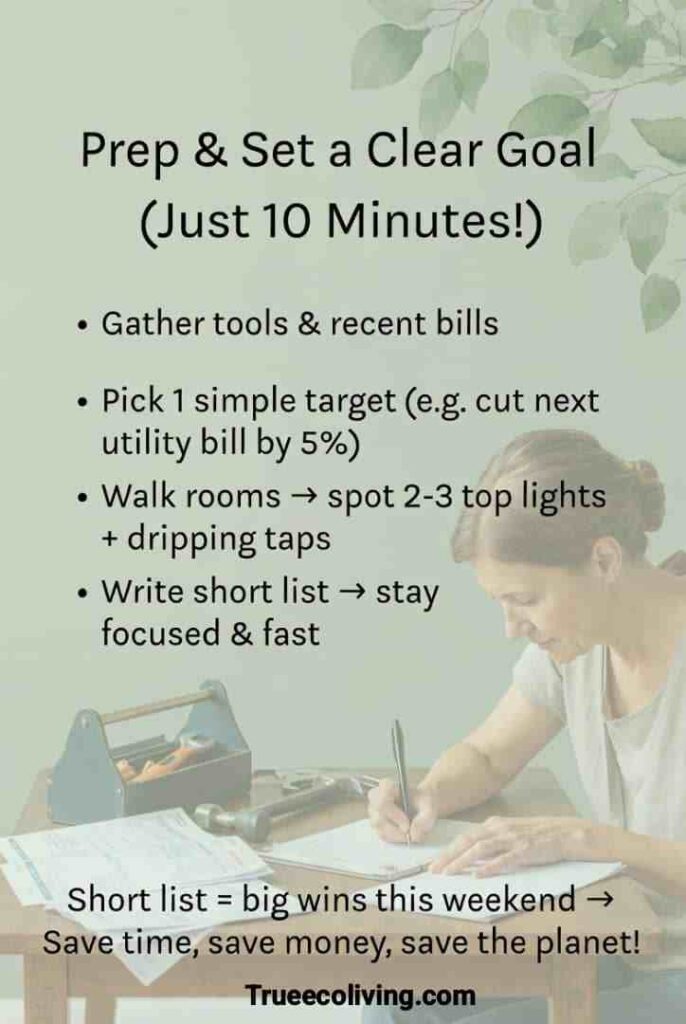
Start by gathering your tools and bills, and choose a simple target such as reduce your next month utility spend by 5 percent. Walk through the main living areas and note the two to three light fittings you use most, and any taps that drip.
Write these down. Having a short list keeps the rest of the weekend fast and focused and prevents you from getting sidetracked.
2. Swap two to three bulbs to LED, 20 minutes
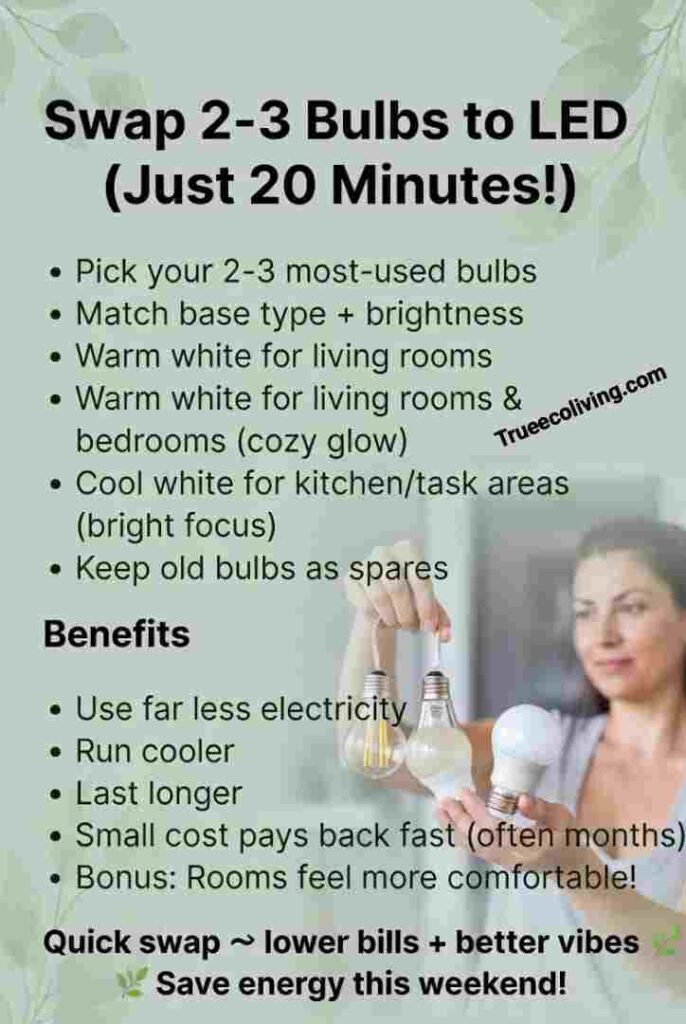
Replace the two or three bulbs you use most with LED replacements of the same base type and equivalent brightness. Pick warm white for living areas and bedrooms and cool white for task areas such as the kitchen.
LEDs use far less electricity, run cooler and last longer. Keep the old bulbs as spares. Typical sale prices vary but the small upfront cost often repays in a few months when bulbs are on for several hours each day.
One thing I know from doing this myself is that the lighting change also improves how comfortable a room feels.
3. Fit faucet aerators and stop leaks, 20 minutes

Screw on aerators to the kitchen and bathroom taps and test the flow. Aerators reduce volume but keep the feel of pressure by mixing air into the stream. While you are there, tighten or replace worn washers on any dripping tap.
Even a small drip adds up to litres of water a week. Aerators are inexpensive and the payback is quick because you save water and the energy used to heat hot water.
Read also: The Ultimate Guide to Creating an Eco-Friendly Environment at Home in 2026
4. Phantom power sweep with a visible power strip, 10 minutes

Collect chargers and entertainment gear and plug them into a single surge protected power strip with a prominent on off switch. Place the strip where you will actually use the switch, such as beside the TV or on a counter.
Switching the strip off at night or when the devices are not in use stops standby power draw from many devices. This is a tiny habit that creates instant savings the day you start it.
5. Shower check and timer routine, 20 minutes

If you have a low flow showerhead fit it now. If not, set a phone timer and practice an eight minute shower routine. Note how many showers your household takes each day, because that helps you estimate total litres and energy saved.
Trimming a couple of minutes off each shower reduces both water and the energy needed to heat that water. In my view, committing to a shorter shower routine is one of the simplest energy wins you can make.
6. Quick food audit and meal plan, 30 minutes
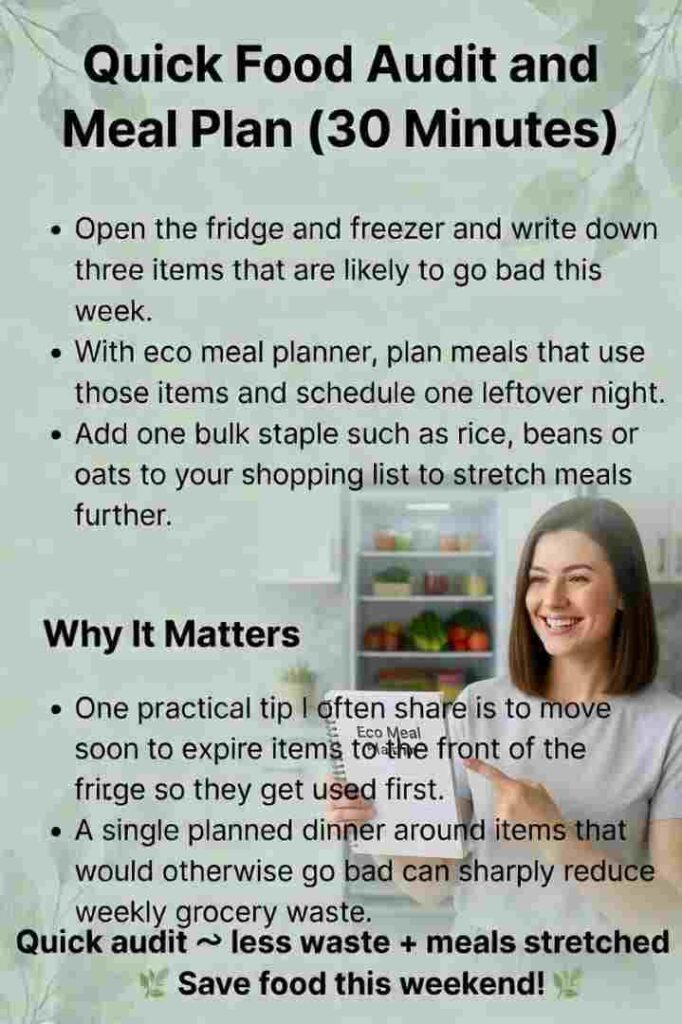
Open the fridge and freezer and write down three items that are likely to go bad this week. With eco meal planner, plan meals that use those items and schedule one leftover night. Add one bulk staple such as rice, beans or oats to your shopping list to stretch meals further.
One practical tip I often share is to move soon to expire items to the front of the fridge so they get used first. A single planned dinner around items that would otherwise go bad can sharply reduce weekly grocery waste.
7. Record initial numbers and make them visible, 10 minutes
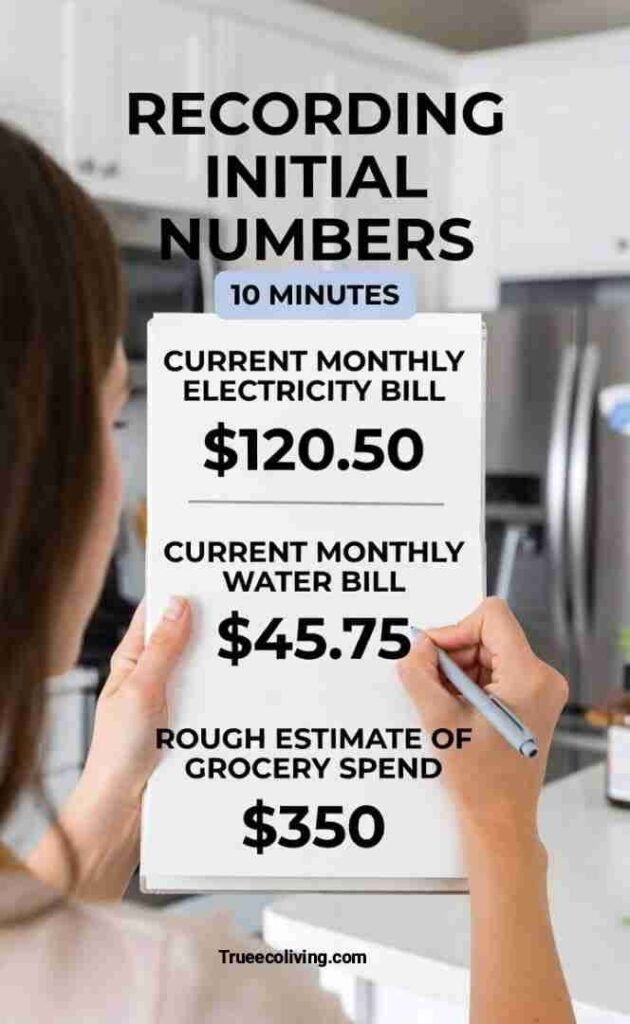
Write down your current monthly electricity and water bill amounts, and a rough grocery spend estimate. Put this note on the fridge or save the numbers in your phone where you will see them.
Measurement creates accountability and gives you a clear benchmark to check next month. Even a small percentage drop feels motivating and helps sustain the new habits.
8. Fridge and freezer tune up, 15 minutes

Check fridge temperature and door seals. Aim for about three to five degrees Celsius for the fridge and minus eighteen degrees Celsius for the freezer where your model allows.
Clean door seals and use the dollar bill test: the bill should not slide out easily when the door is closed. Defrost small frost build up and reorganise items so cold air can circulate.
A properly tuned fridge runs less often and keeps food fresher, reducing waste and energy use.
9. Set up a simple monitoring habit, 10 minutes
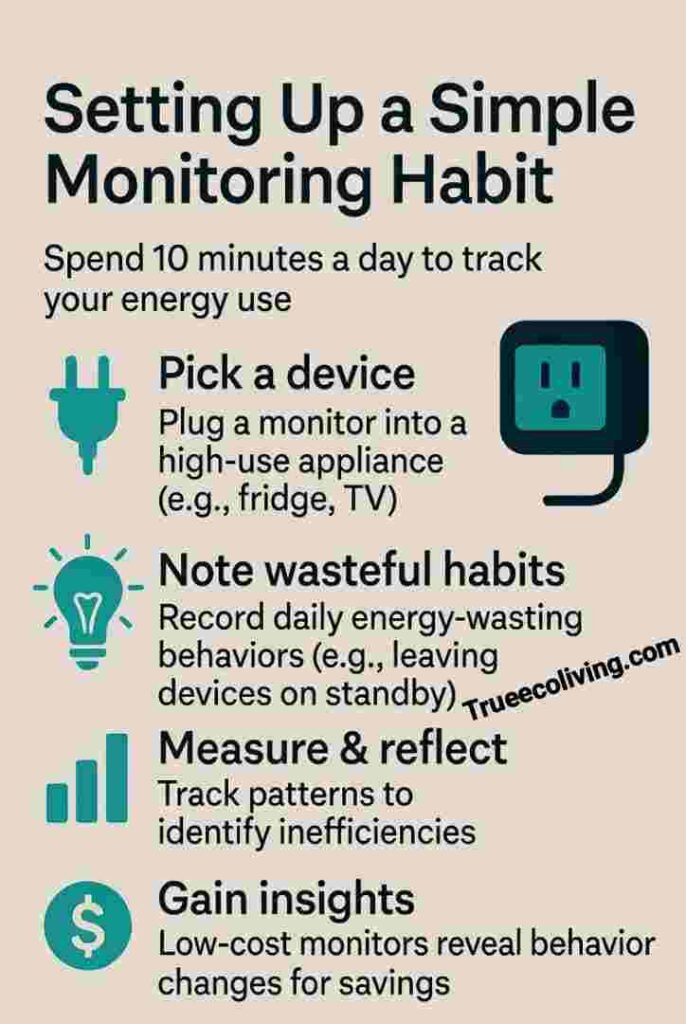
If you have a smart plug or a plug in energy monitor, put it on a high use device for quick feedback, for example the fridge or the TV. If you do not yet own one, start by noting daily habits that waste energy.
Measuring one thing helps you change one thing. Low cost monitoring often produces surprising insights and makes behaviour change much easier.
Want More? Save money and the planet with simple eco-friendly lifestyle changes. Reduce energy, water, and waste with practical hacks that lower your bills.
Time summary and pacing
Prep 10 minutes, bulb swap 20 minutes, aerators 20 minutes, phantom sweep 10 minutes, shower check 20 minutes, food audit 30 minutes, record numbers 10 minutes, fridge tune up 15 minutes, monitoring setup 10 minutes.
Total time is about two hours to two hours and fifteen minutes depending on how quickly you move. You can split the tasks across a Saturday and Sunday if that fits your schedule better.
Practical tips and troubleshooting
- If an LED flickers reseat the bulb and test it in another fitting, check compatibility with dimmer switches and replace the bulb if flicker persists.
- If an aerator leaks remove it, check the rubber washer and reinstall. Use a light wrap of plumber tape if threads are worn.
- If your fridge seal fails the dollar bill test clean the seal or consider replacing it. A poor seal forces the compressor to work harder and costs you money.
- If a device keeps drawing standby power despite the strip try plugging it directly into the strip and switching it off when you know it will not be used for long periods.
Expert recommendations
- LED bulbs: choose warm white 2700 to 3000 Kelvin for living spaces and match lumen output to the bulbs you replace.
- Faucet aerators: look for 1.5 to 2.2 litres per minute models for a good balance of savings and comfort.
- Power strip: choose a surge protected strip with a visible on off switch so the habit is easy to keep.
- Showerhead: select a low flow model rated around 7 to 9 litres per minute for most households.
- Monitoring: a simple smart plug with energy reporting gives clear feedback and excellent return on a small spend.
Safety notes
Turn off power where advised and use a stable ladder when changing bulbs in high fittings. Protect tap finishes with a cloth when using tools and do not force stuck fittings. Keep small parts out of reach of children.
If you suspect major electrical or plumbing problems call a licensed professional. When in doubt stop and get expert help rather than risking damage or injury.
Next steps and accountability
Stick your start numbers on a sticky note and check them on the same date next month. If you see a drop celebrate the win and use a portion of those savings to fund your next small upgrade.
The real payoff is not just the savings from one weekend, but the habit you create that keeps saving month after month.
Conclusion
This quick weekend plan turns two hours of focused work into measurable savings. It targets the low hanging fruit that most households can fix quickly.
The combination of a visible change, simple measurement and a tiny habit such as switching off a strip makes all the difference. Try it this weekend, record the numbers and see what you learn.
If you would like the savings math tailored to your local electricity rates and shower flow etc, Use the Energy Saving Calculator for a more complex breakdown.
Frequently Asked Questions
Results vary depending on household size and usage, but typically you will notice a small drop on the very next bill and larger savings over time as habits like switching off the power strip and taking shorter showers become routine.
No. A good aerator mixes air into the water stream, keeping it comfortable for washing hands, dishes, or brushing teeth while reducing the overall flow and water use.
Yes. You can still tighten leaks, track energy and water usage, plan meals with what’s already in your fridge, and switch off phantom loads. These steps cost nothing and still reduce bills.
Most modern LED bulbs work with standard fittings. However, if you use a dimmer switch, ensure the bulb is labeled “dimmable” to avoid flickering or damage.
Yes. Cleaning seals, defrosting frost, and adjusting temperatures can reduce energy use by up to 10–15 percent and also help keep food fresh longer, reducing grocery waste.