

Beeswax Wraps vs Plastic Wraps: Which One Should You Use?
- Beeswax wraps are reusable and can replace some everyday plastic wrap jobs, especially for covering bowls and wrapping dry or cool foods.
- Plastic wrap is still the more flexible option for airtight, quick, and highly convenient food covering. It helps limit air and moisture, which can reduce spoilage and food waste.
- Beeswax wraps need gentle care with cool water and mild soap, and they are not ideal for raw meat or hot foods.
- Plastic wrap is usually single use, and plastic bags, wraps, and films generally cannot go in curbside recycling bins. Some store drop-off programs may accept them.
- The better choice depends on your routine: beeswax wraps win for low-waste habits, while plastic wrap wins for maximum convenience and a tighter seal.
Thinking About the Real Difference
If you have ever stood in front of your kitchen drawer wondering whether to reach for beeswax wraps or plastic wrap, you are not alone.
Both are designed to cover food, both are common in busy kitchens, and both can help keep leftovers and snacks in better shape. But they do not behave the same way, and that is where the real decision begins.
Plastic wrap is built for fast, flexible, everyday sealing, while beeswax wraps are reusable covers made for people who want a lower-waste alternative.
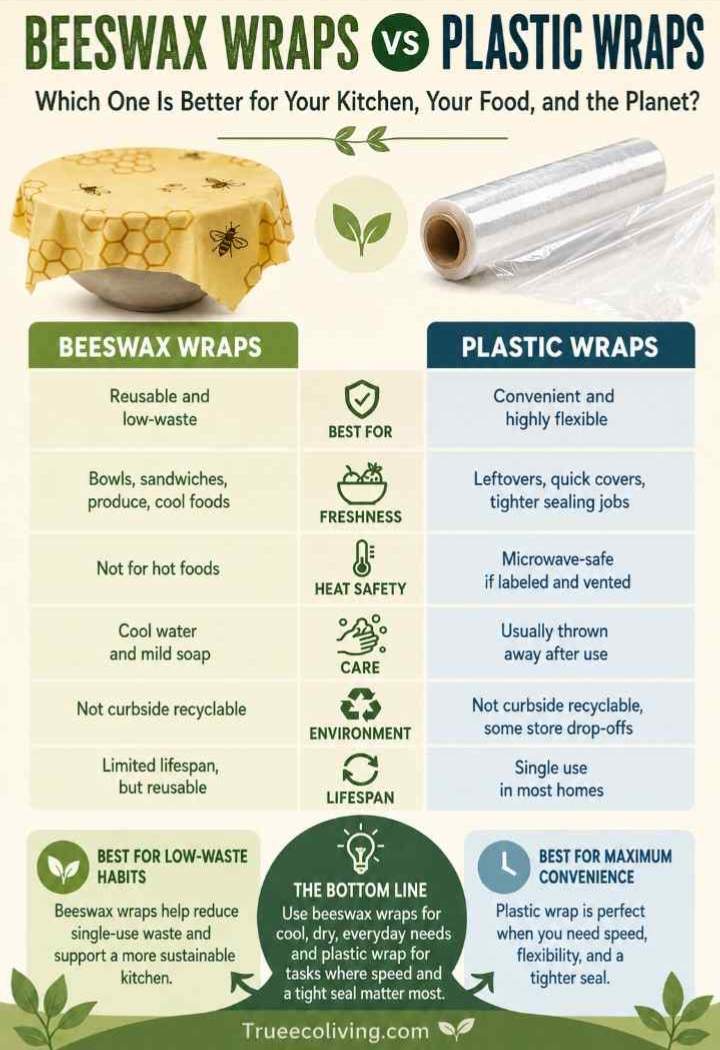
Comparison Table: Beeswax Wraps vs Plastic Wraps
| Feature | Beeswax Wraps | Plastic Wraps |
|---|---|---|
| Main strength | Reusable and low-waste | Convenient and highly flexible |
| Best for | Bowls, sandwiches, produce, cool foods | Leftovers, quick covers, tighter sealing jobs |
| Heat safety | Not for hot foods | Some types are microwave-safe if labeled, but should not touch food and should be vented in the microwave |
| Cleaning | Cool water and mild soap | Usually thrown away after use |
| Recycling | Not usually curbside recyclable | Generally not accepted in curbside recycling, though some stores take film drop-offs |
| Lifespan | Limited, but reusable | Single use in most homes |
What Beeswax Wraps Actually Mean

Beeswax wraps are cloth wraps coated with wax, usually made so you can mold them around food or over a bowl with the warmth of your hands.
In simple terms, they are the reusable, low-waste cousin of plastic wrap. They are a smart option when you want to cover bread, fruit, cheese, sandwiches, or a bowl of chopped vegetables without reaching for a disposable sheet of film.
They are also best handled gently: cool water, mild soap, no hot water, and no raw meat or hot leftovers. Over time, the wax coating wears down, so they eventually need refreshing or replacing.
What Plastic Wrap Actually Means

Plastic wrap, sometimes called cling film, is the classic kitchen shortcut. It is made to stretch, cling, and help reduce exposure to air and moisture, which is one reason it remains so popular for everyday food storage.
In practical terms, it is often the quickest way to cover a plate, protect leftovers, or keep food from drying out in the fridge.
For microwave use, the USDA advises that plastic wrap should not touch food and should be vented so steam can escape.
That makes it useful, but also something you need to use properly rather than casually.
READ ALSO: 5 Silicone Food Storage Swaps That Make Plastic Look Outdated Fast
TrueEcoLiving Thought
From a TrueEcoLiving point of view, this is not really a battle between “good” and “bad.” It is a question of what kind of habit you want to build.
If you are trying to cut down on single-use waste, beeswax wraps are a meaningful upgrade. If you are in a season of life where speed, sealing power, and zero fuss matter most, plastic wrap still has a clear place.
The most sustainable kitchen choice is usually the one you will actually use consistently.
Which One Is Better for Freshness?
This is where people often expect beeswax wraps to win automatically, but the truth is more balanced.
Plastic wrap usually gives a tighter, more familiar seal, which makes it excellent for leftovers and quick fridge storage.
Beeswax wraps work well for covering bowls or wrapping dry, cool foods, but they are not the best fit when you need a heavy-duty airtight seal.
If your main goal is maximum convenience and reliable cling, plastic wrap usually wins. If your main goal is fewer disposables, beeswax wraps win by a mile.
Which One Is Better for the Environment?
On the environmental side, beeswax wraps are clearly the greener feel-good option because they are reusable and reduce daily trash.
Plastic wrap, on the other hand, is generally not accepted in curbside recycling bins, which means a lot of it becomes household waste unless a store drop-off program is available nearby.
That said, eco-friendly does not automatically mean perfect. Beeswax wraps still have a lifespan, and once they stop sticking well, they need replacement.
So the real win is not “zero impact.” It is “less waste over time.”
DISCOVER: 20 Unique, Eco-Friendly Storage Swaps For Kitchen And Every Room. Toss the Plastic Bins!
Which One Is Better for Everyday Life?
Here is my honest take: beeswax wraps are best for people who enjoy a more intentional, lower-waste kitchen and do not mind a little extra care.
Plastic wrap is best for people who want speed, simplicity, and an easy seal without thinking too hard about maintenance.
If you cook a lot, pack lunches, cover bowls, and like reusable products, beeswax wraps can become a habit you genuinely enjoy.
If your kitchen rhythm is fast and practical, plastic wrap may still earn its place.
My Bottom Line
If I had to choose just one for a low-waste kitchen, I would pick beeswax wraps for the smaller, everyday jobs and keep plastic wrap only for the times when I really need that extra convenience.
That is the sweet spot. Beeswax wraps help you cut waste. Plastic wrap helps you move fast. The smartest kitchen is not the one that is perfectly eco-friendly in theory.
It is the one that works in real life and slowly nudges your habits in a better direction.
Concluding Thought
So, beeswax wraps vs plastic wrap? Beeswax wraps are the better long-term lifestyle choice for reducing single-use waste.
Plastic wrap is still the better “I need this done right now” choice for airtight convenience. If you want a simple rule, use beeswax wraps for cool, dry, everyday coverings, and save plastic wrap for the tasks where speed and tight cling matter most.
That balanced approach is often the most realistic and the most sustainable.
Read More: 7 Best Plastic-Free Dishwashing Swaps That Make Your Sink Feel Cleaner Overnight
FAQs on Beeswax Wraps vs Plastic Wraps
Not necessarily safer in every situation, but they are a reusable alternative for some storage jobs. Plastic wrap can also be used safely when the product is labeled for food use and handled correctly.
No. Beeswax wraps are not recommended for hot foods because heat can soften the wax coating and reduce performance.
Some plastic wrap products are microwave-safe, but the USDA says it should not touch the food and should be vented so steam can escape. Always follow the package directions.
Beeswax wraps are usually the more eco-friendly choice because they are reusable and reduce single-use waste. Plastic wrap is generally not accepted in curbside recycling, although some store drop-off programs accept plastic film.