
Affiliate Disclosure: This post may contain affiliate links. If you purchase through one of these links, I may earn a commission at no extra cost to you. I recommend products based on their suitability for the cleaning task.
Have you ever washed your microfiber cleaning cloths only to find that they no longer absorb water properly? Perhaps they leave streaks on your mirrors, feel greasy, or seem to push water around rather than pick it up.
I always encourage people to look at their laundry routine before replacing a cleaning tool that seems to have lost its effectiveness. One overlooked culprit is fabric softener.
Although it makes ordinary laundry feel softer, it can leave a coating on microfiber that interferes with its cleaning performance.
The good news is that you do not need fabric softener to keep microfiber cleaning cloths fresh and useful.
With the right detergent, washing temperature, and drying method, I believe you can maintain your cloths while making your household cleaning routine simpler and less wasteful.
Why You Should Never Use Fabric Softener on Microfiber Cloths
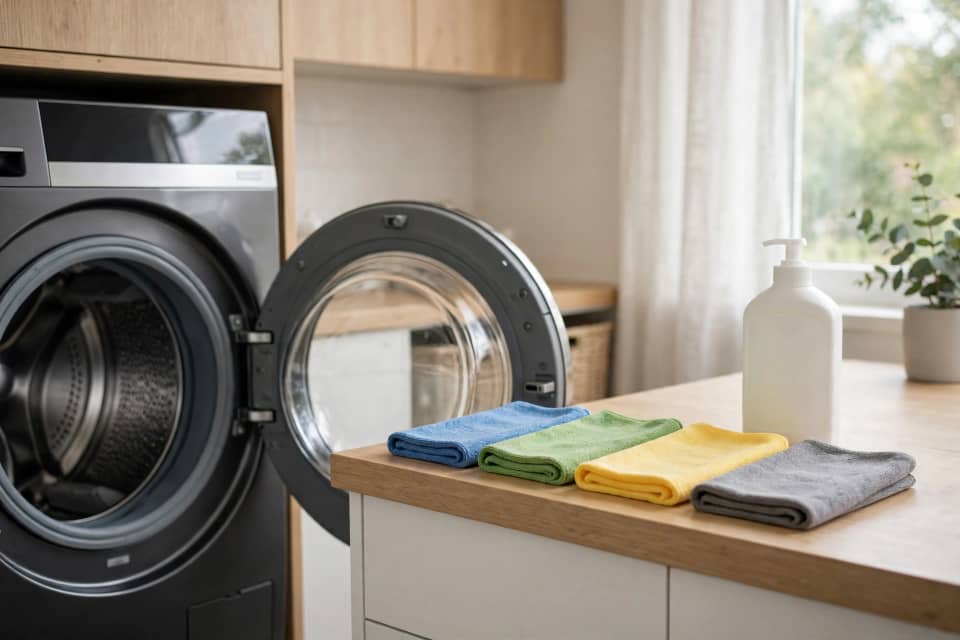
Microfiber cloths are made from extremely fine synthetic fibers, commonly polyester and polyamide. Their fine structure helps them capture dust, lift dirt, and absorb liquid.
Fabric softeners are designed to leave conditioning ingredients on fabric. Unfortunately, that coating can interfere with the fine fibers in microfiber cloths, reducing their ability to absorb water and pick up dirt effectively.
I pay attention to three things when caring for reusable cleaning cloths: cleaning performance, product lifespan, and avoiding unnecessary laundry additives. Skipping fabric softener supports all three goals.
Remember to avoid dryer sheets and laundry products containing fabric-conditioning ingredients, too. Simply leaving liquid softener out of the washing machine is not always enough.
How to Wash Microfiber Cleaning Cloths Without Fabric Softener
My approach is straightforward: remove loose dirt, use a suitable detergent sparingly, rinse properly, and dry without excessive heat.
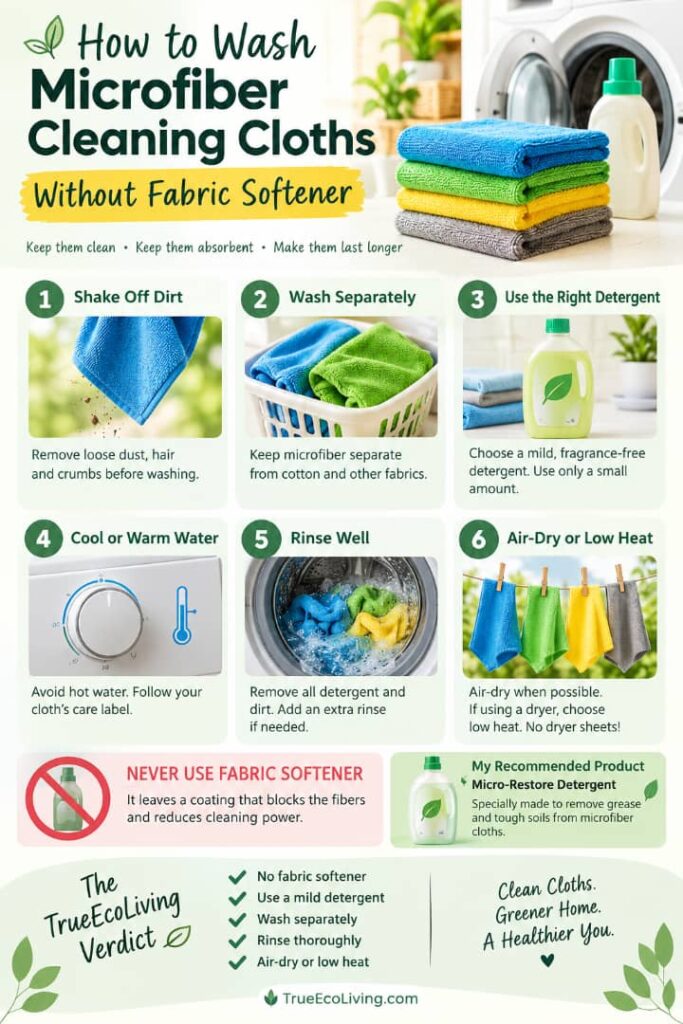
1. Shake Off Loose Dirt First
Before washing, shake your cloths over a bin to remove loose dust, hair, and crumbs. Scrape off solid food residue carefully, and rinse away excess dirt when necessary.
For heavily greasy cloths, such as those used around a cooker or kitchen worktop, I recommend pretreating the affected area with a little suitable liquid detergent before washing.
2. Wash Microfiber Separately
Whenever practical, wash microfiber cloths with other microfiber items rather than cotton towels, clothing, or fluffy fabrics. Microfiber readily attracts lint, and cotton fibers can cling to the cloth and transfer onto the surfaces you clean later.
I also recommend sorting cloths by their intended use. Keep bathroom cloths separate from those used for kitchen surfaces, and separate heavily soiled cleaning cloths from lightly used dusting cloths. This helps reduce unwanted dirt transfer.
3. Choose a Gentle, Residue-Free Detergent
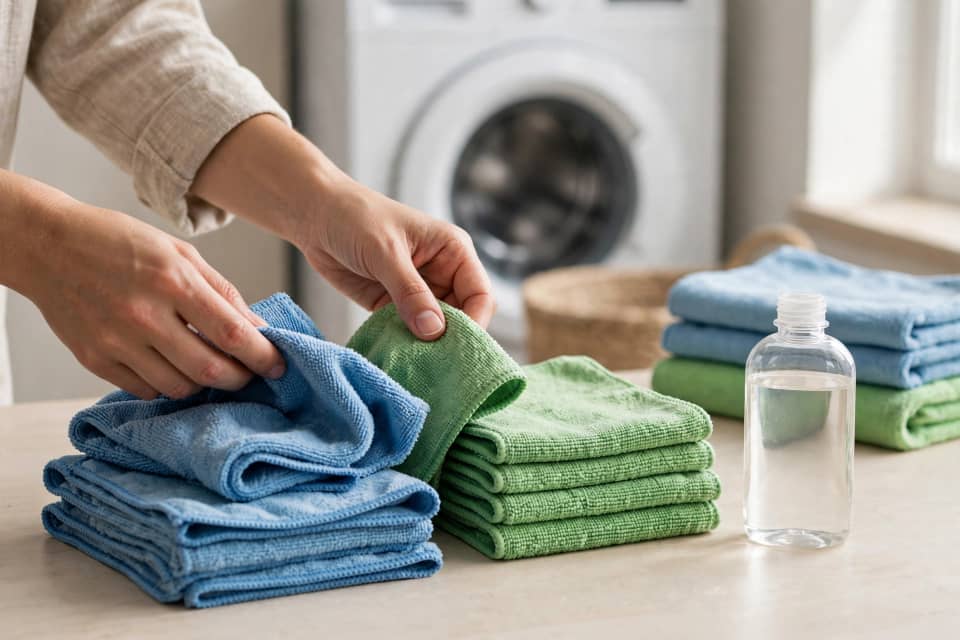
You do not necessarily need an expensive specialty cleaner. A mild liquid laundry detergent without fabric softener, conditioning additives, or unnecessary fragrance is a sensible option for many household microfiber cloths.
Use the smallest amount that will clean your load effectively, following your detergent and washing machine instructions. Too much detergent may leave residue behind, making cloths feel stiff, greasy, or less absorbent.
I would rather use the correct amount of a suitable detergent than add several products in an attempt to make cleaning cloths fresher. Simpler laundry routines can also mean fewer products and less packaging to buy.
READ ALSO: Why Are There White Streaks on Black Clothes After Washing? 7 Fixes That Work
Recommended Product: Chemical Guys Microfiber Wash
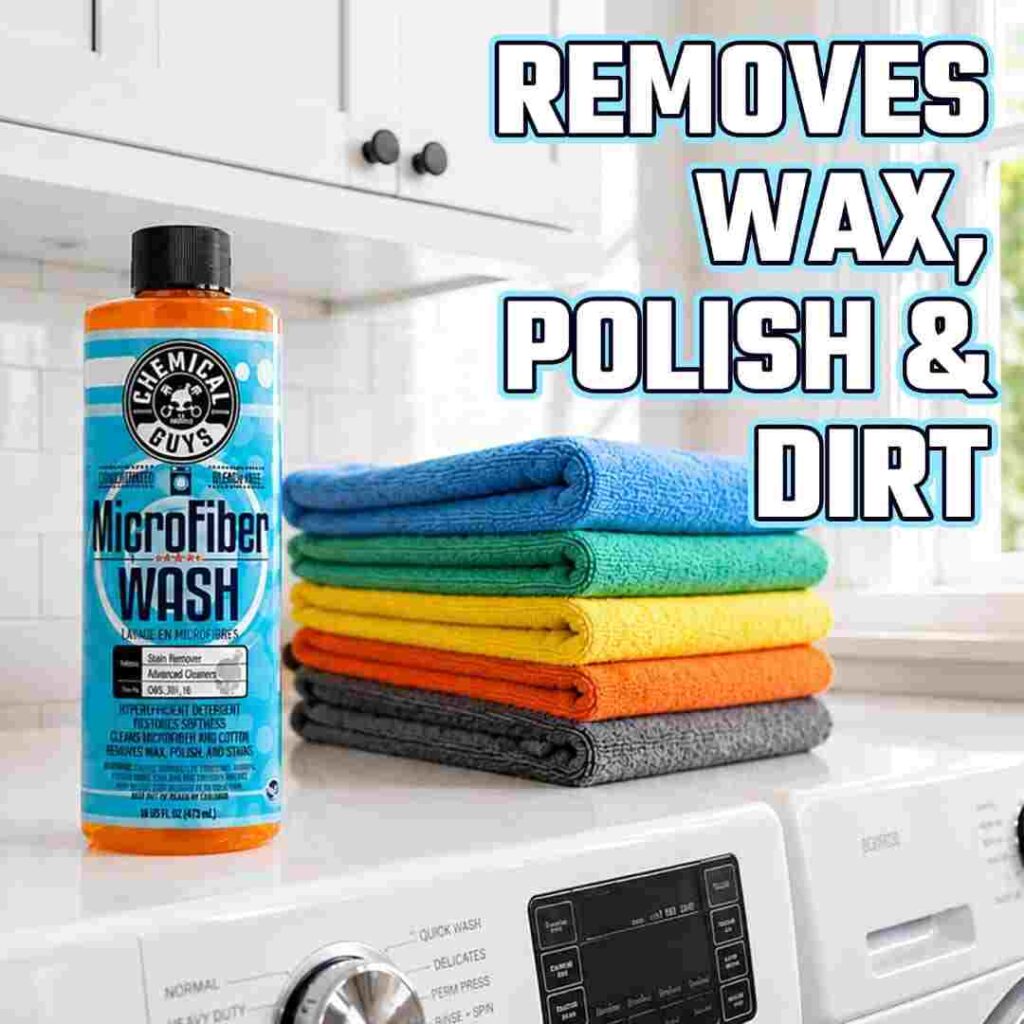
Best for: Cleaning microfiber towels that collect dirt, grease, and stubborn cleaning residue.
Check Chemical Guys Microfiber Wash on Amazon.
My advice: Choose a detergent specifically suited to your microfiber cloths, follow its dosage instructions, and never combine it with fabric softener. If you prefer fragrance-free products, check the ingredient and fragrance information on the exact bottle before buying.
4. Use Cool or Warm Water
For everyday cleaning cloths, cool or warm water is generally a good starting point. Warm water can help loosen grease, while cool water is often sufficient for lightly soiled dusting cloths.
I would avoid automatically choosing the hottest wash setting. Excessive heat can damage some microfiber materials, depending on their construction. Check the manufacturer’s care label and follow any temperature limits it specifies.
5. Rinse Thoroughly
A proper rinse helps remove detergent and loosened dirt. If your cloths feel slippery or greasy after washing, try reducing the detergent dose and using an additional rinse, if your machine permits it.
I do not recommend adding fabric softener to solve stiffness or using several laundry additives to tackle lingering odors. First, make sure the detergent is appropriate and can rinse away properly.
6. Air-Dry or Use Low Heat
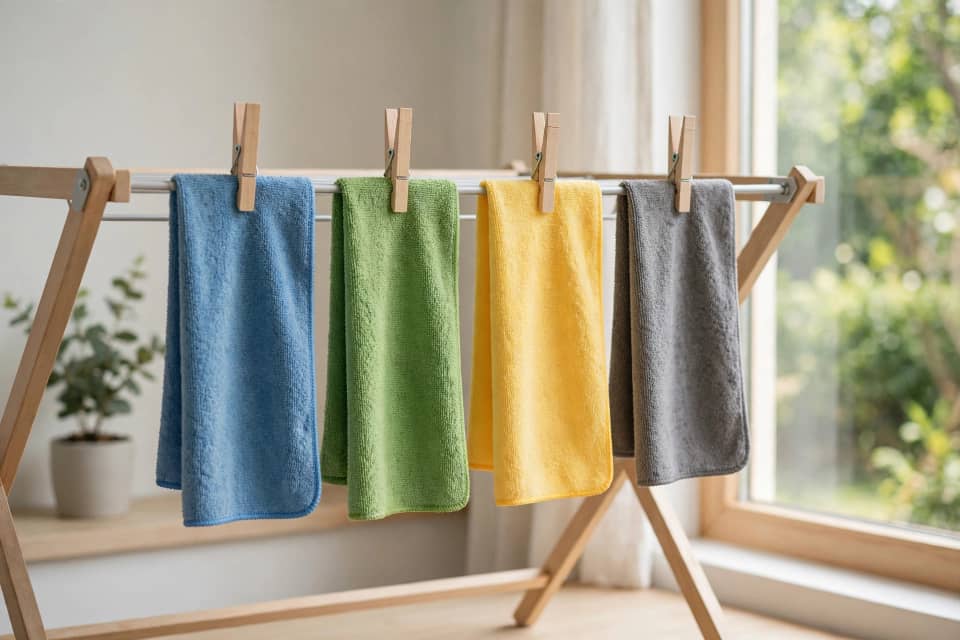
Air-drying is my preferred starting point because microfiber generally dries quickly. Hang washed cloths in a clean, well-ventilated place and allow them to dry completely before storing them.
If you use a tumble dryer, choose a low-heat setting permitted by the care label. Never use dryer sheets, which can leave conditioning residue on the fibers.
READ MORE: 8 Ways to Build a Low-Waste Laundry Routine Without Buying More Products
What If You Have Already Used Fabric Softener?
Do not throw every cloth away immediately. I would first give the affected cloths a chance to recover.
- Wash them again without fabric softener or dryer sheets.
- Use a small amount of suitable detergent, or follow the cloth manufacturer’s recovery instructions.
- Run an extra rinse if you suspect detergent or conditioning residue remains.
- Allow the cloths to dry without excessive heat.
- Test one cloth with clean water to see whether its absorbency has improved.
Some cloths improve after repeated proper washing, but recovery is not guaranteed. If the fibers have been damaged by heat, chemicals, or wear, the cloth may not return to its original performance.
Common Mistakes I Would Avoid
- Using too much detergent: Excess product can leave a residue that affects cleaning performance.
- Mixing microfiber with cotton: Lint can cling to microfiber and transfer onto glass, mirrors, and other surfaces.
- Using bleach without checking the label: Some products can damage microfiber fibers, so follow the manufacturer’s instructions.
- Leaving damp cloths in a pile: Trapped moisture can encourage unpleasant odors. Wash used cloths promptly and let them dry fully.
- Mixing cloths used for different cleaning tasks: Separating kitchen, bathroom, and other cloths helps prevent cross-contamination.
TrueEcoLiving Verdict
My advice is simple: microfiber cleaning cloths need clean fibers, not fabric softener. You can maintain their usefulness with a suitable detergent, sensible dosing, proper rinsing, and gentle drying.
For most ordinary household cleaning, I would start with a fragrance-free, additive-free liquid detergent rather than automatically purchasing a specialty laundry product.
Reserve a dedicated microfiber detergent for cloths that regularly collect stubborn oils or heavy residue and need more specialized care.
I also see proper cloth care as part of a more sustainable home. Reusing well-maintained cleaning cloths can reduce reliance on disposable wipes and paper towels.
The goal is not to buy more products, but to make the cleaning tools you already own work well for longer.
EXPLORE: 15 Low Waste Laundry Tips for an Eco-Friendly Environment at Home
Summary
- Never use fabric softener or dryer sheets on microfiber cleaning cloths.
- Wash microfiber separately from lint-producing fabrics such as cotton.
- Use a small amount of suitable detergent without conditioning additives.
- Choose cool or warm water, rinse thoroughly, and follow the cloth’s care label.
- Air-dry when practical or use an approved low-heat setting to help extend the cloth’s lifespan.
Conclusion
Learning how to wash microfiber cleaning cloths without fabric softener is a small change that can make a meaningful difference to your cleaning routine.
The right washing habits help preserve absorbency, reduce lint, and keep reusable cloths useful for longer.
I encourage you to check your detergent label, simplify your laundry routine, and stop using products that leave unwanted coatings on microfiber.
A cleaner cloth does not need to smell heavily perfumed or feel artificially soft. It simply needs to do its job effectively.
Further reading: For additional practical guidance, consult the New Jersey Department of Health’s guide to cleaning with microfiber cloths.
Frequently Asked Questions
Yes. For many household microfiber cloths, a suitable mild liquid detergent without fabric softener or conditioning additives is sufficient. Use an appropriate amount, check the care label, and rinse thoroughly. A specialty microfiber detergent may help with stubborn oily residue.
You do not need vinegar to replace fabric softener. Start by using a suitable detergent and rinsing thoroughly. If odors or residue persist, check the cloth manufacturer’s care instructions before trying vinegar, as recommendations can vary between products.
Wash microfiber cloths after use, particularly when they have cleaned kitchen surfaces, bathrooms, greasy areas, or significant spills. Do not leave heavily soiled or damp cloths sitting in a pile. Separate cloths by their intended cleaning task.
Sometimes. Rewash the cloths without fabric softener or dryer sheets, use a suitable detergent sparingly, and rinse thoroughly. Repeat if needed according to the manufacturer’s instructions. If heat or chemical exposure has damaged the fibers, their original performance may not be recoverable.