
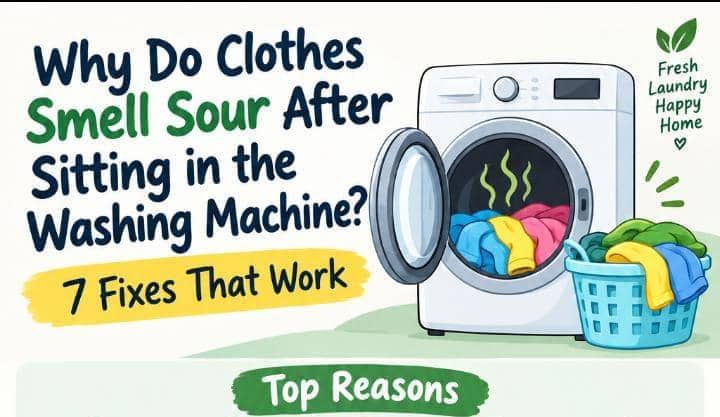
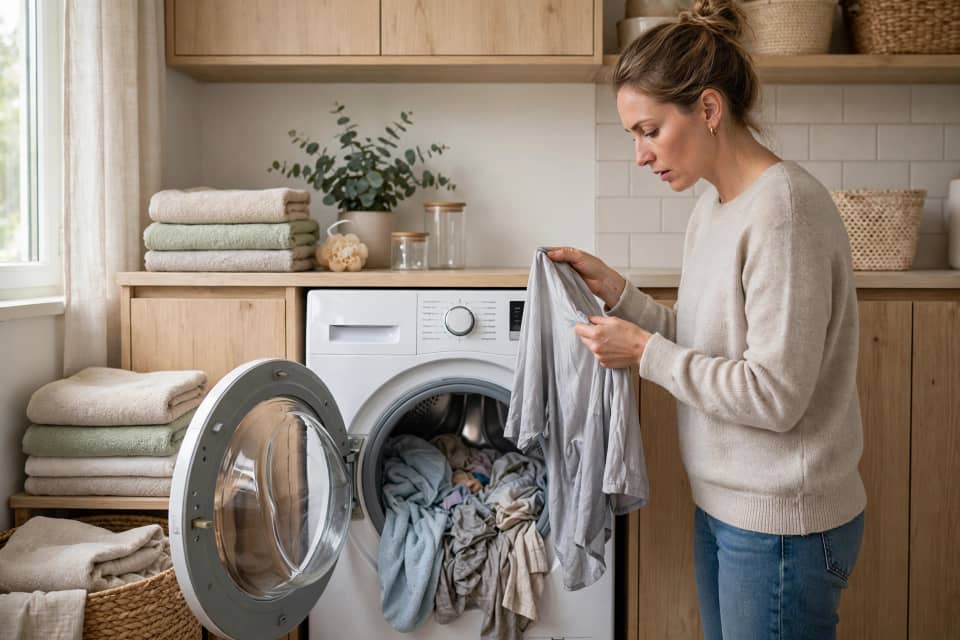
You finish a load of laundry, get distracted by something else, and completely forget about it. When you finally open the washing machine, your freshly washed clothes have a strange sour, musty smell.
Frustrating, isn’t it? You used water, detergent, and electricity to wash those clothes, only to discover that they smell like they need another wash.
From my Eco-Living experiences, I believe that maintaining fresh laundry should not require excessive detergent, heavily fragranced products, or unnecessary rewashing. I prefer to understand the cause of a problem before deciding how to solve it.
So, why do clothes smell sour after sitting in the washing machine, and what can you do about it? The main culprit is usually prolonged moisture, which allows unpleasant odours to develop.
However, detergent residue, a dirty washing machine, and drainage problems can also contribute.
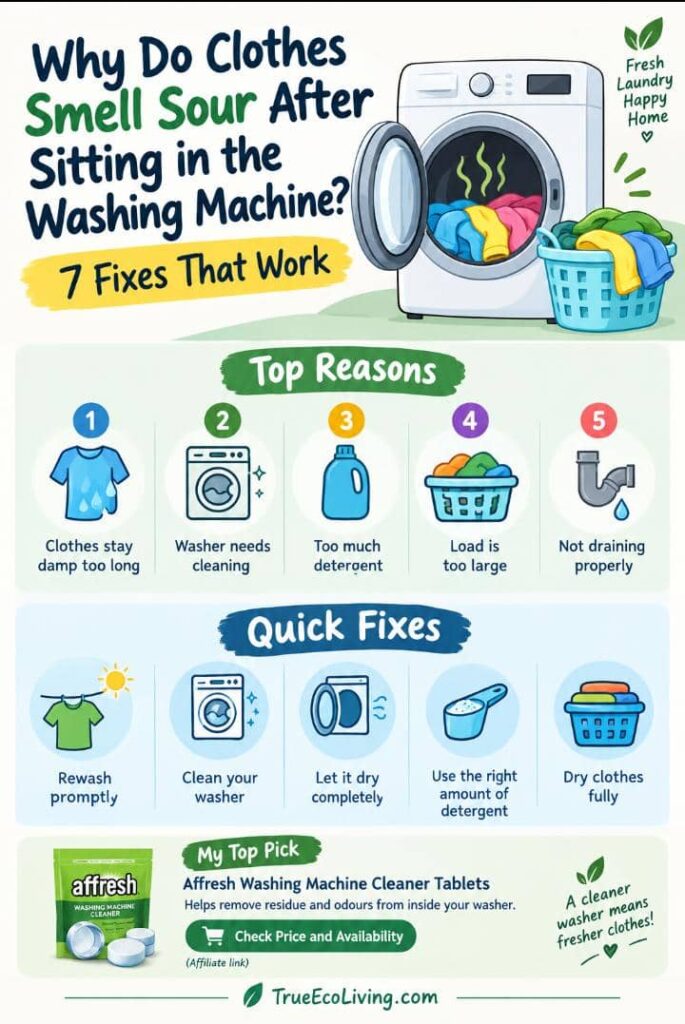
Why Do Clothes Smell Sour After Sitting in the Washer?
1. Damp Clothes Have Been Sitting Too Long
This is the first thing I investigate when someone tells me their laundry smells sour.
After a wash cycle, clothes remain damp even if the spinning cycle has removed much of the water.
When wet fabrics stay in the closed washing machine for hours, the moisture creates favourable conditions for microorganisms to grow and unpleasant odours to develop.
The problem can become worse in warm, humid environments because clothes and the inside of the machine may take longer to dry.
My advice: Remove laundry as soon as the cycle finishes. If the clothes already smell sour, drying them without addressing the odour is not the solution I would recommend.
2. Your Washing Machine Needs Cleaning
Here is something I always encourage people to remember: washing machines do not clean themselves completely during ordinary laundry cycles.
Over time, detergent residue, fabric softener, body oils, dirt, and lint can accumulate in the drum, detergent drawer, rubber door seal, and other internal areas. Trapped moisture and residue can contribute to persistent smells.
If your clothes smell sour immediately after a wash, rather than only after sitting in the machine, investigate the washer itself.
Rewashing clothes repeatedly will not solve the underlying problem if the machine is transferring unpleasant odours to each load.
3. You Are Using Too Much Detergent
It is tempting to assume that adding more detergent will produce cleaner clothes. However, that is not always true.
Excess detergent can leave residue on fabrics and inside the washer, particularly when the machine cannot rinse everything away effectively. Fabric softener can also contribute to buildup when overused.
I prefer measuring detergent according to the product instructions, the size of the load, and the washing machine manufacturer’s recommendations. More soap does not automatically mean fresher laundry.
4. The Load Is Too Large
When a washing machine is overloaded, clothes may not move freely enough for effective washing and rinsing. Water and detergent may not circulate as intended, and some items may retain more moisture after spinning.
I recommend following the washer’s load limit and separating bulky items from smaller garments when necessary. Giving laundry enough room can improve cleaning and rinsing without requiring additional products.
5. The Washer Is Not Draining Properly
If water remains inside the drum after the cycle, do not automatically blame the detergent or the clothes.
A blocked pump filter, drainage issue, or incorrectly installed drain hose can contribute to persistent odours.
A strong sewage-like or rotten-egg smell is particularly worth investigating because it may indicate a drainage or plumbing problem rather than ordinary sour laundry.
When I troubleshoot an unusual smell, I pay attention to where it originates. A smell that remains even when the machine is empty deserves attention beyond simply washing the clothes again.
READ LATER: Laundry Detergent Residue on Clothes? 7 Easy Ways to Remove It Without Stripping
How to Get the Sour Smell Out of Clothes
Now that you understand the likely causes, here is how I would approach the problem without wasting detergent, water, or electricity.
1. Wash the Smelly Clothes Again
If the clothes smell sour after being left in the washer, start by rewashing them promptly.
Use the correct amount of detergent and select a wash temperature suitable for the fabric. A warmer cycle may be appropriate for some items, but always follow the garment care label and your machine’s instructions.
Do not add extra detergent simply because the clothes smell bad. Excess product may leave more residue behind. If the clothes still smell after washing, check the washing machine before repeating the process.
2. Clean the Washing Machine
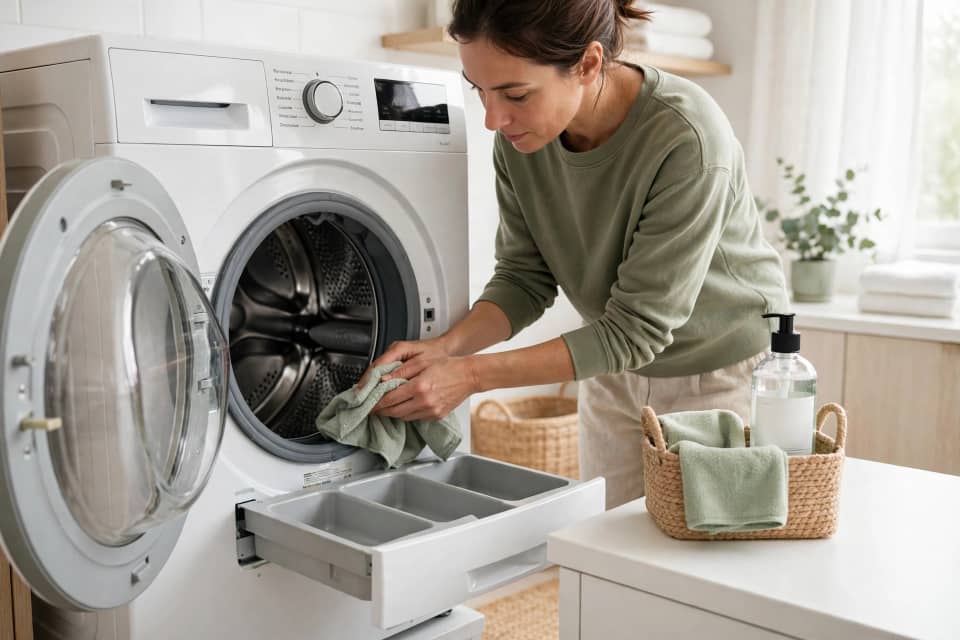
I consider machine maintenance an essential part of an eco-conscious laundry routine. It helps address the source of recurring smells instead of treating every affected load separately.
Start with these areas:
- The drum: Run the machine’s designated cleaning cycle according to the manufacturer’s instructions.
- The detergent drawer: Remove it if the manual permits, wash away residue, and dry it thoroughly.
- The rubber seal: For front-loading machines, inspect the folds for trapped water, lint, and debris. Wipe them clean.
- The pump filter: If your model has an accessible filter, inspect and clean it according to the manual. Follow the safety instructions because residual water may escape.
You may try Earth Breeze Washing Machine Cleaner Tablets (Fragrance-Free), to clean your machine. It works nicely.
3. Let the Washing Machine Dry Completely
Cleaning the washer is only part of the solution. You also need to prevent moisture from remaining trapped inside it.
After removing the laundry, wipe away visible water around the door seal and other accessible areas. Leave the door or lid and detergent drawer open when appropriate to allow the interior to dry naturally.
I like this simple habit because it costs nothing, uses no additional cleaning chemicals, and can help reduce the damp conditions associated with washer odours. Make sure the open machine is safely out of reach of children and pets.
4. Be Careful With Vinegar and Other DIY Cleaning Remedies
When sour laundry becomes a recurring problem, you may be tempted to try every household remedy you encounter online.
My approach is to avoid assuming that natural automatically means suitable for every appliance. Vinegar, for example, should not be treated as a universal washing machine cleaner. Check your manufacturer’s instructions before using it because some appliances have specific maintenance requirements.
Never mix vinegar with chlorine bleach or combine different cleaning chemicals. Such mixtures can release dangerous gases or create other hazards. For routine maintenance, follow your machine’s cleaning instructions rather than experimenting with combinations of products.
5. Dry Clothes Promptly After Rewashing
Once you have rew washed the affected clothes, remove them promptly and dry them completely.
You can air-dry suitable garments outdoors or in a well-ventilated area, provided they can dry fully. A clothes dryer is another option when the care label permits it.
I prefer avoiding unnecessary repeat washes, but once a load has developed a sour smell, addressing the odour and drying the clothes thoroughly is more useful than simply hoping the smell will disappear on its own.
READ ALSO: 15 Low Waste Laundry Tips for an Eco-Friendly Environment at Home
How to Prevent Clothes From Smelling Sour Again

I believe the best eco-friendly cleaning routine is one that prevents problems before they require extra products, water, and effort. These simple habits can make a real difference.
- Remove clothes promptly: Set a reminder on your phone if you regularly forget laundry in the washer.
- Measure detergent correctly: Follow the label and adjust for load size and soil level.
- Avoid overloading: Give clothes enough room to wash and rinse effectively.
- Clean the washer regularly: Follow the maintenance schedule recommended for your model.
- Allow the machine to dry: Wipe accessible wet areas and leave the door or lid open when appropriate.
- Investigate recurring smells: Check drainage, filters, and the detergent drawer rather than repeatedly rewashing every load.
TrueEcoLiving Verdict
When clothes smell sour after sitting in the washing machine, I start with the simplest explanation: the laundry remained damp for too long.
However, I never overlook the possibility that the washing machine itself needs attention.
My preferred approach is to rewash affected clothes, dry them promptly, and clean the washer according to its manufacturer’s instructions.
I also focus on prevention because it is usually more economical and resource-conscious than repeatedly washing the same load.
A dedicated washing machine cleaner can be useful when residue has accumulated, but it should complement proper maintenance rather than replace it. You do not need an overflowing cupboard of cleaning products to keep laundry fresh.
And remember, if the smell resembles sewage or continues despite cleaning and proper drainage, investigate the plumbing or contact a qualified appliance technician.
5 Things to Remember About Sour-Smelling Laundry
- Wet clothes left inside the washer can develop sour or musty odours.
- Detergent buildup, trapped moisture, and a dirty washing machine can make the problem worse.
- Rewash smelly clothes using the correct detergent amount and a suitable wash temperature.
- Clean the washer according to its manual, including accessible areas where residue and moisture collect.
- Prevent future smells by removing clothes promptly, drying the machine, and maintaining it regularly.
Conclusion
Discovering that your laundry smells sour after sitting in the washing machine can be annoying, but it is usually a problem you can address with a few practical changes.
Start by rewashing the affected clothes, cleaning your washer if necessary, and making sure everything dries properly. Then build a simple habit of removing laundry promptly and keeping the machine clean.
At TrueEcoLiving, I believe that a fresher home does not have to mean more chemicals, more fragrance, or more waste. Sometimes, the most effective solution is simply understanding what went wrong and changing the habit that caused it.
Reference: Learn more at Whirlpool’s official washing machine odour guidance which explains why leaving wet clothes in the washer, using unsuitable detergent, and neglecting cleaning cycles can contribute to unpleasant smells.
Frequently Asked Questions
Wet clothes remain damp inside the closed washer, creating conditions in which microorganisms and unpleasant odours can develop. Rewash the affected clothes if they smell sour, remove them promptly, and dry them thoroughly.
A sour smell is a sign that the laundry needs attention. I recommend rewashing the clothes and drying them completely before wearing them rather than masking the smell with fragrance.
Vinegar is not a guaranteed solution for sour laundry and should not be used in a washing machine unless the manufacturer permits it. Start by rewashing the clothes with an appropriate amount of detergent, and never mix vinegar with chlorine bleach.
Follow the cleaning schedule in your washing machine manual. Many manufacturers recommend a regular maintenance cleaning, often monthly, depending on the model and frequency of use. Wipe away accessible moisture and residue between cleaning cycles.
About the Author
Agboola Elizabeth is an Eco Living Coach passionate about non-toxic cleaning, eco-friendly living, and creating a healthier home. Through TrueEcoLiving, she shares practical, thoughtful cleaning tips and sustainable solutions that help readers maintain a fresh, clean home while reducing unnecessary waste and chemical use.