
Have you ever looked at your laundry supplies and wondered whether you really need another eco-friendly detergent, reusable dryer sheet, or special laundry accessory to make your routine more sustainable?
I understand the temptation. When we start learning about low-waste living, it is easy to assume that every environmental problem requires a new product to solve it.
Before long, we may have replaced perfectly usable household items with greener alternatives, spending more money without necessarily reducing much waste.
My approach to low-waste laundry is much simpler: use what you already have, wash only when necessary, avoid wasting detergent and water, and take better care of your clothes.
You do not need a perfectly organized laundry room or an expensive collection of sustainable cleaning products to make meaningful changes.
In many households, the most useful improvements come from small habits that cost absolutely nothing.
In this guide, I will explain how to build a practical, low-waste laundry routine using the products, equipment, and everyday resources you already have at home.
What Does a Low-Waste Laundry Routine Really Mean?
A low-waste laundry routine focuses on reducing unnecessary consumption, packaging waste, water use, energy consumption, and premature clothing disposal.
Notice that none of these goals requires you to buy something new.
For example, washing a shirt only when it genuinely needs cleaning can save detergent and water. Correctly measuring your existing detergent prevents waste.
Air-drying clothes when practical can reduce electricity consumption, while repairing a loose button may help you keep a favourite garment for longer.
I encourage people to think about the entire laundry process rather than focusing exclusively on the product label.
A detergent advertised as eco-friendly cannot compensate for habits that waste large amounts of resources.
The goal is not to make laundry complicated. It is to make the routine you already have work more efficiently.
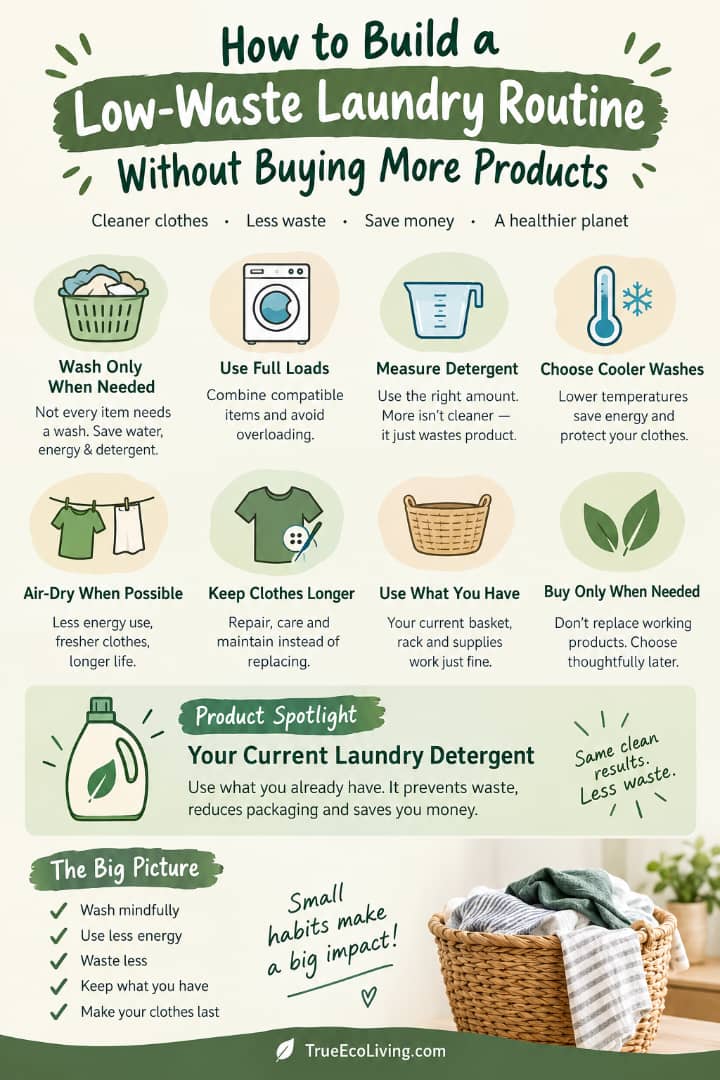
What are the 8 Ways to Build a Low-Waste Laundry Routine Without Buying More Products
1. Wash Clothes Only When They Actually Need It
One of the easiest ways to reduce laundry waste is to question the habit of washing every garment automatically after one wear.
Some clothes need washing after every use, especially underwear, socks, workout clothes, and garments that are sweaty, visibly dirty, or exposed to substances that require prompt cleaning.
Other items, such as lightly worn jeans, sweaters, and some outerwear, may be perfectly suitable for another wear.
When I think about reducing unnecessary laundry, I start by considering how a garment was actually used rather than following a rigid washing schedule.
Ask yourself a few simple questions. Is the garment visibly dirty? Does it smell unpleasant? Was it worn during exercise or hot weather? Does its care label recommend frequent cleaning?
If it simply needs freshening, airing it in a suitable, well-ventilated place may be enough. If it needs washing, put it in the laundry basket.
This small change can reduce the number of washing cycles you run over time, helping you conserve detergent, water, and energy without sacrificing cleanliness.
BOOKMARK: Laundry Detergent Sheets vs. Powder: Which Is Better for Cleaning, Saving Money and Reducing Waste?
2. Make Better Use of the Laundry Basket

You do not need a new laundry organizer or a collection of separate sorting containers to manage your washing more efficiently.
Use the basket you already own. If you have enough space, you can separate items loosely according to colour, fabric, or washing requirements. Otherwise, check the garments when you are ready to wash them and organize the load at that point.
I recommend checking pockets, closing zippers where appropriate, fastening delicate garments when their care instructions allow, and turning printed or dark clothing inside out when helpful.
These small habits can reduce avoidable damage and help clothes remain wearable for longer.
Also, treat stains before washing when necessary. Follow the garment’s care instructions and use a suitable treatment you already have.
Prompt attention to a stain may reduce the need for repeated washing, although some stains require specific treatment.
The point is to get more value from your existing laundry setup instead of purchasing organizational products to solve problems that a simple routine can handle.
3. Wash Full Loads Without Overloading the Machine
Running several small loads when you could combine them into one suitable load wastes opportunities to save water and energy.
Whenever practical, wait until you have enough compatible laundry for a full load. However, do not pack the drum so tightly that clothes cannot move freely. Overloading can interfere with cleaning and rinsing.
If you need to wash a smaller load urgently, use the machine’s appropriate small-load or water-level setting when available.
I also recommend grouping laundry according to its care requirements rather than combining everything simply to fill the machine.
Delicate fabrics, heavily soiled clothing, and items requiring different temperatures may need separate treatment.
For a practical guide to using less energy when washing clothes, see the Energy Saving Trust’s advice on washing machine efficiency. It explains the benefits of cooler washes and avoiding unnecessary half loads.
4. Use Cooler Washes When Appropriate
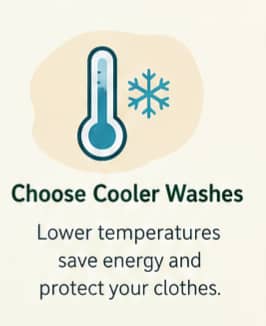
Heating water can account for a substantial share of the energy used by a washing machine, so reducing wash temperatures where appropriate can make your routine more efficient.
For normally worn, lightly soiled clothes, a cold or 20–30°C cycle may be suitable when permitted by the garment’s care label and the detergent instructions.
However, I would not recommend using one temperature for absolutely everything.
Heavily soiled items, certain fabrics, and laundry requiring specific hygiene measures may need a different programme. Follow the care label and your machine’s instructions.
You also do not need to purchase a special cold-water detergent if your existing detergent works effectively at lower temperatures.
Start by checking the instructions on the product you already own. Choose an appropriate setting, observe the results, and adjust when necessary.
This is a practical way to reduce energy use without adding another product to your shopping list.
5. Stop Using More Detergent Than Necessary
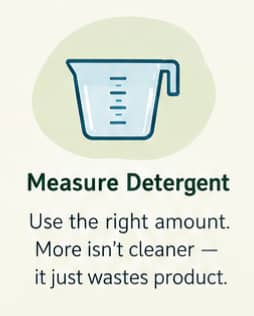
It is tempting to believe that adding more detergent will produce cleaner, fresher-smelling clothes. In reality, using more than necessary does not automatically improve cleaning.
Excess detergent can contribute to residue, excess suds, and rinsing difficulties, depending on the product and washing machine. It also means you use up your supply faster and purchase replacements sooner.
I recommend measuring detergent rather than pouring it casually into the dispenser. Follow the label’s dosage guidance and account for load size, soil level, and water hardness where the instructions call for it.
Do not add extra detergent simply because your laundry basket is full. Equally, do not deliberately use too little if doing so leaves clothes inadequately cleaned.
There is no need to add several separate products to every wash, either. Scent boosters, stain removers, fabric softeners, and other extras are not automatically necessary for ordinary laundry.
Use a specialist product only when there is a genuine need and it is suitable for the fabric.
For me, an efficient laundry routine is one in which every product has a purpose rather than one in which the washing machine receives the largest possible combination of ingredients.
Read Also: 7 Best Non-Toxic Laundry Detergents That Actually Clean Clothes
6. Air-Dry Your Clothes Whenever Practical
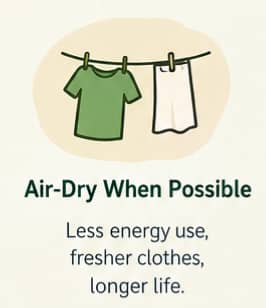
Air-drying is one of the simplest ways to reduce reliance on energy-consuming drying appliances, and you do not need to buy an expensive drying system to get started.
Use a clothesline, balcony rail where safe and permitted, existing drying rack, or suitable hanger. Choose an option that fits your home and the weather.
If outdoor space is available, breezy conditions can help clothes dry efficiently. When drying indoors, allow enough space for air to circulate and ventilate the room to reduce excess moisture.
Before hanging clothes, shake them out and straighten them. Positioning garments properly can help reduce creases and may lessen the need for ironing.
If you use a tumble dryer because of limited space, weather, accessibility, or household needs, there is no reason to feel that your entire routine has failed.
Use it when practical alternatives do not meet your needs, and follow the manufacturer’s instructions.
The objective is to reduce unnecessary energy use where you reasonably can, not to make laundry more difficult for yourself.
7. Help Your Clothes Last Longer
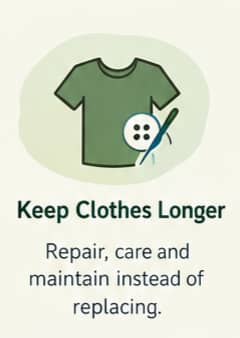
Low-waste laundry is not just about detergent bottles and washing machine settings. It is also about keeping clothes in use for as long as they remain serviceable.
Every time a usable garment is discarded and replaced, additional materials, manufacturing resources, and packaging may be needed for its replacement. Looking after the clothing you already own helps delay that cycle.
I encourage simple clothing-care habits such as following washing instructions, avoiding unnecessarily harsh treatment, and dealing with minor damage before it becomes worse.
A loose button can often be sewn back on. A small seam opening may be repairable. Clothes that no longer suit your preferences may still be useful as hand-me-downs, donations, or fabric for another purpose, depending on their condition.
You do not need to become an expert tailor. Even learning a basic repair can help you avoid replacing an otherwise usable garment.
Take care of your washing machine, too. Clean the detergent dispenser, filter, and other accessible parts according to the manufacturer’s instructions.
Leave the door open after use when appropriate so moisture can escape, particularly if your machine’s instructions recommend it.
These habits can support the useful life of your clothing and equipment without requiring a dedicated collection of laundry-care products.
8. Avoid Replacing Products That Still Work

This is where I think many people misunderstand low-waste living.
Imagine that you already own a sturdy laundry basket, a working clothesline, an effective detergent, and a drying rack that does its job.
Buying new versions of all four items simply because they are marketed as sustainable is unlikely to be the most economical starting point.
Making use of an existing product avoids the immediate need for another purchase, its packaging, and the resources associated with producing and transporting a replacement.
When a product eventually runs out or becomes unusable, you can then assess the available alternatives.
A concentrated detergent, refill option, or less heavily packaged product may be worth considering if it meets your cleaning needs and makes practical sense for your budget and location.
But you do not need to make that decision today.
I prefer a simple principle: use what you have first, replace items only when necessary, and choose thoughtfully when the time comes.
Create a Simple Low-Waste Laundry Routine
To make these ideas easier to follow, here is how I would organize a normal laundry day without buying any new products.
- Before washing: Check which garments genuinely need cleaning, separate items according to their care instructions, and treat stains where necessary.
- When loading: Combine compatible garments into a suitable load without overfilling the machine.
- During washing: Select an appropriate temperature and programme, and measure your existing detergent correctly.
- After washing: Air-dry garments when practical, leaving enough room for proper airflow.
- Between laundry days: Air suitable garments when needed, repair small problems, and keep your washing machine clean according to its instructions.
Notice what is missing from this routine: a new detergent, disposable laundry accessories, special storage containers, and an expensive collection of eco-friendly products.
The biggest change is not what you buy. It is how thoughtfully you use the resources and equipment you already have.
READ MORE: Enzyme-Based vs. Enzyme-Free Laundry Detergents: Which Cleans Better?
Five Things to Remember About Low-Waste Laundry
- Wash thoughtfully. Clean garments when they need it, while maintaining appropriate hygiene for underwear, workout clothes, and heavily soiled items.
- Make each load count. Wash compatible clothes together when you have enough laundry for a suitable load, without overloading the machine.
- Measure your detergent. Using the recommended amount helps avoid unnecessary product consumption and potential residue.
- Reduce avoidable energy use. Choose cooler washes when appropriate and air-dry clothes whenever practical.
- Keep products in use longer. Use your existing laundry supplies, maintain your equipment, and repair clothing instead of replacing it unnecessarily.
TrueEcoLiving Verdict
My verdict is simple: you do not need to spend more money to begin building a low-waste laundry routine.
I believe the most practical approach starts with using what you already own, reducing unnecessary washing, measuring detergent properly, and taking better care of your clothes.
These changes can help you use household resources more efficiently while avoiding purchases that add little value to your routine.
Of course, not every household has the same washing machine, drying space, water supply, or laundry needs. Your routine should reflect those realities.
There is no need to feel guilty about a necessary wash or an occasion when a tumble dryer is the only practical option.
Instead, focus on the changes that work for your circumstances and maintain them consistently.
Remember, low-waste living is not about replacing everything you own with an environmentally friendly alternative. Sometimes, the most sustainable purchase is the one you do not need to make.
Frequently Asked Questions
Start by washing clothes only when necessary, combining compatible items into suitable loads, measuring your existing detergent correctly, using cooler wash settings when appropriate, and air-drying clothes when practical. Maintaining your washing machine and repairing damaged garments can also help reduce waste without additional purchases.
Yes. Washing suitable garments less frequently can reduce the number of washing cycles you run, helping conserve water, energy, and detergent. However, underwear, socks, workout clothes, visibly dirty garments, and items requiring particular hygiene measures should be washed as needed.
Your existing laundry detergent is a sensible starting point. Use a detergent that cleans effectively for your household and follow its dosage instructions. You do not need to purchase a new eco-friendly detergent or special laundry accessories if your current supplies meet your needs.
Air-drying generally reduces energy use compared with using a tumble dryer and can help clothes last longer. Use an existing clothesline, drying rack, or suitable hanger when practical. Indoor drying should allow adequate airflow to limit excess moisture, and using a dryer when necessary is reasonable.