

- Reusable bottles are the better everyday option because they reduce repeat waste and are designed for long-term use.
- Single-use plastic bottles are convenient but wasteful because most are not recycled.
- Microplastics are found in bottled water and tap water, but current FDA evidence does not show that the levels detected in foods pose a human health risk.
- Reusable bottles need regular washing to prevent buildup of bacteria and mold.
- The best choice for most people is reusable, with plastic reserved for occasional emergency or one-off use. This is an inference based on the waste and hygiene evidence above.
Introduction
Let me say this plainly: the bottle you choose every day matters more than most people think. A reusable water bottle is usually the smarter long-term choice because it cuts waste, can save money over time, and gives you better control over how you drink and clean it.
Single-use plastic bottles are convenient, but they are built for short-term use, and most do not end up being recycled. In the U.S., the EPA reports that PET bottles and jars had a recycling rate of 29.1% in 2018, which means the majority were not recycled.
There is also a health angle here. The WHO has reviewed microplastics in drinking water, including bottled and tap water, and the FDA says current scientific evidence does not show that the levels of microplastics or nanoplastics detected in foods pose a risk to human health.
So, if you are trying to decide between reusable and plastic, the real question is not just “Which is easier?” It is “Which is better for daily life, and which one keeps paying off over time?”
Reusable Water Bottle vs Plastic Water Bottle: The Real Comparison
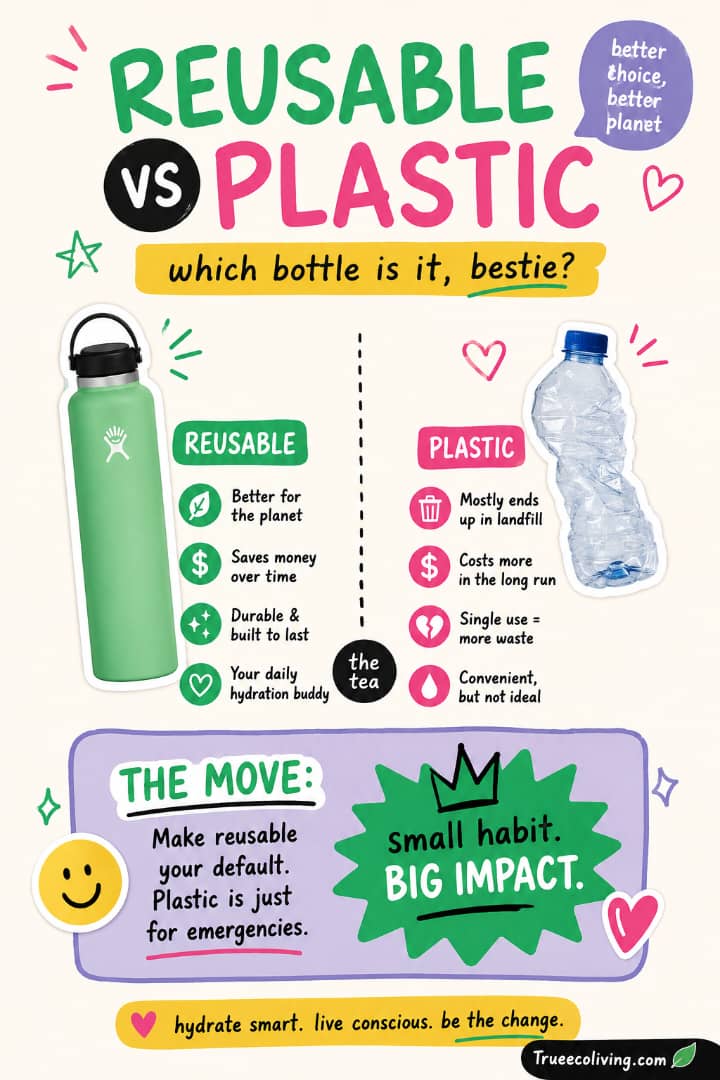
I do this comparison because it cuts through the noise. People often debate bottles like it is just about style, but the real story is a mix of environmental impact, health, cost, and convenience.
Reusable bottles are not automatically perfect, and plastic bottles are not automatically evil. But when you look at the full picture, the reusable option comes out ahead for most daily routines.
BOOKMARK: The Ultimate Guide to Reusable Water Bottles: Stylish, Durable, and Eco-Friendly
Comparison Table
| Factor | Reusable Water Bottle | Plastic Water Bottle |
|---|---|---|
| Environmental impact | Designed for repeated use, so it reduces disposable waste when used consistently. | Usually single-use; in the U.S., PET bottles and jars had a 29.1% recycling rate in 2018, so most were not recycled. |
| Health considerations | Can be a good daily option, but it must be cleaned regularly to avoid bacteria and mold buildup. | Bottled water can contain microplastics, and the WHO has reviewed this issue in bottled and tap water. |
| Cost over time | Costs more upfront, but usually becomes cheaper over time because you reuse it. This is a practical inference from repeated use. | Cheap at the point of purchase, but expensive over time if you buy it often. This is a practical inference based on repeated replacement. |
| Convenience | Great for daily use, school, work, gym, and travel, especially if you refill often. | Very convenient in the moment because you can buy it anywhere and discard it after use. |
| Maintenance | Needs rinsing, washing, and occasional deep cleaning; Cleveland Clinic says all reusable bottles need regular washing. | No cleaning needed because it is usually thrown away after use. |
| Best for | Daily hydration and long-term use. | Emergency use, occasional backup, or situations where refill access is limited. This is a practical inference. |
Why Reusable Water Bottles Win for Most People
The biggest advantage of a reusable bottle is simple: reuse beats replacement. Every time you refill the same bottle instead of buying another disposable one, you reduce packaging waste.
That matters because plastic waste is still a major environmental issue, and recycling systems do not capture everything. The EPA’s 29.1% PET recycling figure shows that most plastic bottles and jars were not recycled in the U.S. in 2018.
Reusable bottles also fit real life better. If you are someone who drinks water throughout the day, carrying one bottle is easier than repeatedly buying new ones.
Stainless steel, glass, and reusable plastic bottles can all work well, but the key is consistency: use one, wash it, refill it, repeat. Cleveland Clinic notes that reusable bottles of all materials need regular washing to avoid bacteria and mold buildup.
And yes, there is a little feel-good factor too. When people switch to reusable bottles, they often become more aware of how much they drink and how often they refill.
That kind of habit change is a quiet win. It is not just about saving plastic; it is about making hydration more intentional. This is an inference based on the long-term use pattern of reusable bottles and their maintenance needs.
READ ALSO: Stylish reusable water bottles: I tried 12 – these 5 kept me hydrated & saved me money
What About Plastic Water Bottles?
Plastic water bottles are not useless. They are handy, lightweight, and easy to grab when you are in a rush. That is why they are popular. But “popular” is not the same thing as “best.”
Their biggest problem is the short lifecycle. They are made to be used once or a few times, and then disposed of. The recycling system does not recover most of them.
There is also the microplastics question. The WHO has specifically examined microplastics in drinking water, including bottled water, and bottled water itself can be one source of microplastics in drinking-water.
FDA’s current position is that the scientific evidence does not show that the detected levels in foods pose a risk to human health. That is reassuring, but it is not a reason to love disposable plastic; it is more of a reminder that the issue is still being studied.
So my honest take is this: plastic bottles make sense in a pinch, but they should not be your everyday default if you have access to a reusable option. That conclusion follows from the waste and maintenance evidence above.
Health and Safety: The Part People Forget
A lot of people focus on the bottle material and forget the real daily issue: cleanliness. A reusable bottle can become a problem if you never wash it properly.
Cleveland Clinic says water bottles have nooks, crannies, and removable parts that can harbor bacteria and mold if they are not cleaned properly.
That does not mean reusable bottles are unsafe. It means they need a little maintenance. A basic routine is enough for most people: rinse daily, wash with soap regularly, and deep-clean when needed. Cleveland Clinic recommends hot water and soap, and notes that vinegar can help with deeper cleaning for mold spores.
This is actually one of the hidden benefits of reusable bottles: they make you more aware of hygiene. A single-use bottle looks clean because it is new, but it creates a throwaway habit. A reusable bottle asks for care, and that care is part of what makes it worthwhile.
DISCOVER: Budget Picks: 7 Best Reusable Water Bottles Under $30
Cost: The Sneaky Winner
Generally speaking, a plastic bottle looks cheaper because you pay less upfront. But that is only the first chapter of the story. If you keep buying bottled water every day, the cost adds up fast.
A reusable bottle costs more at the start, but it usually becomes the cheaper option over time because you keep using the same one. This is a practical inference based on the repeated-use model of reusable bottles and the one-time nature of disposable bottles.
This is why reusable bottles are one of those purchases that feel small but pay off quietly. They are not flashy. They just save you from making the same purchase again and again. That is the kind of everyday habit that looks boring on paper and brilliant in real life.
Which One Should You Choose?
Here is my straightforward recommendation:
- Choose a reusable water bottle if you drink water daily, care about reducing waste, and can commit to cleaning it regularly.
- Choose a plastic water bottle if you need a temporary backup, are in a situation where refill access is limited, or just need something for a one-time emergency. That is a practical inference from the convenience and single-use nature of the product.
If you ask me for the simplest rule, it is this: make reusable your default, and plastic your exception. That conclusion follows from the waste data, the hygiene advice, and the current scientific view on microplastics.
PEOPLE ALSO READ: 5 Best Reusable Water Bottles for Commuters: Leak-Proof, Cup-Holder Friendly Picks
Concluding Thought
At the end of the day, this is not a complicated decision. For everyday life, a reusable water bottle is the better habit.
It is better for the environment, usually better for your wallet over time, and perfectly practical as long as you keep it clean. Plastic water bottles still have a place, but that place is occasional, not automatic.
Frequently Asked Questions
Yes, for most people they are better overall because they reduce disposable waste and are meant to be used repeatedly. The EPA’s recycling data shows that most PET bottles and jars were not recycled in 2018, which strengthens the case for reusable options.
Not necessarily in the short term. The bigger concern is not instant danger but waste, repeated use, and the fact that bottled water has been found to contain microplastics. The FDA says current scientific evidence does not show that detected levels of microplastics or nanoplastics in foods pose a risk to human health.
They can if you do not clean them well. Cleveland Clinic says reusable bottles can harbor bacteria and mold, especially around caps, lids, and hard-to-reach areas.
A good habit is to rinse it daily and wash it regularly with soap and water. Cleveland Clinic recommends regular washing, and deeper cleaning when needed. LEARN MORE: How to Clean Any Reusable Water Bottle in 5 Minutes
That depends on your routine. Stainless steel, glass, and reusable plastic all have trade-offs, but the most important factor is that the bottle is reusable and cleaned often. Cleveland Clinic notes that all reusable bottles need regular washing.
Not automatically. The WHO has reviewed microplastics in both tap and bottled drinking-water, so bottled water is not a magic shield from the issue.