
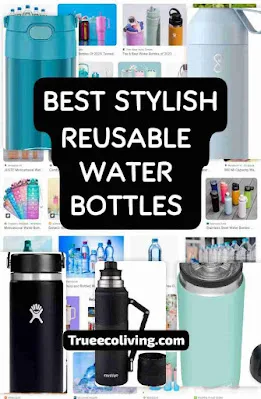
Have you ever bought a reusable water bottle because it looked amazing, only to stop using it a few weeks later because it leaked, became annoying to clean, did not keep your drink cold, or simply did not fit your daily routine?
That is exactly why I decided to bring everything together in this guide.
I have spent years writing and researching practical zero waste living, and reusable water bottles are one of those products that look simple until you actually have to live with one every day.
I have tested bottles across commuting, workouts, travel, school runs, office days, outdoor use, and everyday hydration. I have also compared different materials, lid designs, sizes, insulation systems, cleaning requirements, and price points.
And I have learned something important: the best reusable water bottle is rarely the one with the loudest marketing. It is the one that fits your hand, your bag, your cup holder, your drinking habits, your budget, and your willingness to clean it.
So in this complete guide to stylish reusable water bottles, I am going much further than a simple list of pretty bottles. I am bringing together the strongest ideas from my stylish bottle guide, budget bottle research, commuter testing, travel research, and broader reusable bottle guide.
You will see the standout stylish bottles, the best lower cost alternatives, commuter friendly designs, travel ready options, kid friendly choices, material advice, lid comparisons, insulation explained simply, cleaning advice, sustainability considerations, and a practical buying checklist.
My goal is simple: by the time you finish reading, you should know exactly what to look for and why you are buying it. No more picking a bottle just because everyone on social media seems to have one.
Affiliate Disclosure: Some links in this post are affiliate links. If you buy through them, we may earn a small commission at no extra cost to you. I only recommend products that fit the use cases discussed in this guide.

Why Stylish Reusable Water Bottles Matter
Let us start with something that sounds obvious but is surprisingly important.
You are much more likely to use a reusable bottle consistently when you actually like carrying it.
That may sound like a small thing, but habits are built around convenience. A bottle that is attractive, comfortable, easy to open, simple to clean, and reliable enough to throw into a bag without worrying about leaks has a much better chance of becoming part of your daily routine.
That is where stylish reusable water bottles have changed the conversation. Years ago, reusable bottles were often treated as outdoor gear or basic gym equipment.
Today, you can find bottles designed to look at home on a work desk, in a car cup holder, in a school backpack, at the airport, or beside you during a workout.
But I want to make one thing clear.
Style should never be the only reason you buy a bottle.
A beautiful bottle that leaks into your laptop bag is not a good bottle. A fashionable bottle that is miserable to clean will eventually end up sitting in a cupboard. A huge bottle that is too heavy to carry around may become something you leave at home.
The real sweet spot is where appearance and performance meet.
That is also where the environmental benefit becomes more meaningful. The U.S. Environmental Protection Agency recommends choosing reusable bottles and thermoses instead of disposable drinks as part of reducing plastic waste. You can read the EPA’s guidance on reducing plastic waste for more information.
I like this approach because it keeps sustainability practical. You do not have to buy a perfect product or completely redesign your lifestyle. You can simply choose something reusable that fits your routine well enough that you keep reaching for it.
And once the bottle becomes part of your routine, the benefits start stacking up. You buy fewer disposable bottles, carry water with you more often, spend less on convenience purchases, and get more control over the water you are drinking.
How I Approach Reusable Water Bottle Reviews
I do not think a bottle should be judged only by its product page.
Specifications matter, but real life tells you something different. A bottle can have impressive insulation numbers and still be annoying to carry. A lid can look incredibly clever until you have to clean six tiny components every evening.
When I assess reusable water bottles, I focus on the things that actually affect daily use.
- Material: I look at stainless steel, glass, silicone, Tritan, and other common food contact materials and consider how they affect durability, weight, taste, cleaning, and temperature control.
- Insulation: I distinguish between vacuum insulated and single wall designs because that difference can completely change the drinking experience.
- Lid design: Straw lids, screw tops, flip tops, sport caps, and auto seal lids solve different problems. I look at convenience as well as cleaning.
- Leak resistance: A bottle needs to stay closed when it is sitting inside a backpack, handbag, gym bag, or vehicle.
- Portability: Diameter, handle design, overall weight, grip, and cup holder compatibility matter more than many buyers realize.
- Cleaning: A bottle should be practical to wash, especially around seals, straws, spouts, and moving lid components.
- Value: I compare what you are getting with what you are paying instead of automatically assuming a higher price means a better daily experience.
I also believe readers deserve a little honesty. Not every bottle below will be right for everyone. A bottle designed for a commuter may be completely wrong for a child. A massive travel bottle may be ridiculous for a small office desk. And a beautifully designed glass bottle may not be the first thing I would put into an overstuffed hiking bag.
That is why this article is organized around real situations instead of pretending there is one perfect bottle for every person.
The Five Stylish Reusable Water Bottles That Stand Out Most
These five are the bottles that best represent the idea behind this article: good looking, functional, practical enough for everyday use, and suitable for very different lifestyles.
1. Hydro Flask Wide Mouth with Straw Lid: A Strong Choice for Commuters and Everyday Style
 |
| Hydro Flask Wide Mouth water bottle with Straw Lid. Image credit: retailer. |
Hydro Flask is one of those brands that became almost synonymous with reusable bottles, and after using and comparing the brand over time, I understand why.
The Wide Mouth design gives you a useful combination of capacity, insulation, durability, and a polished finish. The straw lid is especially practical for commuting because you can sip without repeatedly removing the entire cap.
What I like most about this style is its versatility. It does not look like something you bought exclusively for the gym. Carry it into an office, onto a train, into a car, or on a day trip and it still feels appropriate.
The powder coated exterior also gives it a substantial feel in the hand while providing grip. For people who regularly carry cold drinks, the vacuum insulated stainless steel construction is the main attraction.
- Best suited to: Commuters, office workers, travelers, and everyday users who want style with strong insulation.
- Typical capacity discussed here: Around 24 oz depending on model and lid.
- What I like: Strong insulation, recognizable design, broad color selection, good everyday ergonomics.
- What to watch: Some lids have several parts and require more cleaning attention.
2. Yeti Rambler with Chug Cap: Rugged Style for Travel and Long Days

If Hydro Flask feels polished and outdoorsy, Yeti leans harder into rugged simplicity.
The Rambler family is built for people who do not want their bottle treated like delicate office equipment. I particularly like the straightforward shape and solid feel when a bottle needs to survive travel, outdoor activities, and daily knocks.
The Chug Cap option changes the personality of the bottle because it is designed for faster drinking than a traditional narrow opening. That makes it useful for people who take bigger drinks throughout the day.
One thing I always consider with a larger stainless steel bottle is weight. A tough insulated bottle feels great until you remember that the water inside it weighs something too. So I think the Rambler makes the most sense for users who genuinely need the durability and capacity.
- Best suited to: Travelers, outdoor users, road trippers, and anyone who prefers rugged reusable gear.
- Typical capacity discussed here: 18 to 26 oz depending on the model.
- What I like: Durable construction, strong insulation, simple visual design.
- What to watch: Larger models can become heavy when completely full.
3. Contigo Matterhorn Thermalock: Practical Style for the Gym and Commute
 |
| Contigo Matterhorn Thermalock. Image credit: retailer. |
Contigo is one of the brands I tend to look at when the main priority is convenience.
The Matterhorn combines an insulated stainless steel body with a drinking system designed around easy use. That makes it particularly interesting for gym sessions, commuting, and anyone who does not want to stop what they are doing every time they want a drink.
The design is less about being a fashion statement and more about looking neat while doing a job well. I actually think that is one of its strengths. It does not try too hard.
- Best suited to: Gym users, commuters, students, and anyone who wants convenient drinking.
- Typical capacity discussed here: Around 20 oz.
- What I like: Practical lid, insulated stainless steel body, compact everyday profile.
- What to watch: More complicated lids need regular cleaning.
4. Ocean Bottle Go: Stylish Reusable Water Bottle for Eco Conscious Buyers
 |
| Ocean Bottle Go. Image credit: retailer. |
Ocean Bottle is where the environmental story becomes part of the product identity.
The Go is compact, modern, and designed for people who want something that feels more like a lifestyle accessory than a traditional outdoor bottle.
I particularly like this option for someone who wants a smaller bottle for short commutes, errands, office use, or everyday urban carry. The anti slip finish can also be a genuinely useful detail when you are carrying the bottle around wet streets or during busy commutes.
Ocean Bottle has also built environmental programs around its products, which is relevant for buyers who want their purchase to connect to broader plastic reduction efforts. Still, I always recommend looking beyond environmental marketing and checking exactly what a brand says it funds, measures, or reports.
- Best suited to: Eco conscious commuters, office workers, and people who prefer compact modern bottles.
- Typical capacity discussed here: Around 17 oz or 500 ml.
- What I like: Sleek appearance, compact size, environmental focus.
- What to watch: Smaller capacity is not ideal if you want one refill to carry you through a very long day.
5. Thermos Funtainer: A Practical Stylish Bottle for Kids
 |
| Thermos Funtainer. Image credit: retailer. |
When a reusable bottle is going into a child’s backpack, my priorities change completely.
I care less about premium appearance and more about whether the bottle is easy for smaller hands to hold, whether the drinking mechanism is straightforward, whether it can survive everyday knocks, and whether the size makes sense for school.
The Funtainer is designed around those needs. Its compact format, pop up straw, and kid focused design make it a practical choice for school days and family outings.
- Best suited to: Young children, school bags, parents shopping for an everyday kid bottle.
- Typical capacity discussed here: Around 12 oz.
- What I like: Compact size, simple drinking system, kid friendly handling.
- What to watch: Smaller capacity and a lid that needs regular cleaning.
More Great Reusable Water Bottles Worth Considering
The five bottles above are the core stylish recommendations, but one of the biggest lessons from combining my other guides is that there are several excellent alternatives once you start shopping around your actual needs.
Owala FreeSip: One of the Most Flexible Designs for Everyday Use

Owala deserves special attention because the FreeSip lid solves a very real problem: different people want to drink in different ways.
The design lets you sip through the built in straw or drink through the larger opening. I find that useful because the way you drink during a walk, commute, gym session, or travel day is not always the same.
The insulated versions are especially appealing for people who want a larger bottle with cold water retention and a fun, modern appearance.
Best for: Travel, commuting, gym use, parents, and anyone who dislikes choosing between a straw and a traditional drinking opening.
Nalgene Wide Mouth: The Simple Budget Classic

Nalgene is what I point to when someone tells me, “I do not care about fancy features. I just want something that works.”
The wide mouth makes filling, adding ice, and cleaning relatively straightforward. It is also light compared with a large insulated stainless steel bottle.
The major compromise is temperature control. A basic uninsulated Nalgene is not designed to compete with vacuum insulated stainless steel when it comes to keeping water cold for long periods.
But if durability, light weight, and price are your priorities, that tradeoff can make perfect sense.
Best for: Students, hikers, beginners, budget shoppers, and anyone who wants simple everyday hydration.
Takeya Actives: Strong Insulated Value Without the Premium Feel

Takeya fits nicely into the category I call “practical premium.” You get stainless steel insulation, a useful spout lid, and a design that is simple enough to use every day.
It is particularly interesting for people who want a bottle with real temperature control without moving all the way into the highest premium price range.
Best for: Commuters, gym users, office workers, and shoppers who want insulated performance for a moderate price.
Simple Modern Summit: Big Capacity on a Budget

There is a particular type of reusable bottle buyer who wants a lot of water, a large handle, a straw option, plenty of design choices, and a reasonable price. Simple Modern is aimed squarely at that person.
The larger size can be useful for long days when you do not want to refill constantly. The downside is obvious: the larger the bottle, the heavier it becomes once full.
Best for: Full day hydration, students, commuters, gym users, and anyone who prioritizes capacity.
Klean Kanteen Classic Insulated: Minimalist Commuter Option

Klean Kanteen is worth a look when you want something more understated. The brand has a strong association with reusable drinkware, and its insulated bottles are designed around practical daily use.
I particularly like this type of bottle for people who dislike oversized designs. A relatively slim insulated bottle can be much easier to carry in a work bag or alongside other essentials.
Best for: Minimalist commuters, office workers, cyclists, and people who prefer understated designs.
CamelBak Chute Mag: Convenient Everyday Drinking

The magnetic cap is the feature that makes this bottle interesting. It is designed to stay out of the way while you drink instead of leaving the cap loose in your hand or somewhere on the ground.
That is the sort of tiny design detail that can have a surprisingly large impact when you use a bottle every day.
Best for: Commuters, cyclists, gym users, and people who prefer a straightforward drinking experience.
Brita Filtering Bottle: For People Who Care About Water Taste
Not everyone has a bottle problem. Some people have a water taste problem.
If the flavor of tap water is the main reason you keep buying packaged water, a bottle with a replaceable filter can be worth considering. Brita’s bottle format gives you portable filtration and reduces the need to rely on disposable bottled drinks simply because you dislike the taste of the water available to you.
There is a tradeoff, though. Filters are consumable items. That means you have an ongoing replacement cost and an additional component to maintain.
Best for: Commuters, travelers, office users, and people who primarily want better tasting drinking water.
Get Brita Bottle
S’well Original: When Style Is a Major Part of the Decision
S’well is worth mentioning because reusable bottles have clearly moved into fashion territory. A bottle does not have to look like outdoor equipment, and S’well has traditionally leaned into that idea with polished designs.
This is particularly relevant for office workers or anyone who treats accessories as part of their personal aesthetic.
Best for: Style focused buyers and office users who want their bottle to feel like an accessory.
Lifefactory Glass: A Different Take on Stylish Hydration
Glass appeals to a completely different type of buyer.
Some people simply prefer the taste and feel of drinking from glass. It can also look elegant on a desk or kitchen counter.
The tradeoff is durability. Glass is heavier and more vulnerable to breakage than many stainless steel or plastic options, so I would choose it based on where you will actually use it.
Best for: Office use, home use, and people who strongly prefer glass.
Hydrapak Stash: When Packability Matters Most
A collapsible bottle solves a problem rigid bottles cannot: where do you put the bottle when it is empty?
The Hydrapak Stash style is useful for travel, hiking, festivals, and minimalist packing because it can be compressed when you no longer need a full sized bottle.
Best for: Backpackers, hikers, travelers, and anyone trying to save luggage space.
LifeStraw Go Series: For Travel Where Water Quality Is a Concern
This is where reusable bottles become a little more specialized.
The LifeStraw Go line combines a bottle with filtration or purification technology designed for certain travel and outdoor situations. I would not buy a filtered bottle simply because the technology sounds impressive. I would buy it because the specific water conditions I expect to encounter make filtration useful.
Always check the exact filter specifications, replacement schedule, and the types of contaminants the current model is designed to address. A filter is not automatically a guarantee that every water source is safe.
Best for: Outdoor travel, hiking, camping, and trips where water treatment is an important consideration.
Nalgene Cantene: High Capacity Without the Rigid Bottle Shape
The Cantene solves another practical problem: carrying a lot of water without carrying a rigid bottle that takes up the same amount of space all day.
It is particularly interesting for road trips, hiking, camping, and situations where flexibility matters more than insulation.
Best for: Outdoor use, large water needs, camping, road trips, and flexible packing.
READ ALSO: 15 Best Non Toxic Cleaning Products for a Safer and Eco Friendly Home: Explore the cleaning products guide here.
Stainless Steel, Glass, Silicone, or Tritan: Which Material Should You Choose?
Material is one of the most important decisions in this entire category.
And I would caution against asking, “Which material is best?” without first asking, “Best for what?”
Stainless Steel
Stainless steel is the workhorse of reusable bottles. When you combine it with double wall vacuum insulation, it becomes particularly useful for people who want strong hot and cold temperature retention.
I generally recommend stainless steel to people who want a bottle that can handle daily use, commuting, outdoor activities, and travel without feeling disposable.
The disadvantages are straightforward. It is heavier than many plastic options, you cannot see the water level through an opaque body, and dents are possible if the bottle takes a serious hit.
Glass
Glass gives you a different drinking experience. It is visually clean, easy to see through, and appealing to people who prefer a neutral taste.
But I would not choose glass simply because it sounds premium. Think about your routine. If the bottle is going into a backpack that gets thrown onto the floor regularly, stainless steel or a suitably durable plastic bottle may be more practical.
Silicone
Silicone shines when portability matters. A collapsible bottle can disappear into luggage or a backpack when empty, which is a major advantage for travelers and hikers.
The main tradeoff is that flexible bottles are generally chosen for portability rather than maximum insulation.
Tritan and Similar Reusable Plastics
Reusable plastic bottles are popular because they are light, practical, and usually less expensive than insulated stainless steel.
For kids, school use, lightweight hiking, and people who do not care about keeping water cold all day, they can make a lot of sense.
When evaluating a bottle for food and beverage use, I prefer to look at the manufacturer’s stated material and intended use rather than relying on vague claims about what is automatically “chemical free.” The FDA regulates substances that come into contact with food and maintains information on authorized food contact substances and conditions of use. See the FDA’s food contact materials information for the regulatory context.
My rule: choose the material that makes you want to use the bottle every day. Longevity comes from consistent use, not from owning the most expensive material.
Lid Types Explained: Screw Top, Straw, Flip, Sport, or Auto Seal
I can tell you from experience that the lid can make or break an otherwise excellent bottle.
A bottle body might be perfect, but if the lid requires awkward twisting, leaks when tipped, has too many tiny pieces, or is difficult to clean, you may stop using the bottle altogether.
Screw Top
This is the simple classic. Fewer moving parts often means fewer things to break, and a properly sealed screw top is a practical choice for people who value simplicity.
Straw Lid
Straws are convenient for sipping while walking, working, studying, exercising, or sitting in a car. The downside is cleaning. The straw, mouthpiece, seals, and hidden channels all deserve attention.
Flip Top
Flip tops make quick access easy and are popular with commuters and people who want one handed drinking.
Sport Cap
Sport caps are designed for quick access during physical activity. They are practical for people who want fast hydration rather than a decorative lid.
Auto Seal
Auto seal systems are particularly attractive to commuters because they are designed around the idea that the opening closes when you stop pressing or activating the drinking mechanism.
One important distinction: convenient drinking does not mean you should actually drink while distracted or while driving. The safest approach is to keep your attention on the road and use the bottle when the vehicle is safely stopped.
For more ideas on practical low waste accessories, see our post on reusable straws you should not buy and the ones worth considering.
Vacuum Insulation Versus Single Wall: What Difference Does It Really Make?
If you have ever filled a bottle with ice water and opened it several hours later to find lukewarm water, you already understand the value of insulation.
Double wall vacuum insulation is designed to slow heat transfer. That is why insulated stainless steel bottles are commonly chosen for people who want cold drinks to stay cold for much longer than they would in a basic single wall bottle.
Single wall bottles are different. They are lighter, simpler, and often cheaper. For room temperature water, that may be exactly what you need.
This is one of those places where I do not recommend paying for a feature you will not use. If your bottle sits on your desk and you usually drink room temperature water, premium insulation may not matter much to you.
But if you are commuting during hot weather, spending all day outdoors, attending long gym sessions, or traveling, insulation can become one of the most valuable features you own.
The Best Stylish Reusable Water Bottles for Commuters
Commuters need a very specific combination of features.
The bottle has to fit naturally into the day. It should not constantly roll around your bag, sweat onto your documents, or require two hands to deal with the lid every few minutes.
For commuting, I would pay particular attention to:
- Diameter and cup holder compatibility.
- Leak resistant or locking lids.
- Comfortable grip.
- Moderate capacity rather than unnecessary bulk.
- Insulation if you regularly carry cold or hot drinks.
- Easy cleaning because commuting bottles tend to get heavy everyday use.
The bottles from this guide that make the most sense for commuter use include Hydro Flask, Contigo, Yeti, Klean Kanteen, CamelBak, and Owala. The right one depends on whether you care most about insulation, lid convenience, capacity, or weight.
TrueEcoLiving Tip: Before buying a commuter bottle, measure your actual car cup holder or bag pocket. A product can be technically portable and still be a terrible fit for your routine.
Stylish Reusable Water Bottles for Travel
Travel changes the decision again.
When I think about travel bottles, I care about three things immediately: what happens at security, what happens when the bottle goes into a bag, and what happens when the bottle is empty.
For air travel in the United States, the Transportation Security Administration allows empty drink containers through the security checkpoint. TSA also states that frozen liquid items can pass when they are frozen solid, while partially melted or slushy items are subject to the liquid restrictions. Because airport screening decisions can ultimately depend on the security officer and circumstances, it is smart to check the official guidance before departure rather than relying on an old travel tip.
Check the official TSA What Can I Bring list here.
The most important practical point is simple: bring the bottle empty through the checkpoint and refill it afterward.
For travel, I particularly like Owala FreeSip and Hydro Flask when insulation matters. Hydaway and other collapsible bottles become more interesting when luggage space is the biggest concern. LifeStraw Go can be useful when your trip involves outdoor activities or destinations where water treatment needs more consideration.
Owala FreeSip for Travel
The FreeSip is practical for long travel days because you can carry a larger amount of water and drink without always tipping a large bottle all the way upward.
That can be convenient in an airplane seat, on public transportation, or while walking around a new city.
Hydro Flask for Temperature Control
|
| Hydro Flask Wide Mouth with Straw Lid. Image credit: retailer. |
Hydro Flask makes sense when your idea of good travel hydration is simple: fill it, chill it, and expect it to stay cold for a long stretch.
The 24 oz range can also strike a useful balance between carrying enough water and avoiding unnecessary bulk.
Hydaway for Minimalist Packing
For minimalist travelers, the appeal is obvious. When the bottle is empty, you do not want a rigid object taking up valuable space in your luggage.
A collapsible silicone bottle can solve that problem beautifully. Just make sure you choose a design rated for the type of liquid and temperature you intend to use. Do not assume every silicone bottle is suitable for hot drinks simply because the material itself can tolerate heat.
Best for: Lightweight travel and travelers who want to reduce the amount of space an empty bottle occupies.
LifeStraw Go for Adventure Travel
When filtration is part of the reason you are buying the bottle, I would move LifeStraw higher on the list of models to investigate.
The key here is understanding exactly what the current filter is designed to reduce and where it should be used. A filtered bottle should be selected based on the water conditions you expect, not simply because the word “filter” sounds reassuring.
Nalgene Cantene for High Capacity
If you need a large volume of water for road trips, camping, or outdoor activities and do not mind giving up insulation, a flexible high capacity bottle can be surprisingly useful.
It is the kind of product that makes more sense once you understand your actual travel routine rather than simply looking at product photos.
The Best Reusable Water Bottles Under $30
One of the biggest misconceptions I see in the reusable bottle space is that you need to spend premium money to get something good.
You do not.
There are inexpensive bottles that are perfectly capable of becoming long term daily companions. The important thing is understanding what you are giving up.
A lower priced bottle may have simpler insulation, fewer finish options, a more basic lid, lighter construction, or fewer accessories. None of those things automatically make it a bad product.
In fact, one of my favorite lessons from reviewing budget bottles is that simplicity can be a feature.
Owala FreeSip
When discounted or available around the lower price ranges described in the earlier guide, Owala can offer an unusual amount of lid versatility. The appeal is less about being cheap and more about getting a thoughtful drinking system without immediately entering premium pricing.
Nalgene Wide Mouth
Nalgene remains one of the easiest budget recommendations because there is no complicated technology to understand. It is simply a durable reusable bottle that has earned a reputation for straightforward use.
Takeya Actives
For shoppers who care about insulation, Takeya is one of the more interesting choices in the lower price category. The spout and insulated body give it more functionality than a basic plastic bottle.
Contigo Autoseal
If preventing spills is the main problem you are trying to solve, Contigo’s auto seal style deserves consideration. The design is built around closing the opening after drinking.
Simple Modern Summit
Large capacity is the reason to look at Simple Modern. It is particularly useful for people who would rather carry one big bottle than refill a smaller one repeatedly.
Brita Filtering Bottle
A filtering bottle can be worthwhile when water taste is the barrier preventing you from choosing reusable water consistently.
CamelBak Eddy or Chute Range
CamelBak offers several practical designs aimed at people who want lightweight hydration and convenient drinking rather than premium insulation alone.
Comparison Table: Reusable Water Bottles by Use Case
Rather than pretending all of these bottles are competing for the exact same buyer, I prefer to look at what each design is trying to do.
| Bottle | Material | Typical Size | Insulation | Main Strength | Best Suited To |
|---|---|---|---|---|---|
| Hydro Flask Wide Mouth | Stainless steel | 24 oz range | Vacuum insulated | Balanced performance and style | Commuting, office, everyday use |
| Owala FreeSip | Stainless steel in insulated models | 24 to 32 oz | Available on insulated models | Flexible drinking lid | Travel, gym, commuting |
| Yeti Rambler | Stainless steel | 18 to 26 oz discussed here | Vacuum insulated | Rugged durability | Travel and outdoor use |
| Contigo Matterhorn | Stainless steel | 20 oz range | Insulated | Convenient drinking | Gym and commuting |
| Ocean Bottle Go | Mixed construction by model | 17 oz range | Varies | Compact style and environmental focus | Urban everyday use |
| Thermos Funtainer | Child focused construction | 12 oz range | Insulated | Kid friendly size | School and children |
| Nalgene Wide Mouth | Tritan plastic | 32 oz | No | Lightweight durability | Budget and outdoor use |
| Takeya Actives | Stainless steel | 24 oz | Insulated | Strong value | Gym and everyday use |
| Simple Modern Summit | Stainless steel | 32 to 40 oz | Insulated | Large capacity | Full day hydration |
| Klean Kanteen Classic Insulated | Stainless steel | 20 oz range | Insulated | Slim everyday format | Commuters |
| CamelBak Chute Mag | Plastic or insulated versions | 20 oz range | Varies | Convenient magnetic cap | Commuting and gym |
| Brita Filtering Bottle | Plastic or stainless versions | 26 oz range | Varies | Portable filtration | Water taste |
| LifeStraw Go | Stainless steel or other model specific construction | 22 to 34 oz discussed here | Available on some models | Filtration | Adventure travel |
| Hydaway | Silicone | 17 to 25 oz discussed here | No | Collapsible design | Minimalist travel |
| Nalgene Cantene | Flexible plastic | 48 oz discussed here | No | High capacity | Outdoor and road trips |
Product sizes, lids, materials, and prices can vary by model and generation, so I recommend checking the exact product page before buying rather than assuming every version of a brand has identical specifications.
How Much Should You Spend on a Reusable Water Bottle?
This is another question where I think shoppers sometimes make things harder than they need to be.
You do not need to spend $40 or $50 simply because that is what a premium bottle costs.
You also do not need to buy the cheapest bottle available simply because you want to save money.
I would think about it in three broad categories.
Budget: Around the lower price range, you can find excellent basic bottles, particularly if you do not care about advanced insulation or premium finishes.
Mid range: This is where you often start getting stronger insulation, better lid systems, more polished finishes, and a broader range of everyday features.
Premium: The extra cost often buys refinement, brand ecosystem, specific insulation performance, premium finishes, replacement parts, or a design you strongly prefer.
The key question I would ask is not “Can I afford this bottle?”
It is “Will I actually use this bottle enough to justify buying it?”
A $15 bottle that you abandon after two weeks is not necessarily better value than a $35 bottle that you use every day for years.
How to Choose the Right Bottle for Your Lifestyle
Here is the fastest way I know to narrow down the choices.
For Commuters
Look for a compact insulated bottle with a secure lid and a shape that works in your bag or cup holder. Hydro Flask, Contigo, Klean Kanteen, CamelBak, and Owala are all worth investigating.
For the Gym
Prioritize quick drinking, easy refilling, useful capacity, and easy cleaning. Owala, Contigo, Takeya, CamelBak, and larger Simple Modern designs can fit this type of routine.
For Travel
Think about leakage, size, weight, TSA convenience, insulation, and how much space the bottle takes when empty. Owala and Hydro Flask are strong insulated options while collapsible bottles become attractive for minimal luggage.
For Children
Look for easy opening, manageable weight, suitable capacity, spill resistance, and a lid that can actually be cleaned properly. Thermos Funtainer and kid specific Owala models fit this use case.
For Office Use
Office users usually benefit from something quieter, slimmer, stylish, and easy to place beside a computer or on a desk. Glass, Hydro Flask, S’well, and compact stainless steel bottles are worth considering.
For Hiking and Outdoor Use
Think about capacity, weight, durability, filtration needs, and whether insulation is actually important to you. Nalgene, Yeti, Hydro Flask, LifeStraw, and flexible high capacity designs all solve different outdoor problems.
Cleaning Your Stylish Reusable Water Bottle
Here is where I want to be slightly boring because this part really matters.
Do not buy a beautiful bottle and then treat cleaning as an afterthought.
Water bottles can develop odors and residue when they are repeatedly used without proper washing. Lids, straws, seals, and narrow channels deserve even more attention because they are easy to overlook.
My basic routine is simple:
- Rinse the bottle regularly instead of allowing old drinks to sit inside it.
- Wash the bottle with warm soapy water using a bottle brush when the opening is narrow.
- Disassemble the lid when the manufacturer says it is designed to come apart.
- Clean straw channels and mouthpieces with an appropriately sized brush.
- Allow the bottle and lid components to dry fully before closing them.
- Check the manufacturer instructions before putting any component into a dishwasher.
And please do not assume that the body being dishwasher safe means every seal, lid, straw, or decorative finish is dishwasher safe too.
How to Make Your Reusable Bottle Last Longer
The easiest way to make a reusable bottle more sustainable is to keep using the one you already own.
That means treating the bottle as something worth maintaining rather than something to replace whenever it gets a scratch.
- Keep the lid clean: Seals and drinking mechanisms are often the first things to develop problems.
- Let parts dry: Closing a wet bottle immediately can trap moisture and encourage unpleasant odors.
- Replace worn parts where possible: A damaged seal should not automatically mean throwing away an otherwise usable bottle.
- Avoid misuse: Do not use a bottle for liquids or temperatures that the manufacturer does not permit.
- Carry it sensibly: A protective sleeve can help reduce scratches on some bottles and provide extra grip.
One of my favorite sustainability principles is simple: buy well, care for it, and keep using it.
That is usually more useful than chasing the newest bottle every few months.
Do Stylish Reusable Water Bottles Actually Save Money?
They can, especially if you regularly buy bottled water during commutes, office days, workouts, errands, or travel.
The exact savings depend entirely on your local bottled water prices and how often you buy them, so I do not like quoting one dramatic savings figure and pretending it applies to everybody.
Instead, do the simple math yourself.
If you normally spend $3 on bottled water three times a week, that is $9 a week. Multiply that by the number of weeks you usually keep the habit and compare the total with the cost of your reusable bottle.
The environmental calculation works in a similar way. Every time you refill the same reusable bottle instead of buying another disposable bottle, you are choosing reuse instead of another single use container.
That does not make reusable products impact free. They still require materials, manufacturing, transportation, and eventual disposal. But consistent reuse is the point. The bottle only becomes the better choice when it is actually used.
That is exactly why I put so much emphasis on style and convenience in this guide. A bottle you love can become a habit.
My Quick Buying Checklist
- Choose your main use: commute, gym, travel, office, school, hiking, or home.
- Choose the material: stainless steel for durability and insulation, glass for preference and presentation, flexible silicone for portability, or reusable plastic for lightweight use.
- Choose the lid: straw for sipping, screw top for simplicity, flip for convenience, sport for activity, or auto seal for controlled drinking.
- Check capacity: smaller bottles are easier to carry while larger bottles reduce the need for refills.
- Think about cleaning: more complicated lids can mean more maintenance.
- Check the exact product specifications: materials, dishwasher guidance, insulation claims, replacement parts, and current price can differ by model.
- Buy for your real life: not the life you wish you lived.
That last point might be the most important one in the entire article.
If you spend eight hours in an office, buy for that routine. If you travel constantly, buy for that routine. If you have children, buy for their actual daily use. If you hike every weekend, think like a hiker.
Do not buy a giant outdoor bottle just because it looks impressive online when you know you will mostly carry it to work.
And do not spend extra money on insulation if you genuinely prefer room temperature water.
Final Thoughts: What I Would Look For Before Buying
After bringing these different guides together, I think the biggest lesson is that choosing a reusable water bottle does not need to be complicated.
Start with your routine.
If you commute every day, a slim insulated bottle with a secure lid may make the most sense. If you travel frequently, portability, leak resistance, TSA convenience, and durability become more important. If you spend hours in the gym, think about drinking speed, capacity, grip, and cleaning. If you have children, keep the bottle simple enough that they can actually use it.
And yes, style matters.
I do not dismiss appearance because I think appearance influences habits. A bottle that fits your personal taste is more likely to become part of your everyday carry. That can be the difference between something you use for years and something that quietly gets forgotten in a cupboard.
Hydro Flask remains an appealing option for people who want polished design and insulation. Owala brings an especially clever drinking concept. Yeti focuses heavily on ruggedness. Contigo emphasizes convenience. Ocean Bottle makes environmental action part of its appeal. Nalgene keeps things simple. Takeya delivers useful insulation without making the bottle unnecessarily complicated. Simple Modern focuses on capacity and variety. Klean Kanteen appeals to people who prefer a more understated approach. CamelBak remains practical for active users.
There is no need for all of those bottles to compete for the same person.
That is the whole point.
The right reusable water bottle is the one that fits your life so naturally that you stop thinking about it.
Once that happens, the bottle stops being just another product. It becomes part of a routine that can help you reduce disposable purchases, make carrying water easier, and create a small but useful low waste habit.
That is what I would look for before buying one.
5 Key Takeaways
- The best stylish reusable water bottle is the one you will actually use: Look beyond appearance and choose a design that fits your routine, bag, drinking habits, and cleaning preferences.
- Stainless steel remains a strong all around material: Especially when you want durability and vacuum insulation, although glass, silicone, and reusable plastics can be better for specific situations.
- Owala, Hydro Flask, Yeti, Contigo, Ocean Bottle, Nalgene, Takeya, and other brands solve different problems: The right choice depends on whether you prioritize style, insulation, convenience, price, capacity, portability, or filtration.
- You do not need to spend premium money: Several budget friendly bottles can deliver useful performance, especially when your main priorities are durability, portability, or basic everyday hydration.
- Maintenance matters as much as the purchase: Clean the bottle, lid, seals, and straws regularly, let everything dry properly, and follow the manufacturer’s instructions so the bottle stays useful for as long as possible.
FAQs About Stylish Reusable Water Bottles
The best choice depends on your routine. Hydro Flask is useful for people who want insulation and polished everyday design, while Owala is attractive to people who value flexible drinking options. Other choices make more sense for specific uses such as travel, children, or budget shopping.
They can be, especially if you want durability and vacuum insulation. Stainless steel bottles are commonly chosen for commuting, travel, gym sessions, and long days when keeping drinks cold or hot matters.
There is no single material that is best for every person. Stainless steel is useful for durability and insulation, glass appeals to people who prefer its drinking experience, silicone is useful for collapsible travel bottles, and reusable plastics can be lightweight and affordable.
Yes. TSA’s current guidance says empty drink containers can go through the security checkpoint. Remember to empty the bottle before screening and refill it after security. Frozen liquids must be frozen solid to receive the special treatment described by TSA.
A bottle used every day should be washed regularly with warm soapy water, with extra attention given to lids, seals, straws, and mouthpieces. A deeper clean can be useful when odors or residue appear. Always follow the manufacturer’s cleaning instructions.
A reusable bottle can reduce the need for disposable drink containers when it is used repeatedly for a long time. The environmental benefit depends on the materials, manufacturing, transport, washing, and especially how long you keep using the bottle.
For commuting or short outings, around 16 to 24 ounces can be convenient. Larger bottles around 24 to 32 ounces can reduce refills during long days, while much larger sizes make more sense for hiking or situations where access to water is limited.
Sometimes. Premium bottles can offer strong insulation, better finishes, specialized lids, replacement parts, or a design you genuinely prefer. But a lower priced bottle can be the better value when it already meets your needs and you will use it consistently.