
Laundry detergent sheets promise a simpler way to wash clothes. They are lightweight, convenient, easy to store and often come in compact packaging.
However, finding sticky fragments or white marks on freshly washed clothes can make you question whether switching from traditional detergent was worthwhile.
I particularly understand this frustration when you have chosen detergent sheets because you want a more convenient and environmentally conscious laundry routine.
Although many detergent sheets are designed for cold-water washing, they do not always dissolve equally well in every washing machine. Water temperature, cycle duration, detergent placement, load size and storage conditions can all contribute to residue.
Let me explain the seven common causes, how to remove the residue and what I would change before giving up on detergent sheets.

Affiliate Disclaimer: This post contains affiliate links. I may earn a small commission when you purchase through qualifying links, at no additional cost to you. This helps support TrueEcoLiving.
Quick Guide: Why Detergent Sheets Leave Residue
| Possible Cause | What I Recommend |
|---|---|
| Extremely cold water | Try a slightly warmer wash if the fabric allows. |
| Short wash cycle | Use a normal washing programme. |
| Incorrect sheet placement | Follow the manufacturer’s instructions. |
| Overloaded drum | Reduce the laundry load. |
| Excessive detergent | Follow the recommended dosage. |
| Damp sheets | Store them in a dry, sealed container. |
| Hard water or washer buildup | Check water hardness and clean the machine. |
Why Do Laundry Detergent Sheets Leave Residue in Cold Water?
Laundry detergent sheets contain concentrated cleaning ingredients held together in a thin, flexible material. Depending on the formulation, these include surfactants, enzymes, fragrances and other ingredients that support cleaning or maintain the sheet’s structure.
When exposed to water, the sheet should dissolve or disperse, releasing its cleaning ingredients. However, cold water can slow this process, particularly when there is insufficient agitation or washing time.
I have also learned that a manufacturer’s claim of cold-water compatibility does not guarantee identical results in every washing machine. The formulation and actual washing conditions both matter.
7 Reasons Laundry Detergent Sheets Leave Residue
1. Your Washing Water Is Extremely Cold
Very cold water can slow the breakdown and dispersion of some detergent formulations. This becomes more noticeable when the machine also uses a short cycle or limited water movement.
My recommendation: Try a moderately warmer wash, provided your clothing care labels allow it. You do not necessarily need hot water to troubleshoot the problem.
2. Your Washing Machine Uses a Short Cycle
Quick-wash programmes reduce washing time and may use different water levels and movement patterns. A detergent sheet that dissolves successfully during a normal cycle may not disperse completely during a very short programme.
My recommendation: Try a standard washing programme. Give the sheet enough time to disperse and circulate through the load.
3. You Are Placing the Sheet in the Wrong Compartment
Some manufacturers recommend placing detergent sheets directly inside the empty washing machine drum, while product instructions can differ. Using an unsuitable detergent drawer may cause a sheet to stick or fail to disperse properly.

My recommendation: Check your product instructions. If the manufacturer specifies drum placement, put the sheet inside before adding your clothes.
4. You Are Overloading Your Washing Machine
Clothes need enough room to move during washing. When the drum is packed too tightly, water and detergent cannot circulate as freely. Bulky towels, blankets and bedsheets can make the problem worse.

My recommendation: Reduce the load and leave enough room for clothes to move freely. This is particularly important when washing bulky items.
5. You Are Using More Detergent Than Necessary
More detergent does not automatically produce cleaner clothes. Some sheets are designed to be divided according to load size, while others specify different quantities for regular and heavily soiled laundry.
Using too much can leave excess cleaning ingredients that are more difficult to rinse away.
My recommendation: Follow the dosage instructions rather than automatically using a full sheet for every load. My guide on how much laundry detergent you should really use per wash explains this in more detail.
6. Your Detergent Sheets Have Absorbed Moisture
Detergent sheets should be stored somewhere dry. Exposure to humidity can make them sticky, soft or clumped together, affecting their condition before they even enter the washing machine.
My recommendation: Keep sheets in their original sealed packaging or a suitable moisture-resistant container. Avoid handling them with wet hands.
7. The Residue May Actually Be Hard-Water Deposits or Washer Buildup
Not every white or grey mark on clothing comes from an undissolved detergent sheet. Hard-water minerals, lint, excessive detergent and accumulated deposits inside the washing machine can produce similar problems.
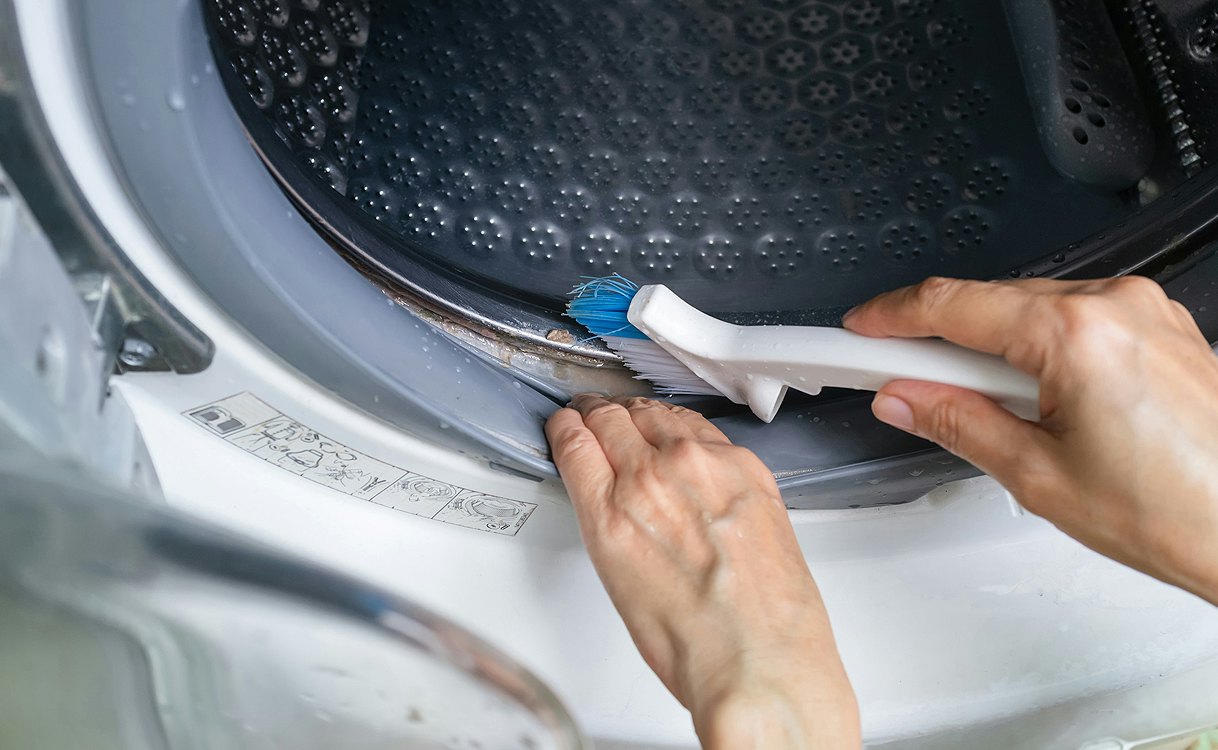
Look closely at the residue before replacing your detergent. Also inspect the drum, detergent dispenser and rubber door seal for accumulated deposits.
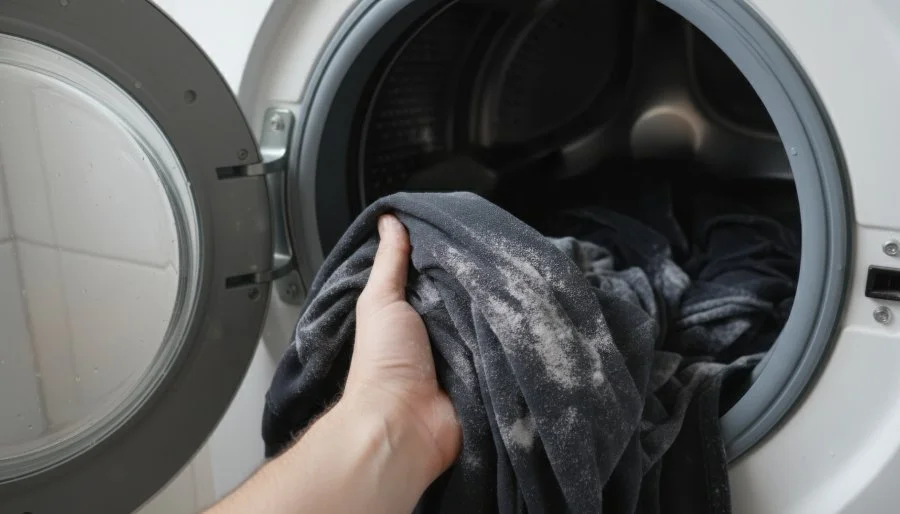
My recommendation: Check your water hardness before investing in water-treatment equipment. Clean your washing machine according to its manufacturer’s maintenance instructions.
A Premium Product to Consider for Confirmed Hard Water
If testing confirms that hard water is contributing to recurring mineral deposits in your home, a whole-house water softener may be worth considering. This is a much bigger investment than changing detergent, so I would investigate your water quality first.
Recommended: Aquasure Harmony Series 48,000-Grain Whole-House Water Softener

Why Aquasure:
This salt-based system uses ion exchange to reduce hardness minerals such as calcium and magnesium throughout the household water supply.
- Capacity: 48,000 grains and more.
- Intended household: Approximately 5–6 people, according to the manufacturer.
- Control: Digital metered regeneration.
- Maintenance: Requires salt replenishment and appropriate servicing.
My consideration: This is a substantial home improvement purchase that requires suitable plumbing connections and proper sizing. It will not fix undissolved detergent-sheet fragments caused by short cycles or incorrect placement.
Check Aquasure Harmony 48,000-Grain Water Softener on Amazon →
Check the exact model, seller, installation requirements and warranty before purchasing. Amazon listing availability and pricing may differ.
How to Remove Laundry Detergent Sheet Residue From Clothes
Finding residue does not mean you need to discard the affected clothes or immediately buy another detergent.
- Remove visible fragments: Gently shake the garment and remove loose pieces.
- Check the fabric: Look for sticky patches and white marks.
- Run another rinse: Use an appropriate rinse programme without adding another full detergent dose.
- Adjust the temperature: A moderately warmer rinse may help if the fabric care label permits it.
- Check before drying: Make sure the residue has disappeared before using a dryer.
For more detailed advice, see my guide on removing laundry detergent residue from clothes without laundry stripping.
What I Look For Before Buying Laundry Detergent Sheets
I appreciate the convenience of detergent sheets, but I would not choose one based on environmental marketing alone. These are the four things I consider:
- Ingredient transparency: Look for meaningful disclosures about surfactants, enzymes, fragrances and other ingredients.
- Cold-water compatibility: Check the manufacturer’s washing instructions and dosage recommendations.
- Cleaning performance: A sheet that dissolves properly does not automatically clean effectively.
- Environmental claims: Consider packaging, manufacturing information and credible certifications rather than assuming cardboard packaging makes a product environmentally harmless.
My comparison of laundry detergent sheets versus powder can help you understand the differences in cleaning performance, cost and packaging waste.
Summary
- Very cold water: Can slow the dissolving and dispersing process.
- Washing conditions: Short cycles, inadequate movement and overloaded drums can contribute to residue.
- Storage: Moisture can make detergent sheets sticky and difficult to handle.
- Other deposits: Hard water, lint and washing-machine buildup can look like detergent residue.
- Better product choices: Prioritise transparent ingredients, clear instructions and credible environmental information.
Conclusion: Should You Stop Using Laundry Detergent Sheets?
I do not believe that finding residue on your clothes automatically means you should abandon laundry detergent sheets.
They offer convenience and can reduce the need for bulky detergent containers. However, their performance depends on water temperature, washing duration, placement, load size and storage conditions.
My recommendation is to investigate your washing conditions first. Try a normal cycle, follow the manufacturer’s placement instructions, avoid overloading the drum and store your sheets properly.
If residue continues despite correct usage, consider trying a different formulation or switching to a suitable liquid or powder detergent.
I believe sustainable cleaning should make everyday household tasks easier, not create additional laundry problems. The best detergent is one that cleans effectively, suits your washing machine and offers a reasonable environmental advantage.
Authority Reference: For more information about evaluating cleaning-product ingredients and environmental claims, consult the US Environmental Protection Agency’s Safer Choice Standard and Criteria.
Frequently Asked Questions
Yes, many laundry detergent sheets are designed for cold-water washing. However, performance varies with formulation, water temperature and washing conditions. Very cold water and short cycles can contribute to incomplete dissolving.
White pieces may indicate that the sheet has not completely dispersed. Poor water circulation, overloading, incorrect placement or damp sheets may contribute to the problem. Remove visible fragments and run an appropriate rinse cycle.
Not necessarily. Many sheets are designed for cold washes. However, a moderately warmer wash may help troubleshoot persistent residue, provided your clothing care labels allow it.
Many manufacturers recommend putting sheets into the empty drum before adding clothes. However, instructions vary, so always follow the directions for your particular product.
Many detergent sheets are compatible with high-efficiency machines, but you should check the manufacturer’s instructions. Use the recommended dosage and make sure the product is suitable for your washing machine.
About Author
Agboola Elizabeth writes about practical non-toxic cleaning choices, sustainable household products and realistic eco-friendly living at TrueEcoLiving.com. Her goal is to help readers make more informed choices for cleaner homes and a lower-waste lifestyle.