

Affiliate Disclosure: This post may contain affiliate links. If you purchase through these links, I may earn a commission at no additional cost to you. I only recommend products that I believe may be useful to my readers. Thank you for supporting TrueEcoLiving!
If you’ve ever taken freshly washed clothes out of the washing machine only to find white streaks, powdery marks, stiff fabric, or a strange soapy feeling? You’ll know It can be frustrating, especially when you thought your laundry was already clean.
When I approach this problem, I always start with one question: Do these clothes really need an intensive cleaning treatment, or do they simply need a better rinse?
In many cases, I have noticed that a straightforward rinse and a few adjustments to your washing routine can help remove detergent residue without laundry stripping.
You don’t necessarily need more cleaning products, a complicated soaking method, or an expensive laundry makeover.
Let me walk you through the practical steps I recommend, explain what causes detergent buildup, and show you how to prevent the problem from returning.
Why Does Laundry Detergent Leave Residue on Clothes?

Before trying to remove the residue, I recommend understanding what might be causing it. Otherwise, you could repeatedly wash the same clothes without correcting the underlying problem.
Here are the most common causes:
- Using too much detergent: Adding more detergent than a load requires can leave product behind, especially when the rinse cycle cannot remove it effectively.
- Overloading the washing machine: Clothes need sufficient room to move so water can circulate through the fabrics and carry away detergent.
- Using the wrong detergent: A conventional detergent may produce too much suds for a high-efficiency washing machine.
- Detergent that has not dissolved properly: Powder detergent may leave visible clumps or streaks when it does not dissolve adequately under the washing conditions.
- Hard water and fabric-product buildup: Minerals in hard water, fabric softeners, and other laundry products can contribute to deposits that make fabrics feel stiff or look dull.
Whirlpool’s guidance on white residue on clothing also identifies excess detergent and undissolved detergent as possible causes and recommends measures such as rewashing and using an extra rinse.
How to Remove Laundry Detergent Residue Without Laundry Stripping

My preferred approach is to start with the gentlest effective solution and only add another step if the problem persists. Laundry stripping is not the first thing I would reach for when ordinary rinsing may solve the issue.
BOOKMARK: 8 Ways to Build a Low-Waste Laundry Routine Without Buying More Products
1. Shake Off Any Visible Detergent Powder
If you notice white powder or small clumps on your clothes, begin by gently shaking the garment outdoors or brushing away the loose material with a clean, soft brush.
I wouldn’t immediately add more detergent or another cleaning product. You first want to remove whatever can be removed without additional washing.
For residue that has become damp or stuck to the fabric, move to the next step instead of rubbing aggressively. Rubbing can spread the residue or damage delicate materials.
2. Rinse the Affected Clothes With Clean Water
One of the simplest ways to tackle detergent residue is to rinse the affected garment with clean water.
For a small item, you can rinse it under running water in a clean basin or sink. Gently move the fabric through the water until the visible residue starts to disappear. Use cool or lukewarm water according to the garment’s care label.
For a larger load, use your washing machine’s rinse-and-spin or extra-rinse option, depending on the machine and fabric requirements.
I particularly like this approach because it addresses the immediate problem without introducing another detergent, fragrance, or cleaning ingredient into the wash.
3. Rewash the Clothes Without Adding More Detergent

If the clothes have already been washed and are otherwise clean, try a rinse-and-spin cycle or an extra rinse without adding more detergent. This gives remaining product another opportunity to wash out of the fabric.
Make sure the machine isn’t overloaded, and check that the selected programme allows adequate rinsing.
If the garments are still dirty, rather than simply showing detergent residue, use an appropriate wash cycle with the correct amount of detergent and follow it with an extra rinse if needed.
My advice: Don’t assume every laundry problem requires a stronger cleaning solution. Sometimes, what the fabric needs most is less product and more effective rinsing.
4. Check Your Water Temperature
Water temperature can affect how well detergent dissolves. Some powder detergents may struggle under certain cold-wash conditions, particularly when the product isn’t designed for the selected temperature.
I recommend checking the detergent packaging before changing your washing routine. If the clothing allows it, try a temperature suitable for the detergent and fabric rather than automatically choosing the coldest setting for every load.
If you prefer cold-water washing to save energy, consider a liquid detergent formulated for cold washes or a suitable cold-water powder.
Follow the product instructions, and avoid using hot water on fabrics that could shrink, fade, or become damaged.
Save For Later: 7 Best Non-Toxic Laundry Detergents That Actually Clean Clothes
5. Use Less Detergent When Appropriate
One of the most useful changes I recommend is reassessing how much detergent goes into each load.
It is easy to assume that more detergent means cleaner clothes. However, using more than the recommended amount can make rinsing harder and may contribute to residue.
Start by measuring detergent according to the product directions, the size of the load, and the degree of soiling. Consider your water hardness and your washing machine’s requirements, too.
I also recommend using only HE detergent in a high-efficiency washer. These machines are designed to work with detergents formulated for their washing systems.
Reducing unnecessary detergent use can also save money, decrease product consumption, and reduce the amount of packaging you buy over time. To me, those are worthwhile benefits of a more conscious laundry routine.
6. Stop Overloading Your Washing Machine
When a washing machine is packed too tightly, water and detergent may not circulate through the load as effectively as they should.
I recommend leaving enough room for clothes to move around freely, following your machine manufacturer’s loading guidance. This is especially important when washing bulky items such as towels, hoodies, bedding, and jeans.
Try separating an excessively large load into two smaller ones. Although this might require an additional cycle, it may help you avoid repeated washing when your clothes are not rinsing properly.
Also, check your washer’s detergent dispenser and drum for accumulated product. Follow the machine’s cleaning instructions if you discover buildup, because residue in the washer can complicate your efforts to keep clothes clean.
7. Consider a Fabric Rinse for Persistent Buildup
If ordinary rinsing doesn’t resolve persistent residue or unpleasant smells, a fabric rinse designed to help remove buildup may be worth considering.
However, I wouldn’t introduce a new product before trying the basic steps. For straightforward detergent residue, clean water and correct detergent dosing may be enough.
Get: Downy Rinse & Refresh
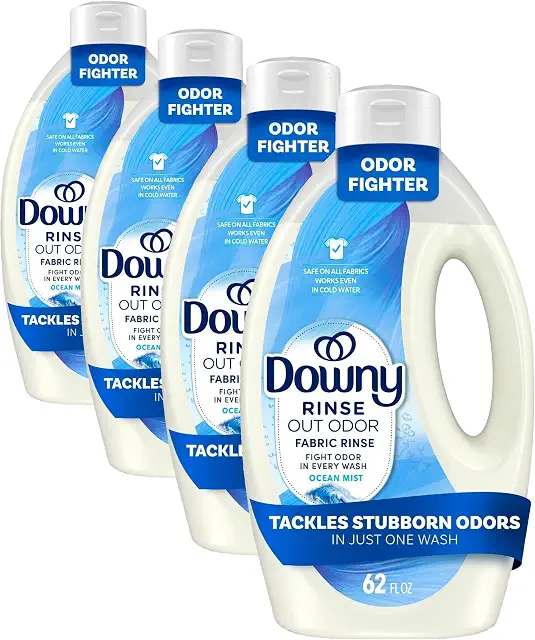
Best for: Laundry that needs additional help with persistent fabric residue and lingering odours.
Why I would consider it: Downy Rinse & Refresh is a rinse-cycle product designed to help remove residue and odour buildup from fabrics. Unlike a conventional fabric softener, it is formulated to help rinse away unwanted deposits rather than simply condition the fabric.
How to use it: Follow the instructions on the specific product you purchase. Depending on your machine, it is added to the fabric-softener dispenser or introduced during the rinse cycle as directed. Avoid exceeding the recommended amount.
My eco-conscious consideration: This is an optional extra, not a substitute for using the correct amount of detergent. Some versions contain fragrance, so it may not suit people who prefer fragrance-free laundry products. If avoiding added fragrance is important to your household, I would start with a plain-water rinse instead.
What I Would Avoid When Removing Detergent Residue
When trying to fix laundry residue, it is easy to turn a small problem into a bigger one by experimenting with too many cleaning products. Here are three things I recommend avoiding.
Don’t automatically resort to laundry stripping. An ordinary detergent-residue problem often doesn’t justify an intensive soak with several cleaning ingredients. Start with rinsing and correcting the original washing conditions.
Don’t keep adding detergent. If the problem is excess detergent, adding more can make it harder to resolve. Remove the existing residue first and reassess your dosage.
Don’t rely on homemade acidic rinses as your first solution. Vinegar is frequently recommended in DIY laundry advice, but it isn’t a universal fix for detergent residue.
Check your washing machine manufacturer’s guidance before adding acidic products, and never mix cleaning products casually.
If residue continues to return despite correct dosing, adequate rinsing, and suitable loading, investigate other possible causes, including hard water, a dirty dispenser, or a washing machine that needs maintenance.
How to Prevent Laundry Detergent Residue in the Future

I prefer preventing a problem over repeatedly treating it. Once your clothes are clean, a few consistent habits can help keep residue from returning.
- Measure detergent instead of pouring it directly into the machine without checking the amount.
- Choose a detergent suitable for your washer, fabrics, water conditions, and washing temperature.
- Avoid tightly packing the drum so water can circulate through the clothes.
- Use an extra rinse when your machine offers it and the load needs additional rinsing.
- Clean the detergent dispenser and washing machine according to the manufacturer’s maintenance instructions.
- Reduce unnecessary fabric softeners and fragrance boosters if you suspect they are contributing to buildup.
These changes can make your routine more practical and reduce unnecessary product use. You don’t need a cupboard full of laundry additives to take good care of your clothes.
Five Things to Remember About Removing Detergent Residue
- Start with water. A rinse-and-spin or extra-rinse cycle may remove residue without requiring another cleaning product.
- Use detergent correctly. Too much detergent can contribute to buildup, so measure according to your load and product instructions.
- Give clothes enough space. Avoid overloading the washing machine, which can interfere with effective washing and rinsing.
- Choose additional products carefully. A fabric rinse may help with persistent buildup, but it is not always necessary and may contain fragrance.
- Address the underlying cause. If residue keeps returning, review your detergent, water conditions, machine settings, and washing machine maintenance.
READ ALSO: 15 Low Waste Laundry Tips for an Eco-Friendly Environment at Home
TrueEcoLiving Verdict
Start with an extra rinse and correct your detergent dosage before considering specialty products or intensive treatments. Simple, well-informed laundry habits are often the most practical place to begin.
Conclusion: You Don’t Need Laundry Stripping to Fix Every Residue Problem
Removing laundry detergent residue doesn’t have to involve an elaborate cleaning routine. In many cases, I would begin with a simple rinse, check the amount of detergent used, and make sure the washing machine has enough room to do its job.
I also believe that a more eco-conscious laundry routine starts with using what you need rather than buying something for every small problem.
Reducing excess detergent, avoiding unnecessary additives, and maintaining your washing machine can help you look after your clothes while limiting waste.
Remember, the goal isn’t to strip your clothes of everything. It is to remove unwanted residue, preserve your fabrics, and establish a washing routine that works consistently.
Frequently Asked Questions
Shake or brush off loose powder, then rinse the affected garment with clean water. For a machine-washable load, use a rinse-and-spin or extra-rinse cycle without adding more detergent if the clothes are otherwise clean. Check the fabric care label before changing the water temperature.
For a small area of visible residue, you may be able to rinse the affected section under clean running water without washing the entire garment. If residue is spread throughout the clothing or the fabric still feels soapy, a rinse cycle or another suitable wash may be more effective.
Possible causes include using too much detergent, powder detergent that has not dissolved properly, overloading the washer, unsuitable detergent for your machine, and mineral or fabric-product buildup. Check your detergent dosage, washing temperature, load size, and rinse settings before trying another product.
Not usually. If the problem is ordinary detergent residue, rinsing the clothes and correcting your detergent dosage may be sufficient. Laundry stripping is an intensive treatment and should not be the automatic first step for every residue problem.