

Affiliate Disclaimer: This post contains affiliate links. If you purchase through these links, I may earn a commission at no extra cost to you. I only recommend products that fit the cleaning problem discussed in this article.
You finish washing your favourite black trousers or T-shirt, only to discover white streaks running across the fabric. Annoying, isn’t it?
And before you blame the washing machine or buy another cleaning product, let me reassure you: these marks are often caused by something you can easily correct.
From experience, I believe effective cleaning starts with understanding the problem rather than throwing more products at it.
When I check white marks on dark clothes, I look at the detergent, water conditions, load size, and rinsing process first. The good news is that many of these streaks can be removed without harsh stain removers.
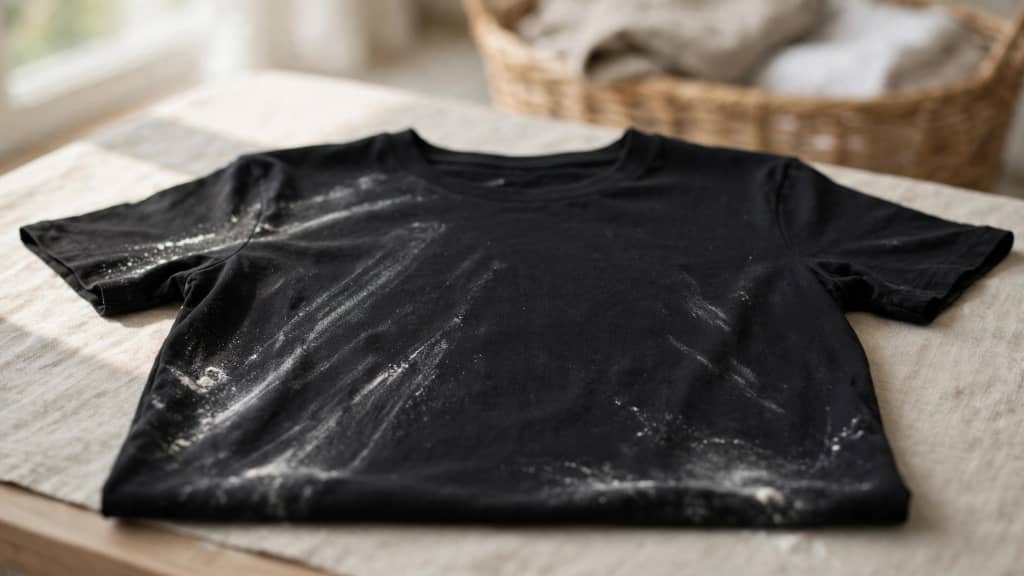
Why Are There White Streaks on Black Clothes After Washing?
White streaks usually indicate detergent residue, mineral deposits, lint, or a buildup of laundry products. Black clothing makes these marks particularly noticeable because even a small amount of pale residue stands out against the dark fabric.
Here are the most common causes I noticed:
1. You Are Using Too Much Laundry Detergent
This is one of the first things I investigate. More detergent does not automatically mean cleaner clothes. When you use more than the wash can rinse away, detergent can remain on the fabric as white marks, streaks, or clumps.
Concentrated detergents are particularly easy to overpour. I recommend measuring the amount instead of estimating it by eye.
Follow the product label and adjust for the load size, soil level, and your washing machine’s instructions.
2. Powder Detergent Is Not Dissolving Properly
Powder detergent can leave visible residue when it does not dissolve fully, particularly in very cold water. Certain powdered formulations may also leave mineral-related deposits, especially in hard water.
For black and other dark clothes, I often favour a suitable liquid detergent because it avoids the problem of undissolved powder particles. If you prefer powder, follow its directions for your water temperature and washing machine.
3. Your Washing Machine Is Overloaded
When clothes are packed tightly into the drum, water and detergent cannot circulate as effectively. The load may not rinse properly, allowing residue to remain on shirts, jeans, and trousers.
My advice is simple: give your clothes enough room to move. A slightly smaller load can produce better results than cramming everything into one wash.
4. Your Water Contains Too Many Minerals
Hard water contains minerals, particularly calcium and magnesium, that can interfere with cleaning and contribute to deposits on fabrics.
If your black clothes develop chalky marks and your laundry often feels stiff, water hardness may be part of the problem.
I would not respond by blindly adding more detergent. First, investigate whether your water is hard. If necessary, use a washing-machine-compatible water softener according to its instructions and the detergent manufacturer’s recommendations.
5. Your Washing Machine Has Detergent Buildup
Detergent residue can accumulate in the dispenser, drum, and other areas of a washing machine. Over time, that buildup may contribute to marks on freshly washed clothes.
I recommend cleaning the detergent drawer and other accessible areas according to your machine’s manual.
Run the manufacturer’s recommended washer-cleaning cycle when needed, and use the correct detergent type for your machine, especially if it requires high-efficiency (HE) detergent.
6. Your Clothes Need a Better Rinse
Even when you use the right detergent, residue can remain if the wash cycle does not rinse the clothes effectively. Excess detergent, overloading, and washing-machine buildup can make the problem worse.
When I encounter recurring streaks, I recommend trying an extra-rinse option, if available. It is a simple adjustment that may help remove leftover detergent without adding another cleaning product.
7. You May Be Seeing Lint or Fabric Product Buildup
Not every white mark is detergent. Lint from towels or other fabrics can cling to black clothing and look like powdery streaks. Excess fabric softener or other laundry products may also leave deposits.
I start by gently brushing the fabric or wiping a small area with a clean, damp cloth. If the marks disappear easily, lint or surface residue may be responsible. If they remain, a rinse or another gentle wash may be more appropriate.
My Product Pick for Preventing White Streaks
ECOS Hypoallergenic Laundry Detergent, Free & Clear
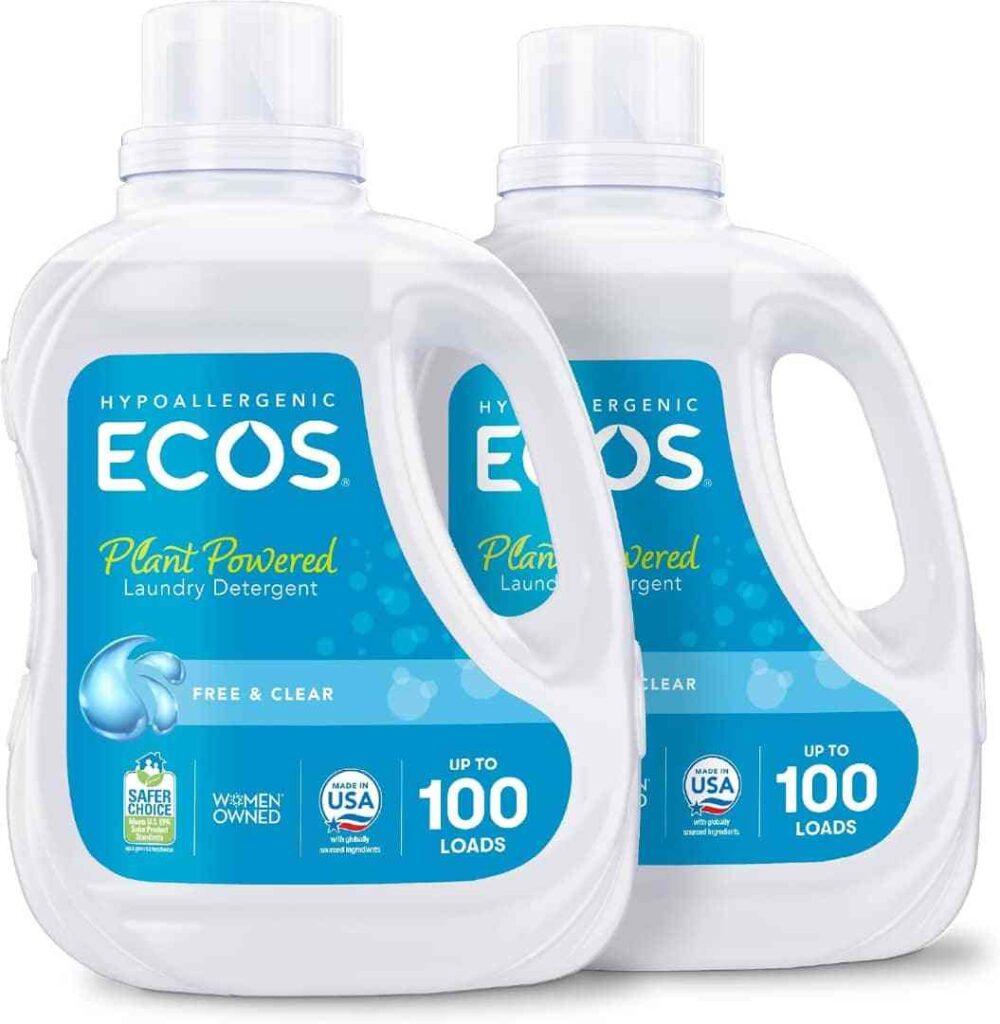
Why I recommend considering it: This liquid laundry detergent is a practical option for an eco-conscious laundry routine.
Its Free & Clear formula is made without added dyes or fragrance, and it is designed for use in different water temperatures and compatible standard or high-efficiency washing machines.
Because it is a liquid, it avoids the specific problem of undissolved powder particles leaving marks on dark garments.
However, no detergent can guarantee streak-free clothes if you use too much, overload the machine, or have a rinsing problem.
My tip: Start with the label-recommended amount for your machine and load. A carefully measured dose is just as important as choosing the right detergent.
Karceyworth Laundry Detergent Dispenser with Measuring Scale and Pouring Spout

Karceyworth Laundry detergent measuring dispenser helps you avoid pouring too much detergent, one of the common causes of white streaks.
A measuring cap or reusable dosing cup is an inexpensive starting point.
Best for: Detergent marks, residue, and reducing wasted detergent.
READ ALSO: 7 Best Non-Toxic Laundry Detergents That Actually Clean Clothes
How to Remove White Streaks from Black Clothes

If your clothes already have white marks, I would try these steps before purchasing a stain remover.
- Check the fabric first. Gently brush away loose lint or wipe a small area with a clean, damp cloth.
- Re-rinse the garment. If the marks appear to be detergent residue, run the item through a rinse-and-spin cycle without adding more detergent.
- Rewash if necessary. If the streaks remain, wash the garment again using the correct detergent dose and a suitable cycle.
- Follow the care label. Choose a water temperature suitable for the fabric rather than assuming hotter water is always better.
- Check before drying. Let the residue clear before applying heat, and avoid aggressive scrubbing that could damage the fabric.
If a mark persists after rinsing and gentle washing, it may not be ordinary detergent residue.
Permanent colour loss or a bleach-related mark, for example, will not necessarily come out with another wash.
How I Prevent White Streaks on Dark Laundry
In my eco-cleaning approach, prevention is better than repeatedly rewashing the same clothes. These are the habits I would prioritise:
- Measure detergent according to the load size and product instructions.
- Use liquid detergent if undissolved powder is a recurring problem.
- Separate dark garments from lint-producing fabrics such as towels.
- Avoid overloading the washer so water can circulate freely.
- Clean the detergent dispenser and washer according to the manufacturer’s maintenance guidance.
- Investigate hard water if chalky deposits or stiff laundry keep appearing.
- Choose an extra rinse when necessary rather than automatically adding more detergent.
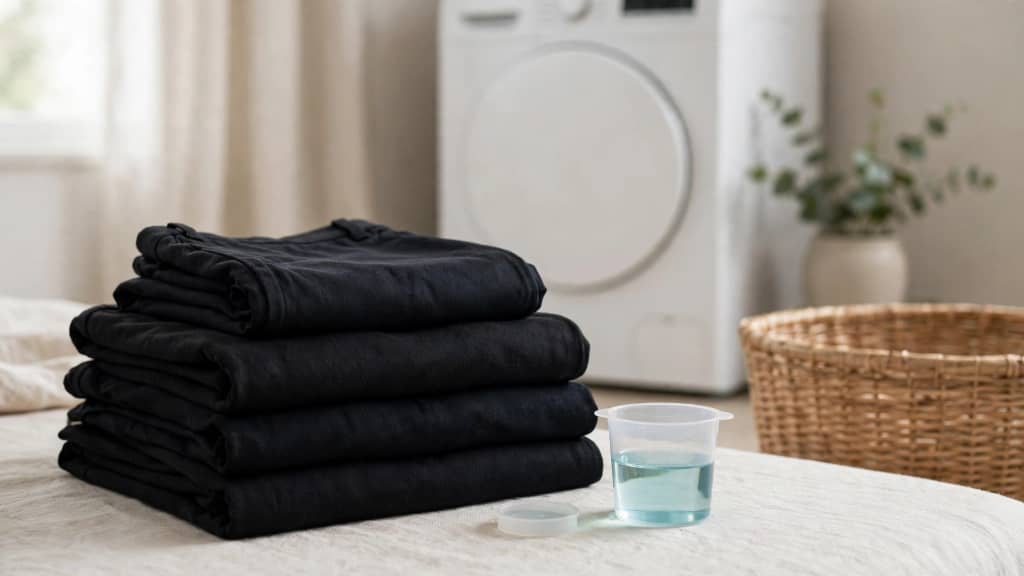
TrueEcoLiving Verdict
White streaks on black clothes after washing are frustrating, but I would not immediately blame the garment or reach for a stronger chemical cleaner.
In many cases, the real issue is excess detergent, powder that has not dissolved, hard water, or a load that has not rinsed properly.
My recommendation is to start with the simplest solution: gently remove the residue, rinse the garment, measure your detergent correctly, and give the washing machine enough room to work.
If you need a replacement detergent, a suitable liquid formula such as ECOS Free & Clear is worth considering as part of a more conscious laundry routine.
Eco-friendly cleaning is not about buying more products. It is about using the right amount, preventing waste, and caring for the clothes you already own.
A few small changes can help you keep your dark clothes looking their best while making your laundry routine more thoughtful.
In a Nutshell

- Excess detergent is a common reason for white streaks and clumps on dark clothing.
- Powder detergent may leave visible deposits when it does not dissolve properly.
- Hard water, overloaded drums, and washer buildup can contribute to residue.
- Rinse or rewash affected garments using a suitable cycle before drying them.
- Prevent future marks by measuring detergent, separating lint-producing fabrics, and maintaining your washing machine.
READ MORE: Why Do Clothes Smell Sour After Sitting in the Washing Machine? 5 Fixes That Work
Conclusion
So, why are there white streaks on black clothes after washing? Most often, the answer lies in detergent residue, mineral deposits, lint, or an ineffective rinse.
The key is to identify the likely cause instead of repeatedly adding products or washing the same item without changing anything.
I encourage you to begin with the basics: use the right detergent dose, avoid overloading your washer, and rinse clothes thoroughly.
With these small adjustments, you can often prevent white streaks, reduce unnecessary laundry waste, and keep your favourite black garments in better condition for longer.
To learn more, I recommend the Whirlpool guide to white residue on clothing. It explains how factors such as detergent quantity, water temperature, water quality, and washer buildup can contribute to the problem.
Frequently Asked Questions
White streaks are commonly caused by excess detergent, undissolved powder, hard-water deposits, lint, or detergent buildup in the washing machine. Try rinsing the garment and measuring your detergent more carefully in future washes.
Gently brush off loose residue or wipe the fabric with a clean, damp cloth. If the marks remain, run the garment through a rinse cycle or rewash it using the correct detergent dose and a suitable temperature. Check that the marks have disappeared before drying.
Liquid detergent can help prevent streaks caused by undissolved powder. However, using too much liquid detergent, overloading the washer, or having hard water or rinsing problems can still leave residue on clothes.
Yes. Minerals in hard water can contribute to pale deposits and laundry residue. If the problem keeps happening, check your water hardness and consider a washing-machine-compatible water-softening product according to its instructions.
About the Author
Agboola Elizabeth is an eco-conscious lifestyle writer at TrueEcoLiving who shares practical guidance on non-toxic cleaning, responsible product choices, and sustainable household habits. Her goal is to help readers make informed cleaning decisions that support a cleaner home and reduce unnecessary waste.