
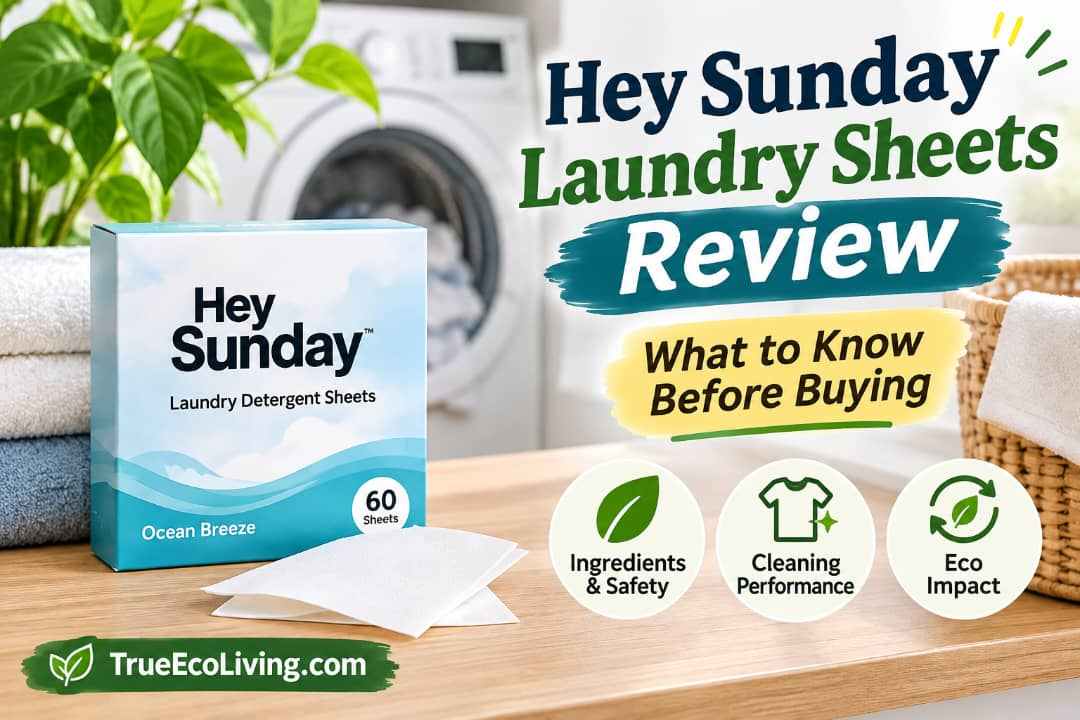
Hey Sunday Laundry Sheets is an attractive alternative to traditional liquid laundry detergent. It comes with a convenient cleaning, less bulky packaging, a simpler laundry routine and ingredients that are easier to understand. But are they genuinely worth switching to?
I’m always mindful of, and always takes non-toxic cleaning and sustainable living seriously, result of which – I don’t judge a laundry product by its marketing claims alone.
I look at what goes into the formula, how well it cleans, how much you need per wash and whether its environmental benefits are meaningful.
For this review, I examined Hey Sunday’s detergent sheet, it’s ingredient list, product information, independent product testing and customer feedbacks.
Affiliate Disclosure: This post contain affiliate links. If you purchase through these links, TrueEcoLiving may earn a small commission at no additional cost to you. I only recommend products I believe are worth considering, and my opinions remain honest and independent.
What Are Hey Sunday Laundry Sheets?
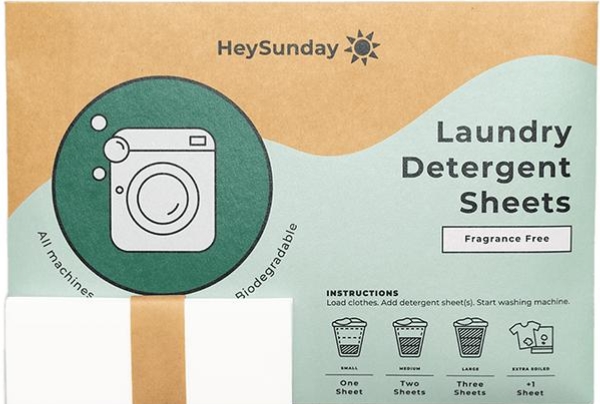
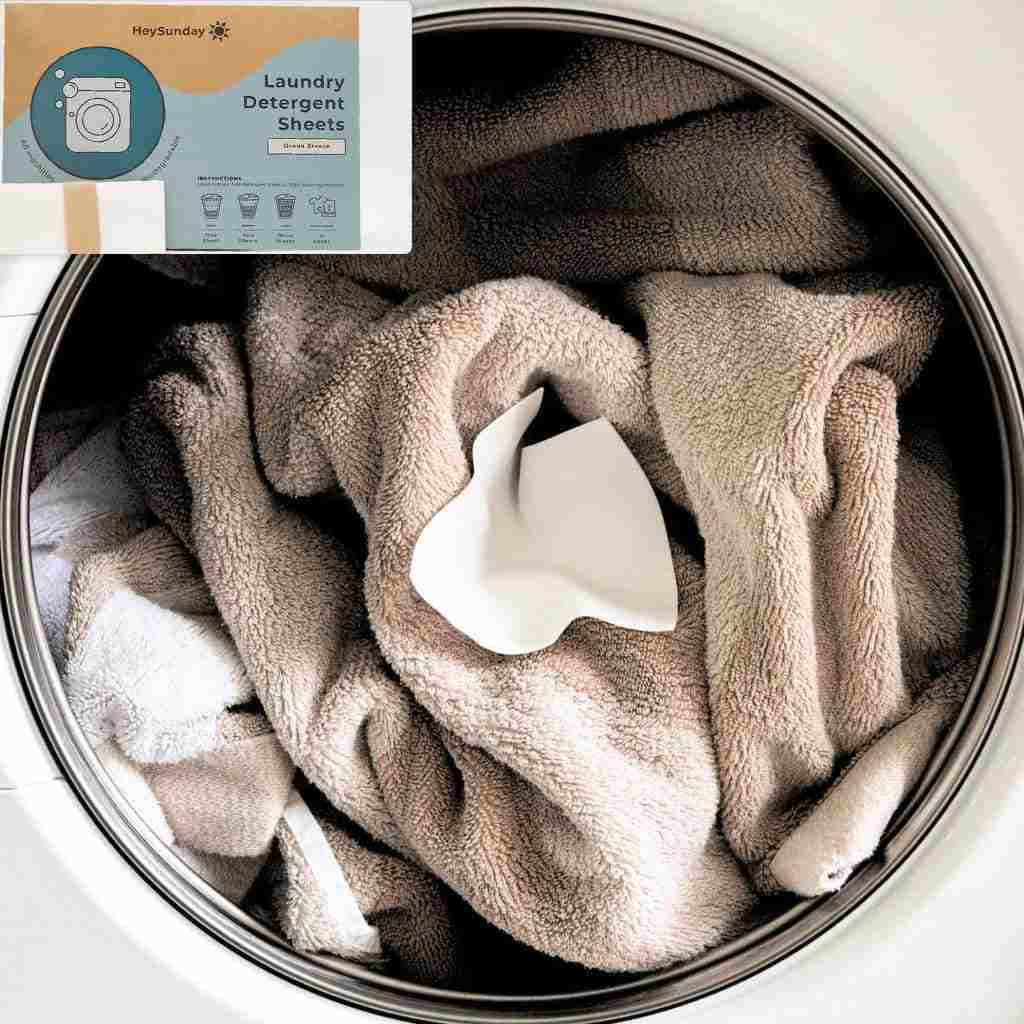
Hey Sunday Laundry Sheets are concentrated detergent sheets designed to replace traditional liquid or powdered laundry detergent. Instead of pouring detergent into a measuring cap, you place a pre-measured sheet directly into your washing machine.
The brand currently offers two laundry detergent options: Ocean Breeze and Fragrance Free. Both are designed for front-load, top-load and high-efficiency washing machines.
What I particularly appreciate about this format is its simplicity. There are no heavy detergent bottles to store, no liquid spills to clean up and considerably less bulky packaging to deal with.
Hey Sunday Laundry Sheets Ingredients: What’s Actually Inside?
This is where I pay the most attention. A product being advertised as plant-based or eco-friendly doesn’t automatically make every ingredient harmless or environmentally perfect.
Hey Sunday publishes its complete ingredient list. Some of the notable ingredients include:
- Sodium Dodecyl Sulphate: A surfactant that helps loosen and remove dirt and oils from fabrics.
- Polyvinyl Alcohol (PVA): A water-soluble synthetic polymer used in the sheet’s formulation.
- Cocamidopropyl Betaine: A cleansing surfactant commonly used in household and personal-care products.
- Lauramidopropylamine Oxide: Another surfactant that supports cleaning.
- Protease: An enzyme that helps break down protein-based stains.
- Citric Acid: An ingredient used for formulation and cleaning support.
- Glycerin and Starch: Ingredients that help support the sheet’s formulation.
- Fragrance: Included in Ocean Breeze but excluded from the Fragrance Free version.
I like that Hey Sunday makes its ingredient information available instead of relying entirely on vague natural-cleaning language. It also excludes dyes, optical brighteners, bleach, phosphates and several commonly used preservatives.
READ ALSO: EARTH BREEZE Laundry Detergent Sheet: the most sought after detergents sheets nowadays
Is Hey Sunday Really Non-Toxic?
I would be careful about describing any complete detergent formula as absolutely non-toxic. Cleaning products contain functional ingredients, and some surfactants can irritate sensitive skin or eyes depending on exposure and individual sensitivity.
What I find encouraging is the absence of added dyes, bleach, phosphates and certain preservatives. The Fragrance Free option is also worth considering for households trying to reduce unnecessary fragrance exposure.
However, fragrance-free doesn’t mean allergen-free. The formula still contains other ingredients that may not suit everybody. I would always check the complete ingredient list rather than relying on the front label.
The PVA Question: Is Hey Sunday Plastic-Free?
This is probably my biggest environmental consideration with Hey Sunday.
The sheets contain polyvinyl alcohol, commonly called PVA. It is a synthetic, water-soluble polymer. Although it dissolves in water, that doesn’t automatically mean it is plastic-free.
There is some positive information here. Hey Sunday reports that its sheets achieved 98% biodegradation within 28 days under the OECD 301B laboratory test, conducted by TÜV Thüringen.
I consider that encouraging, but I wouldn’t interpret a laboratory result as proof that every component disappears under every environmental condition. It is also important to distinguish biodegradable from plastic-free.
I explored this issue further in my article Is PVA in Laundry Detergent Sheets Plastic? The Truth Eco-Shoppers Need to Know.
Does Hey Sunday Actually Clean Clothes Very Well?
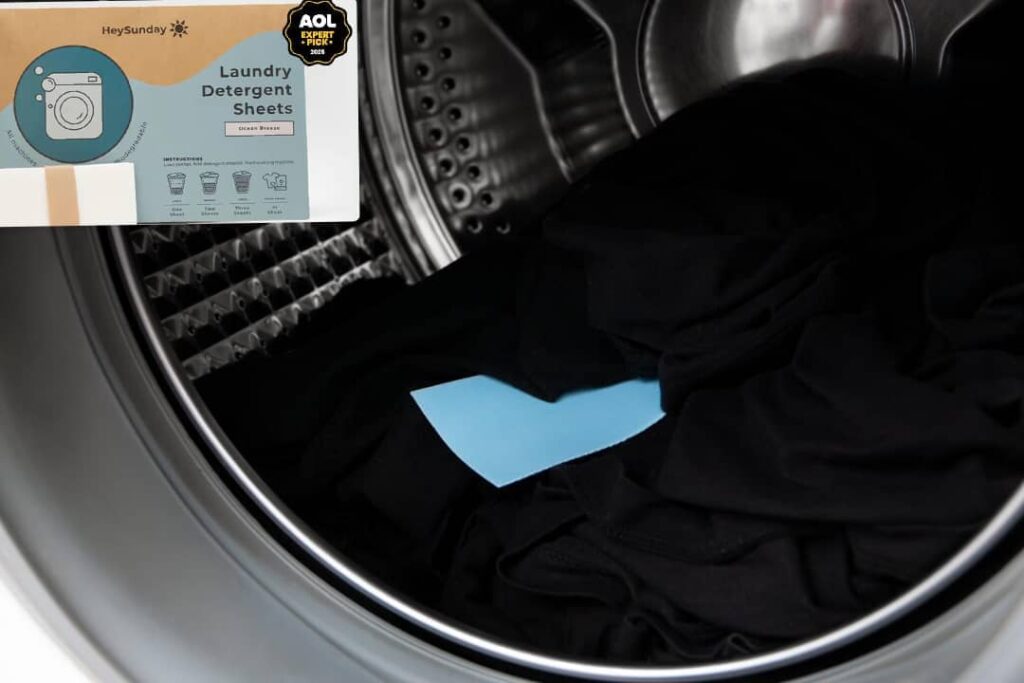
Convenience means very little if a detergent cannot clean properly. Fortunately, independent reviews offer some encouraging results.
The Guardian’s product review reported that Hey Sunday performed well against stains compared with other detergent sheets tested.
Another independent review found that the sheets handled everyday laundry reasonably well, although oil splatters were not completely removed after the first wash.
This is an important distinction. I wouldn’t expect a detergent sheet to perform miracles on heavily soiled clothes, cooking grease or stubborn stains without additional treatment.
My recommendation is to pre-treat stubborn stains before washing rather than expecting the detergent sheet to handle everything. You can also explore my guide to non-toxic laundry stain removers for suitable options.
Do Hey Sunday Sheets Dissolve in Cold Water?
According to the manufacturer, the sheets work in cold, warm and hot water. The brand recommends placing the sheet directly inside the washing machine drum, on top of the clothes, before the machine fills with water when using cold water.
There are generally positive customer reports about dissolving, although experiences can vary. I would follow the placement instructions carefully, especially when washing with cold water or using a heavily packed machine.
How Many Hey Sunday Sheets Should You Use?
Hey Sunday’s FAQ recommends:
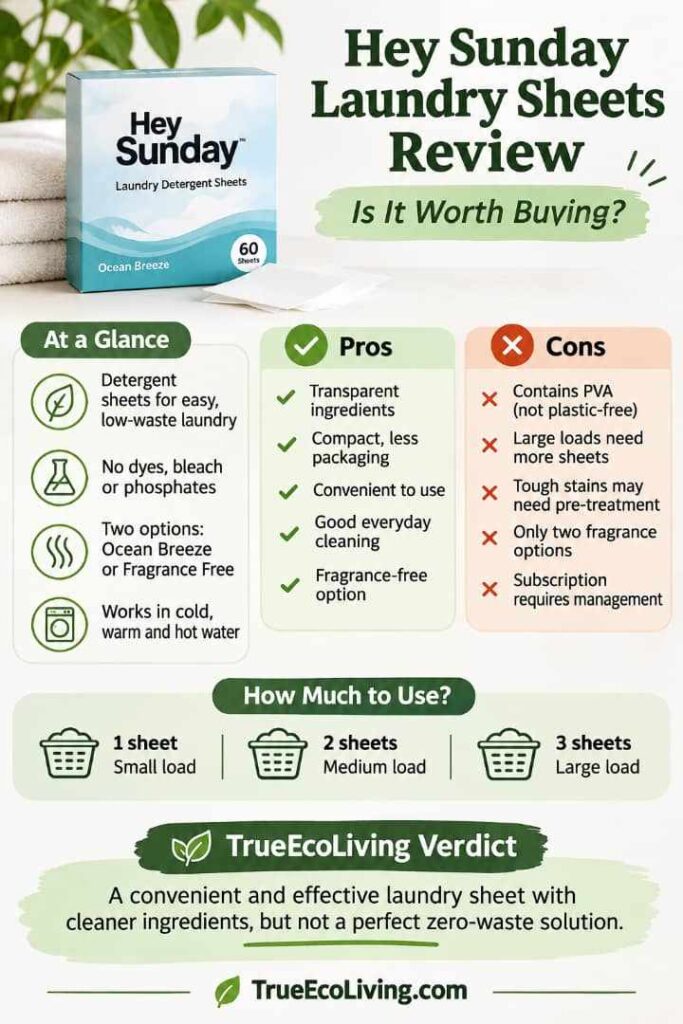
- One sheet for a small load.
- Two sheets for a medium load.
- Three sheets for a large or heavily soiled load.
A 60-sheet pack therefore doesn’t necessarily mean 60 average-sized loads. This is something I think buyers should consider when calculating the actual cost.
How Much Do Hey Sunday Laundry Sheets Cost?
At the time of my research, Hey Sunday’s US website listed a 60-sheet pack at $15 on its subscription plan with deliveries every 30 days. And that’s approximately 25 cents per sheet. One-time purchases cost more, while less frequent subscription deliveries have different discounts.
Remember that using two sheets for a medium load brings the detergent cost to approximately 50 cents, while three sheets cost approximately 75 cents. That makes the recommended dosage important when comparing prices.
Also, check the subscription option before completing checkout. Deliveries recur automatically unless you skip, reschedule or cancel. Hey Sunday says changes must be made at least 24 hours before the next order is processed.
What I Like and Dislike About Hey Sunday
What I like:
- Published ingredient information and a fragrance-free option.
- Compact packaging without bulky detergent jugs.
- Convenient dosing and storage.
- Good reported stain-cleaning performance for a detergent sheet.
- No added dyes, bleach or optical brighteners.
What I don’t particularly like:
- Contains PVA, so I wouldn’t call it completely plastic-free.
- Large loads may require several sheets.
- Some stubborn stains still need pre-treatment.
- Only two laundry detergent options are available.
- Automatic subscriptions require attention when managing deliveries.
Is Hey Sunday Better Than Traditional Laundry Detergent?
I think Hey Sunday makes a convincing case for people who value convenience and want to reduce bulky packaging. However, I wouldn’t automatically say detergent sheets are better than every traditional detergent.
Powdered detergents can offer competitive cleaning at a lower cost per wash, depending on the formula and dosage. Some liquid detergents also offer stronger options for particular cleaning needs.
My laundry sheets vs. powder comparison explains why I think the best choice depends on cleaning performance, cost and packaging rather than product format alone.
For anyone trying to build a more sustainable laundry routine, I would also recommend reading my guide to building a low-waste laundry routine without buying more products.
5 Things to Know Before Buying Hey Sunday Laundry Sheets
- Hey Sunday publishes its full ingredient list, including its PVA content.
- The Fragrance Free version removes added fragrance but isn’t automatically suitable for every sensitive-skin concern.
- Independent testing has reported encouraging cleaning performance, but difficult oil stains may need pre-treatment.
- One pack contains 60 sheets, but medium and large loads require additional sheets.
- The sheets reduce bulky packaging but aren’t completely plastic-free, and subscriptions require careful management.
Conclusion: Are Hey Sunday Laundry Sheets Worth Buying?
After examining the ingredients, cleaning reports, environmental claims and pricing, I think Hey Sunday Laundry Sheets are a worthwhile option for people who want a convenient alternative to traditional liquid detergent.
However, I wouldn’t buy them simply because they are advertised as eco-friendly. The PVA content, recommended dosage and overall cost per wash deserve consideration.
My advice is to consider the Fragrance Free option if you prefer to avoid added fragrance, follow the recommended dosage and remember that stubborn stains may still need pre-treatment.
Also, check shipping availability: Hey Sunday’s current website says it ships within the United States rather than internationally.
TrueEcoLiving Verdict
My verdict: A good convenience-focused laundry sheet, but not a perfect zero-waste solution.
I like Hey Sunday’s ingredient transparency, compact packaging and reported cleaning performance. Its fragrance-free option is another positive, and the biodegradable claim is encouraging when considered alongside the published test information.
Nevertheless, the PVA content means I wouldn’t classify it as completely plastic-free. I would also compare its actual cost per load with a good-quality powdered detergent before committing to a subscription.
Overall, Hey Sunday deserves consideration, particularly if convenience and reducing bulky packaging are your priorities. Just make your decision based on the complete formula and realistic cost rather than the green marketing alone.
Further reading: For general guidance on evaluating cleaning product ingredients and environmental considerations, explore the US Environmental Protection Agency’s Safer Choice programme. This is a general resource, not a claim that Hey Sunday is EPA-certified.
Frequently Asked Questions
No. They contain polyvinyl alcohol (PVA), a water-soluble synthetic polymer. The brand reports 98% biodegradation within 28 days under an OECD 301B laboratory test, but this does not make the sheets completely plastic-free.
Hey Sunday offers a Fragrance Free version without added fragrance or dyes. However, fragrance-free does not mean allergen-free, and some people may react to other detergent ingredients. Check the complete ingredient list against your sensitivities.
Independent testing has reported good stain-cleaning performance compared with other laundry sheets. However, stubborn grease and oil stains may require pre-treatment before washing.
A pack contains 60 sheets. The manufacturer’s FAQ recommends one sheet for small loads, two for medium loads and three for large or heavily soiled loads. Therefore, the number of actual washes depends on your laundry load sizes.
About the Author
Agboola Elizabeth writes for TrueEcoLiving, sharing practical insights on non-toxic cleaning, sustainable household products and eco-friendly lifestyle choices. Her goal is to help readers make informed decisions that are better for their homes and the environment.
Testing Disclaimer: I haven’t conducted my own controlled washing tests on Hey Sunday Laundry Sheets yet. Hence, this review is based on my research, ingredient analysis, independent product reviews and customer feedback. I share my honest assessment of what you should know before buying.